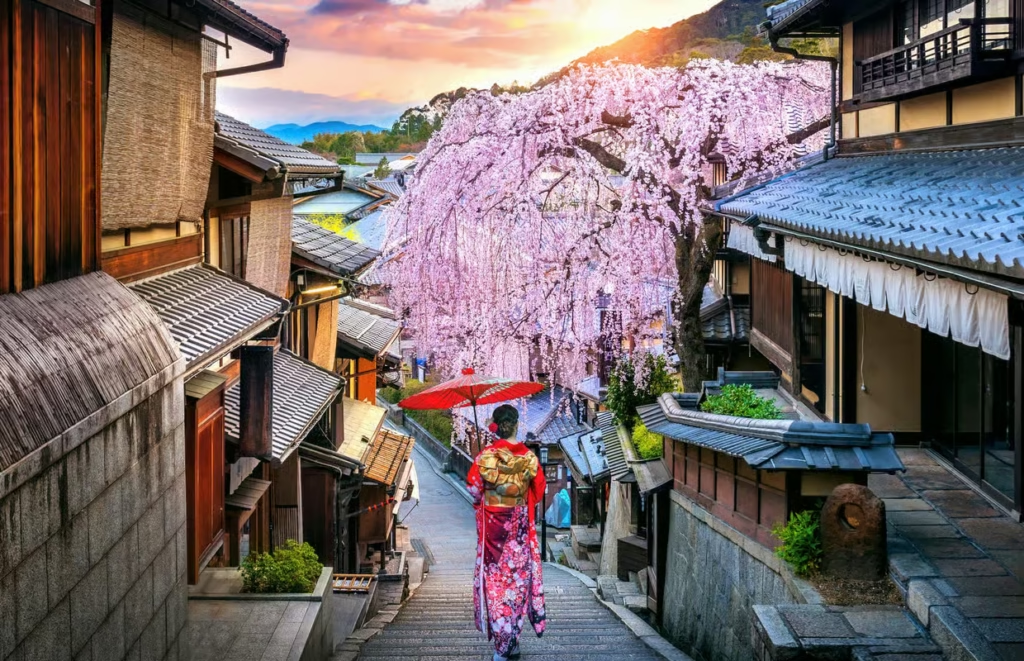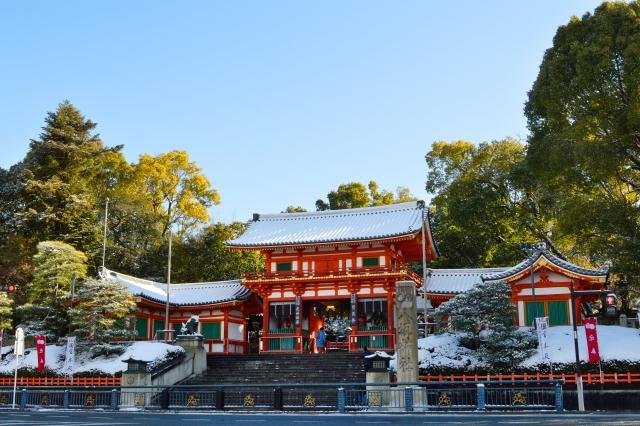
Kyoto has no cherry blossoms or autumn leaves in winter, so you may wonder whether it is still worth visiting. However, the city is quieter, with fewer tourists. Planning a winter trip can be challenging, though, as temperatures can feel especially cold underfoot, and snowfall is difficult to predict.
In this article, we introduce places to visit in winter, from Kinkaku-ji covered in snow to Kifune Shrine, as well as seasonal events from New Year’s Eve through the plum blossom season. We also cover what to wear to stay warm, suggest a one-day itinerary, and introduce tours led by English-speaking guides to help you plan your winter trip to Kyoto.
Three Reasons to Visit Kyoto in Winter
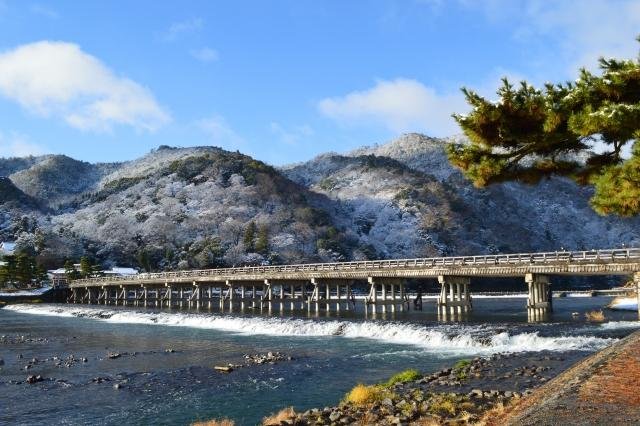
Kyoto in winter offers seasonal scenery and events you will not find at other times of the year, while its popular sights tend to be less crowded. Here are three reasons to visit Kyoto in winter.
1. See Winter-Only Scenery Such as Snow and Plum Blossoms
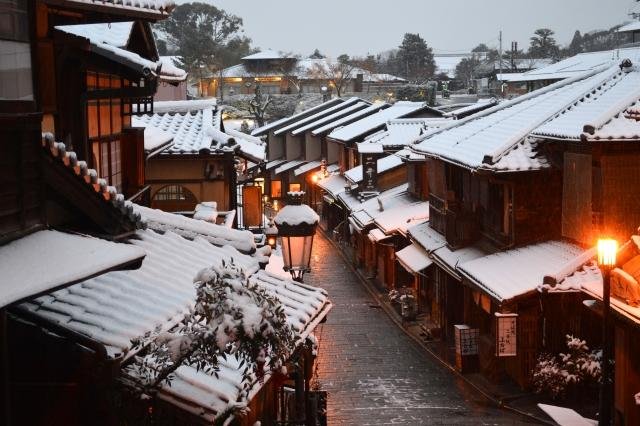
When snow settles, the Golden Pavilion and Zen temple gardens are blanketed in white, creating scenery unlike anything you will see in other seasons. According to the Japan Meteorological Agency’s climatological normals for 1991–2020, snow falls in Kyoto City on an average of about seven days in December, 16 days in January, and 14 days in February. However, monthly snowfall totals average only about 5 cm (2 in) in January and 7 cm (3 in) in February, meaning there are relatively few opportunities to see snow remaining on the ground.
A thin layer of snow in the city often melts by noon. Plan your stay for January or February if you hope to see snowy scenery. On the morning after a snowfall, head out early to arrive at temples and shrines around opening time. Even without snow, you can enjoy the first signs of spring in February, when plum trees begin blooming at places such as Kitano Tenmangu Shrine, adding white and red blossoms to the otherwise bare winter landscape.
2. Experience Events and Special Openings Held Only in Winter
In winter, Kyoto offers seasonal traditions and events that you will not encounter during the autumn foliage or cherry blossom seasons. These include New Year’s Eve ceremonies, special openings of normally closed cultural properties from January to March, and Setsubun celebrations in February. You can witness scenes unique to this time of year, such as worshippers swinging ropes lit by sacred New Year’s fires and monks striking enormous temple bells to welcome the new year. These experiences offer a glimpse into Kyoto’s winter traditions. Each event is covered in detail in the section “Winter Events to Experience in Kyoto” later in this article.
3. Temples and Shrines Are Less Crowded Than in Autumn or Spring
According to the Kyoto City Tourism Association, hotel occupancy rates in Kyoto are typically among the lowest of the year in January and February, when fewer visitors from Europe and North America travel to Japan. Compared with the autumn foliage season in November or the cherry blossom season from March to April, you may spend less time waiting to enter temples or navigating crowded stations. You can also explore popular temples, shrines, and the lanes of Gion at a more relaxed pace.
However, shrines can be crowded during the New Year holidays, when many people make their first shrine visit of the year. For a quieter experience, consider visiting from mid-January onward.
Four Places to See Kyoto in the Snow
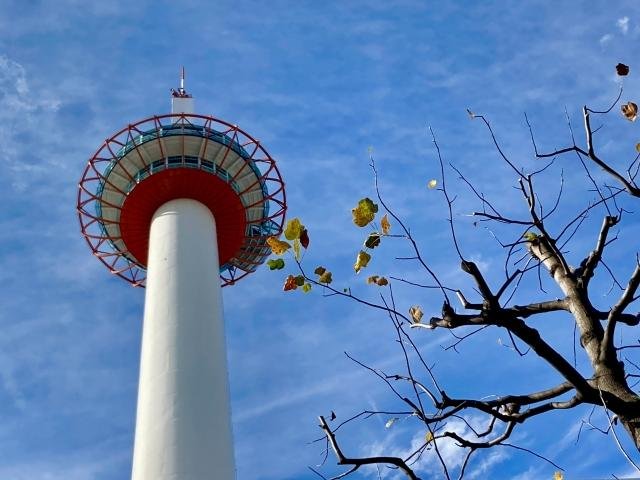
Snow settles in Kyoto on relatively few days each winter, so deciding where to go in advance can help you make the most of a snowy morning. In this section, we introduce four temples and shrines that are especially beautiful when covered in snow.
Kinkaku-ji: Gold Against White on Snowy Mornings
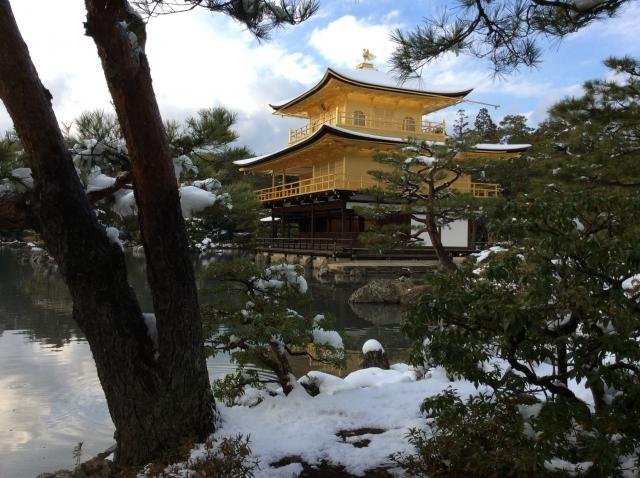
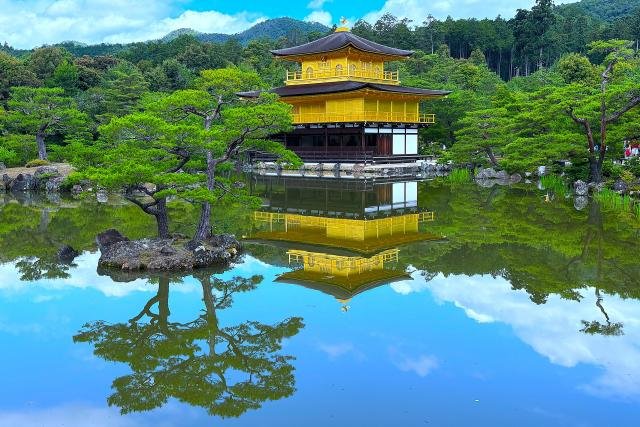
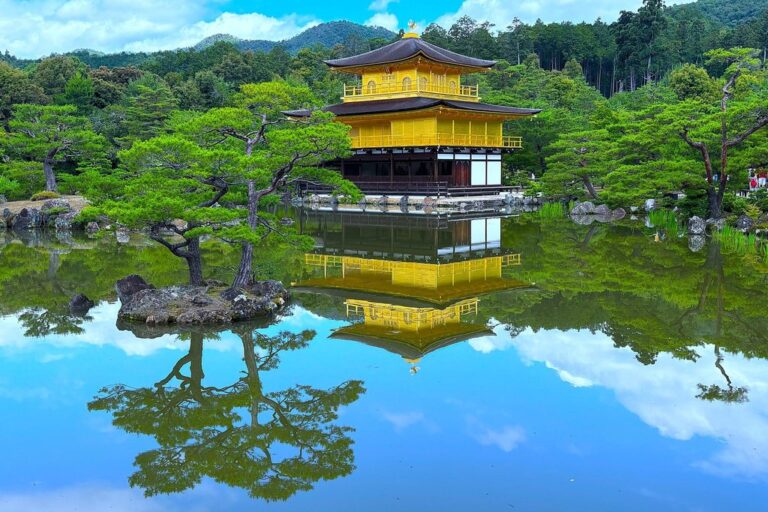
Kinkaku-ji is home to the Golden Pavilion, a hall covered in gold leaf that houses relics of the Buddha. The pavilion is reflected in Kyoko-chi Pond, and on snowy mornings, you can see its golden walls and white roof mirrored in the water. On clear days, the gold stands out even more against the blue sky. You can check snow conditions using the live camera on the temple’s official website.
Photography on the grounds is limited to personal snapshots, and the temple does not permit photography intended for sharing with third parties, including on social media. Beyond the Golden Pavilion, the route includes stairs, so wheelchair and stroller users follow an alternative route that turns back before reaching them. To get there, take a city bus to the Kinkakuji-michi stop.
Details
| Address | 1 Kinkakuji-cho, Kita-ku, Kyoto, Kyoto Prefecture |
| Hours | 9 am–5 pm |
| Closed | None |
| Official website | https://www.shokoku-ji.jp/kinkakuji/ |
| Recommended for | Travelers who want to photograph snowy scenery at one of Kyoto’s best-known temples |
Tenryu-ji: The Garden and Arashiyama’s Mountains Turn White
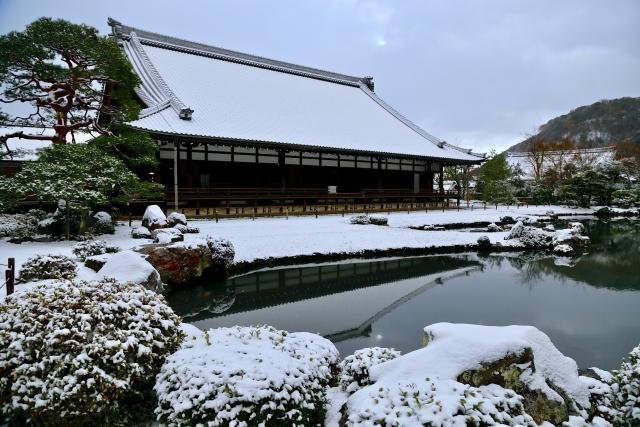
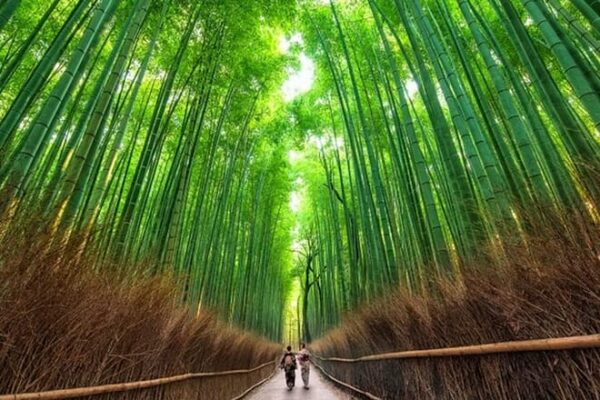
Tenryu-ji is a Zen temple and World Heritage Site known for Sogenchi Garden, which incorporates the surrounding mountains of Arashiyama into its design. On snowy days, the pines and rocks around the pond turn white, blending with the snow-covered mountains in the background to create a seamless landscape where it is difficult to distinguish the garden from the mountains beyond. Tenryu-ji is near Arashiyama Station on the Randen tram line, and you can easily combine a visit with a walk along the Bamboo Grove Path.
Details
| Address | 68 Sagatenryuji Susukinobaba-cho, Ukyo-ku, Kyoto, Kyoto Prefecture |
| Hours | Garden: 8:30 am–5:00 pm, last entry 4:50 pm |
| Closed | None, although some halls may be closed to visitors on event days |
| Official website | https://www.tenryuji.com/ |
| Recommended for | Travelers who want to see a Zen temple garden along with a walk through the bamboo grove |
Kifune Shrine: Illuminations Only on Snowy Weekend Nights
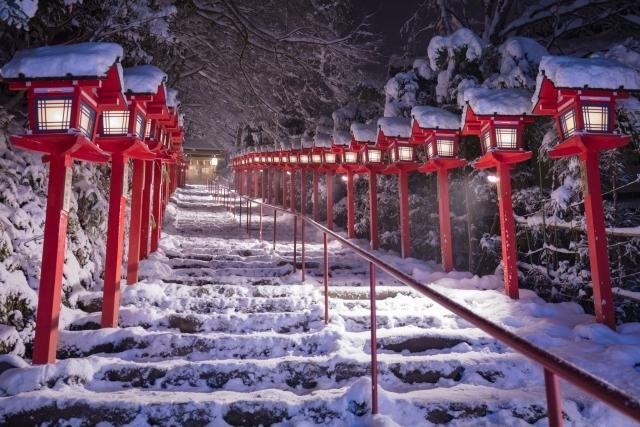
Kifune Shrine is nestled in the mountains of northern Kyoto. Vermilion lanterns line the stone steps leading to the main shrine, creating a striking red-and-white scene when snow settles. In winter, the shrine grounds are sometimes illuminated after sunset, but only on weekends when snow remains on the ground. Whether the illumination will take place is announced on the shrine’s official social media accounts at around 3:00 p.m. on the day. On illumination days, buses between Kifuneguchi and Kifune operate later than usual.
From Keihan Demachiyanagi Station, take the Eizan Electric Railway to Kifuneguchi Station, a journey of about 28 minutes, then transfer to Kyoto Bus Route 33 for a ride of approximately four minutes. Walking from Kifuneguchi Station takes about 30 minutes, mostly uphill. Mountain roads can become icy on snowy days, so taking the bus is advisable.
Details
| Address | 180 Kuramakibune-cho, Sakyo-ku, Kyoto, Kyoto Prefecture |
| Amulet office hours | 6 am–6 pm, extended during illumination periods |
| Closed | None |
| Official website | https://kifunejinja.jp/ |
| Recommended for | Travelers hoping to see a view that only appears on snowy nights |
Sanzen-in: Snow-Capped Little Statues in a Moss Garden
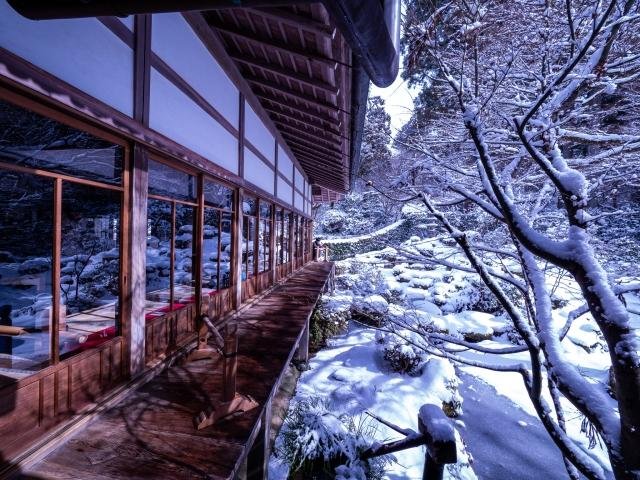
Sanzen-in is a temple in Ohara, in northeastern Kyoto, where you can see Warabe Jizo, small stone Buddhist statues shaped like children, in a snow-covered moss garden. Snow settles on the statues’ heads, making them look as if they are wearing white hats. Some smile, while others rest their chins on their hands, adding to their charming appearance. Snow can melt as the day warms up, so set off early to see the garden at its best. Sanzen-in also closes 30 minutes earlier in winter than in other seasons.
From Kyoto Station, Kyoto Bus Route 17 takes about an hour to reach the Ohara bus stop. Alternatively, you can take Kyoto Bus Route 19 from Kokusaikaikan Station on the Karasuma Subway Line. The temple is about a 10-minute walk from the bus stop, so allow half a day for the visit, including travel time to and from the temple.
Details
| Address | 540 Ohara Raikoin-cho, Sakyo-ku, Kyoto, Kyoto Prefecture |
| Hours | 9:00 am–5:00 pm, or 9:00 am–4:30 pm from December to February |
| Closed | None |
| Official website | https://www.sanzenin.or.jp/ |
| Recommended for | Travelers who want to leave the city and visit a temple in a quiet mountain village |
From New Year’s Eve to the Plum Blossom Festival: Winter Events to Experience in Kyoto
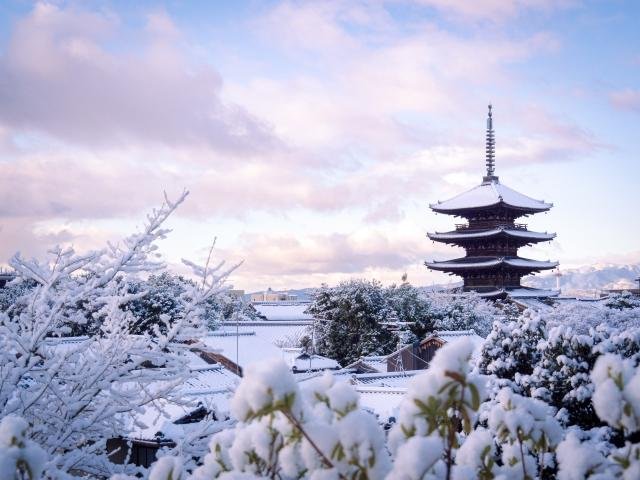
Kyoto hosts a series of seasonal events in winter, from New Year’s Eve through late February. Here, we introduce five events that you can easily fit into your itinerary, listed in chronological order.
December 31: Receive the New Year’s Fire at Yasaka Shrine’s Okera Mairi
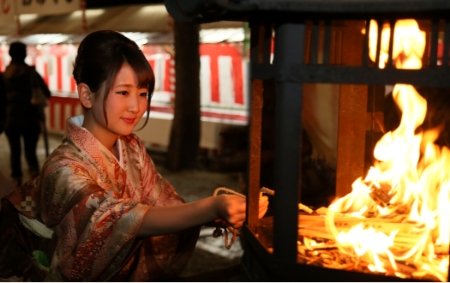
At Yasaka Shrine in Gion, a New Year’s Eve ceremony begins at 7:00 p.m. on December 31. After the ceremony, okera-bi, a sacred fire kindled by burning medicinal herbs, is used to light lanterns on the shrine grounds. Visitors can light a rope from this fire and take it home while praying for good health in the coming year. This custom, known as Okera Mairi, continues into the early hours of New Year’s Day. Worshippers swing their ropes as they walk to keep the embers glowing, creating one of Kyoto’s signature New Year’s Eve scenes.
For safety, extinguish the fire before returning to your accommodation, following the shrine’s instructions. You can then take the rope home as a good-luck charm. Yasaka Shrine is about a five-minute walk from Gion-Shijo Station on the Keihan Line.
December 31: Hear or Ring a Temple Bell on New Year’s Eve
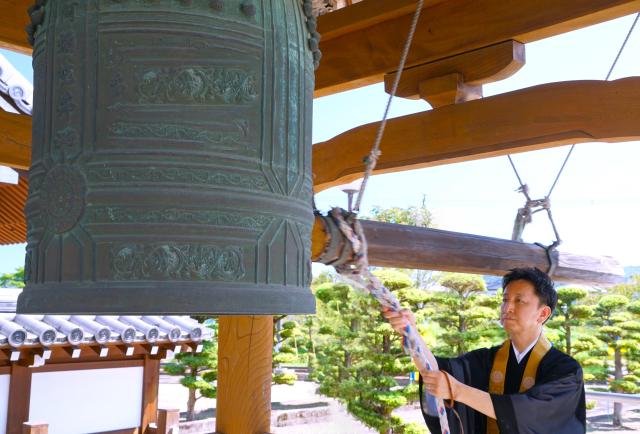
On New Year’s Eve, temples ring their bells 108 times in a tradition known as joya no kane. At some temples, you can watch the ceremony, while others allow visitors to ring the bell themselves. At Chion-in, you can watch 17 monks work together to strike the temple’s great bell. One monk leans back and hangs from the rope to deliver each powerful strike, creating a dramatic sight. Other temples, such as Kodai-ji, distribute numbered tickets on the day and allow visitors to ring the bell on a first-come, first-served basis. If you want to take part, arrive early and line up before ticket distribution begins.
January to March: See Normally Closed Cultural Treasures During Kyo no Fuyu no Tabi
Kyo no Fuyu no Tabi, or “Kyoto Winter Journey,” is an annual campaign organized by Kyoto City and the Kyoto City Tourism Association since 1967. Typically held from early January to mid-March, it offers limited-time access to gardens, Buddhist statues, sliding-door paintings, and other cultural treasures at temples and shrines that are not usually open to the public. The participating sites and annual theme change each year. Many venues do not require individual visitors to make reservations, making it easy to include a visit in your itinerary.
Early February: Watch Maiko Dances and Demon-Expelling Rituals at Setsubun
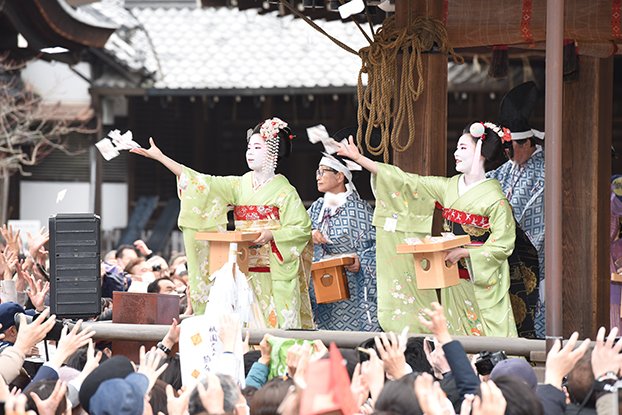
Setsubun falls on the day before the traditional beginning of spring, when people scatter beans to drive away bad luck. At the Setsubun Festival at Yasaka Shrine, geiko and maiko—Kyoto’s geisha and apprentice geisha—from four of the city’s five geisha districts perform dedicatory dances on the shrine grounds, followed by a bean-scattering ceremony. At Yoshida Shrine, near Kyoto University, the Tsuina-shiki ceremony takes place on the eve of Setsubun. Visitors can watch a ritual in which red, blue, and yellow demons are driven away.
February 25: Enjoy Tea Prepared by Geiko and Maiko at the Plum Blossom Festival
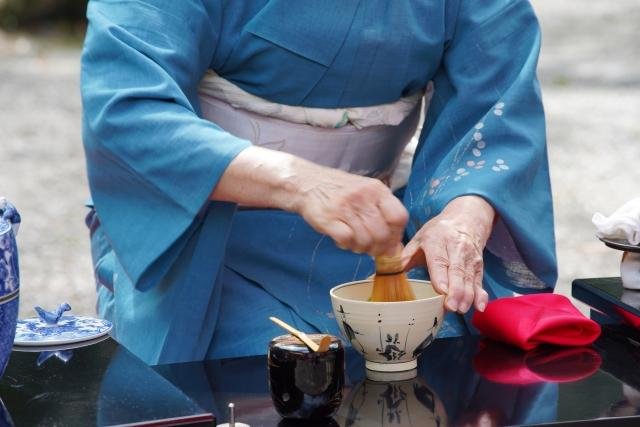
The Baikasai Plum Blossom Festival at Kitano Tenmangu Shrine is held on the anniversary of the death of Sugawara no Michizane, a Heian-period aristocrat revered as the god of learning. The festival takes place during the plum blossom season, when about 1,500 plum trees bloom on the shrine grounds. Geiko and maiko from Kamishichiken, a nearby geisha district, serve tea at an outdoor tea ceremony, where visitors can enjoy a bowl of tea beneath the plum blossoms. A tea ceremony ticket is required to participate.
The festival coincides with Tenjin-ichi, a market fair held on the 25th of each month. Stalls line the shrine grounds, and the site tends to be crowded throughout the day. Kitano Tenmangu Shrine is located right beside the Kitano Tenmangu-mae city bus stop.
What to Wear and Pack for Kyoto’s Deep Winter Chill
Winter sightseeing in Kyoto often involves visiting temples and shrines, where you may spend long periods outdoors in the cold. Dressing warmly is therefore essential. This section covers what to wear and bring for winter sightseeing in Kyoto, from coats and socks to suitable footwear.
Choose a Thick Down Jacket or Wool Coat
In January and February, daytime highs in Kyoto average around 10°C (50°F), so a light jacket may not provide enough warmth. A down jacket or thick wool coat is a better choice. If you plan to spend long periods outdoors, such as on temple grounds or along rivers, choose a coat that covers your hips to help keep you warm.
Protect Your Neck and Hands with Gloves, a Scarf, and a Hat
Your hands and neck can get cold in the mornings and evenings, as well as in shaded areas, so bring gloves, a scarf, and a knit hat. If you plan to take lots of photos with your smartphone, consider touchscreen-compatible gloves so you can keep them on while capturing snowy scenery. Disposable heat packs are also available at convenience stores and drugstores. Keep one in your pocket to warm your hands when needed.
Dress in Layers for Changes Between Indoor and Outdoor Temperatures
When sightseeing in Kyoto in winter, you will often move between heated shops and trains and the cold outdoors. Rather than relying on one thick layer, wear a thin thermal base layer and a sweater under your coat. Layering makes it easier to adjust to changing temperatures indoors and outside. A coat that opens at the front is also convenient, as you can take it off quickly when entering a heated building.
Wear Thick Socks for Temple Halls Where You Remove Your Shoes
In temple halls and castle palaces, you will often need to take off your shoes and walk on wooden floors. Kyoto is a basin surrounded by mountains on three sides, and its winter cold is known for seeping up from the ground, a sensation called sokobie in Japanese. You may feel the chill of the floors directly through your feet. Wearing thick socks or carrying a spare pair can help keep your feet warm and ensure that you have dry socks to wear when entering the next temple, especially if your socks get damp from snow or sweat.
Choose Slip-Resistant Shoes on Snowy or Frosty Mornings
On mornings when snow or frost is present, stone steps and paved paths at temples and shrines can become slippery. Wear sneakers or boots with deeply treaded soles for better grip, and avoid flat-soled leather shoes and high heels.
A One-Day Winter Itinerary in Kyoto from Kinkaku-ji to Gion
Days are short in Kyoto in winter, and it starts to get dark by late afternoon. This one-day itinerary takes you from Kinkaku-ji in the morning to Gion in the evening, alternating between outdoor walks and indoor activities.
9 am: Visit Kinkaku-ji Right After Opening
Kinkaku-ji opens at 9 am, and visitors follow a one-way route through the grounds that passes in front of the Golden Pavilion before leading to the exit. The grounds tend to be quieter just after opening, and if you visit on the morning after a snowfall, you may be able to see the snow before it melts. Allow about an hour for your visit, then take a city bus to Kitano-Hakubaicho Station and ride the Randen Kitano Line to Katabiranotsuji Station. Transfer to the Randen Arashiyama Main Line and continue to Arashiyama Station. The journey takes approximately 45–60 minutes, so you should arrive around 11 am. Have lunch at a restaurant in Arashiyama before heading to the meeting point for your noon walking tour.
Noon: Walk Through Tenryu-ji’s Garden and the Bamboo Grove with an English-Speaking Guide
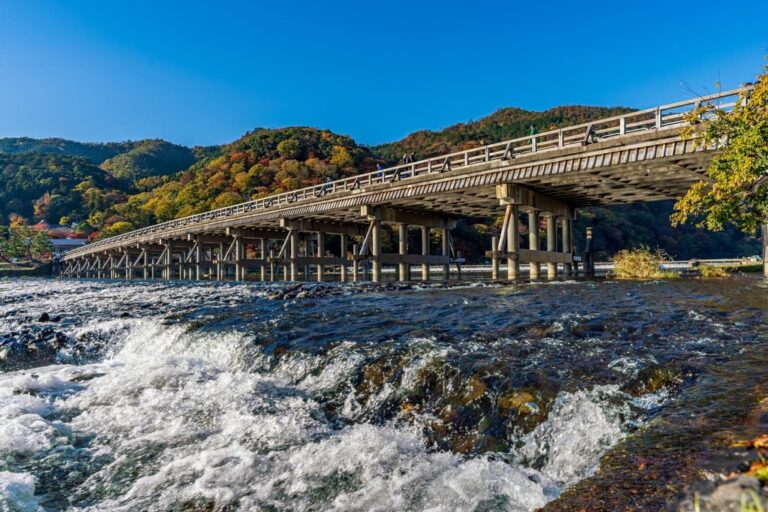
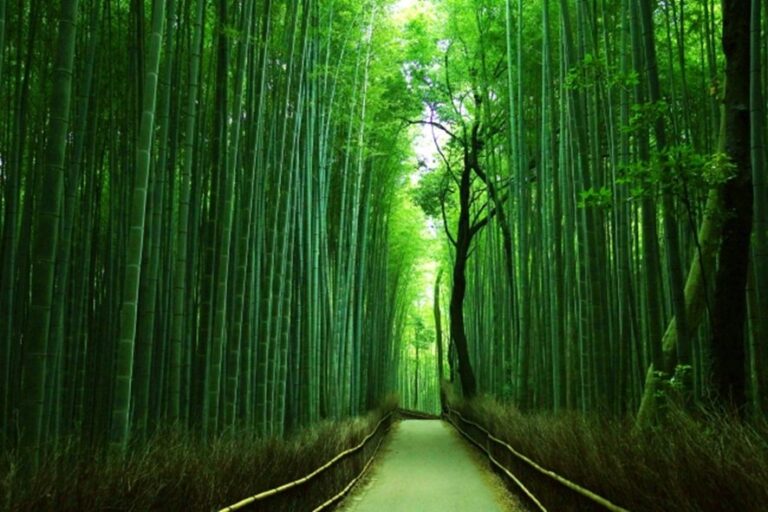
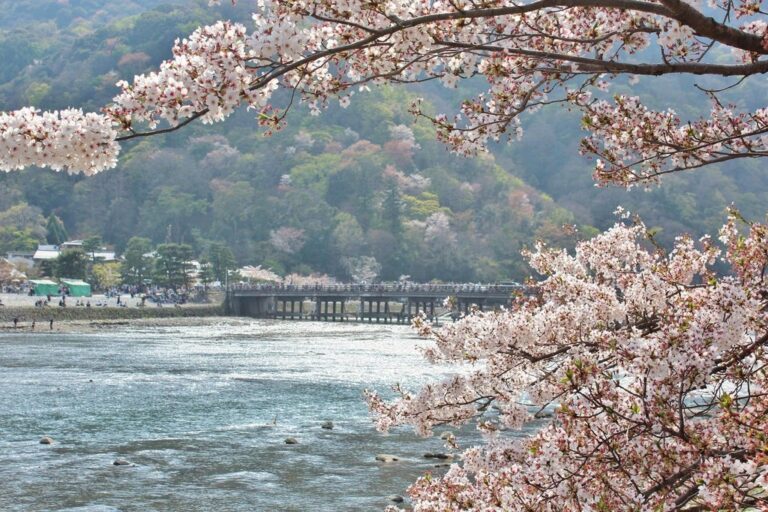
Join an English-speaking guide for a walking tour of approximately 90 minutes, visiting the Bamboo Grove Path, Tenryu-ji’s Sogenchi Garden, Arashiyama Park, and Togetsukyo Bridge. In winter, the bamboo grove may be less crowded, allowing you to appreciate the sound of bamboo leaves rustling as the tall stalks sway in the wind. The tour should finish around 1:30 pm, leaving you about 30 minutes to return to the meeting point and prepare for your next activity at 2:00 pm.
Kyoto: Arashiyama UNESCO Walking Tour with Admission
2:00 pm: Make Your Own Chopsticks at a Workshop in Arashiyama
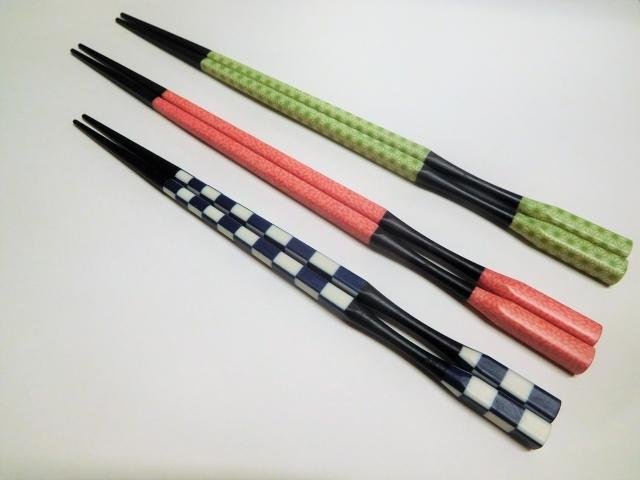
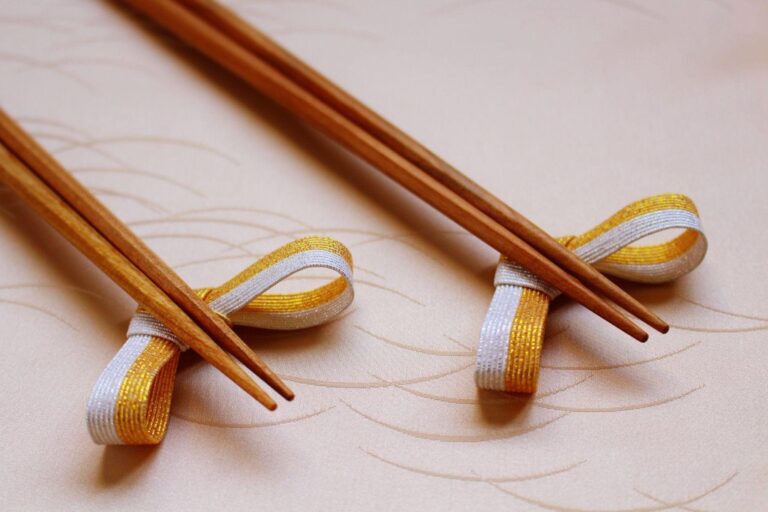
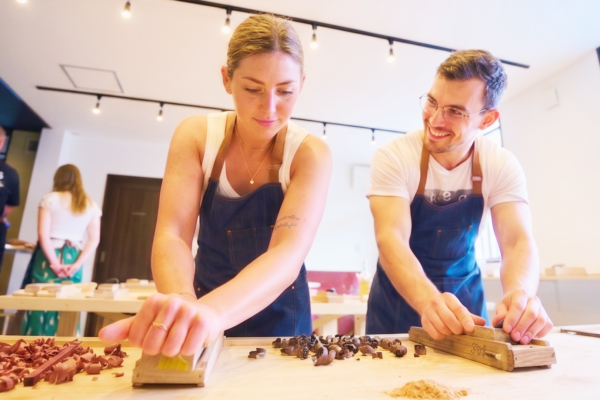
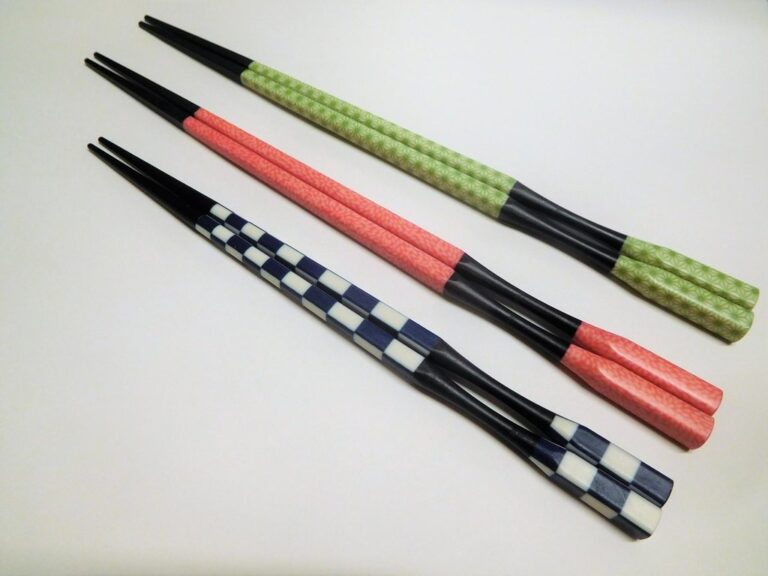
At a workshop in the same building as the tour meeting point, you will spend about an hour shaping wood and finishing your own pair of chopsticks. This indoor activity offers a chance to warm up and take a break after walking outdoors in the cold. Afterward, take the Randen tram to Shijo-Omiya Station, then transfer to the Hankyu Line and continue to Kyoto-Kawaramachi Station. The journey takes about 40 minutes.
Kyoto Arashiyama Chopstick Making Workshop
4 pm: Taste Kyoto Flavors at Nishiki Market
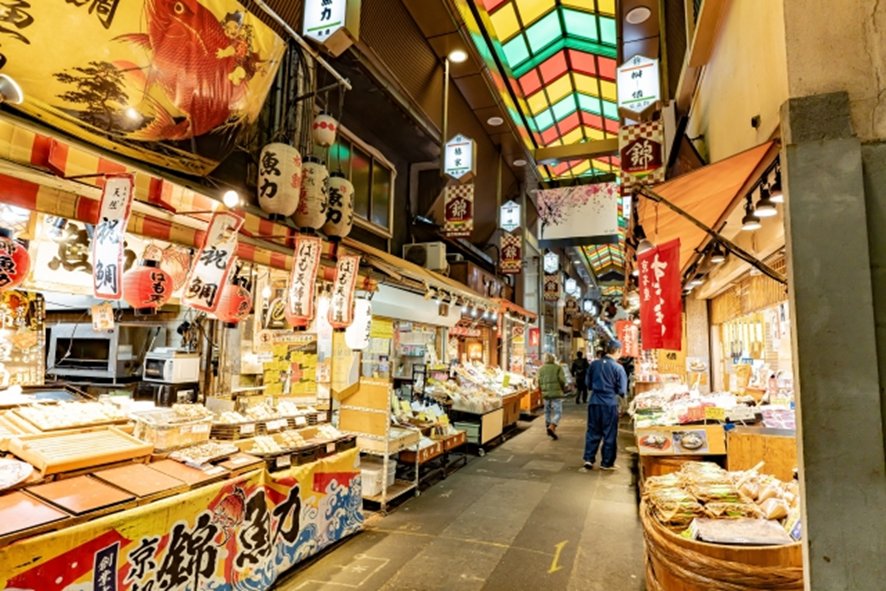
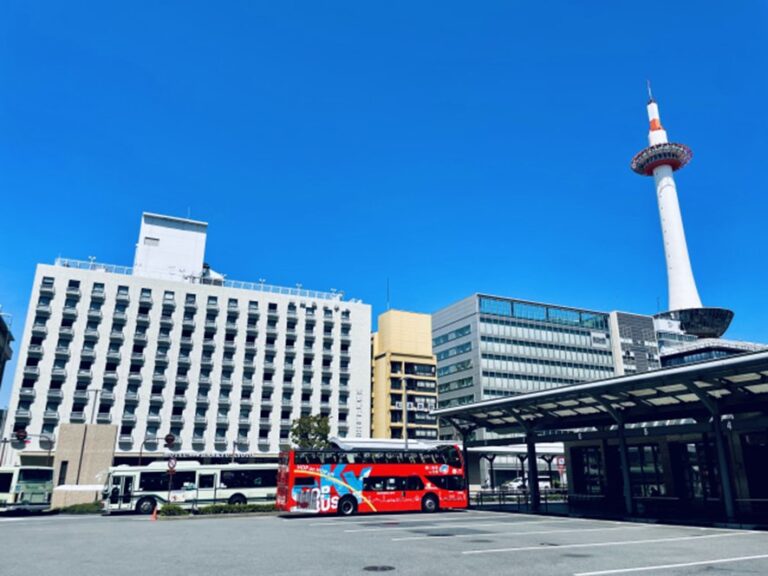
Nishiki Market is a covered shopping street about 390 meters (1,280 feet) long, located roughly a five-minute walk from Hankyu Kyoto-Kawaramachi Station. Shops along the market sell local specialties such as Kyoto pickles, yuba (tofu skin), and traditional sweets. In winter, the covered walkway is also a welcome shelter from snow and rain. Enjoy your purchases in designated eating areas at the shops rather than eating while walking. After exploring the market, head east along Shijo-dori toward Shijo-Ohashi Bridge.
5 pm: Walk Gion’s Lanes at Dusk with an English-Speaking Guide
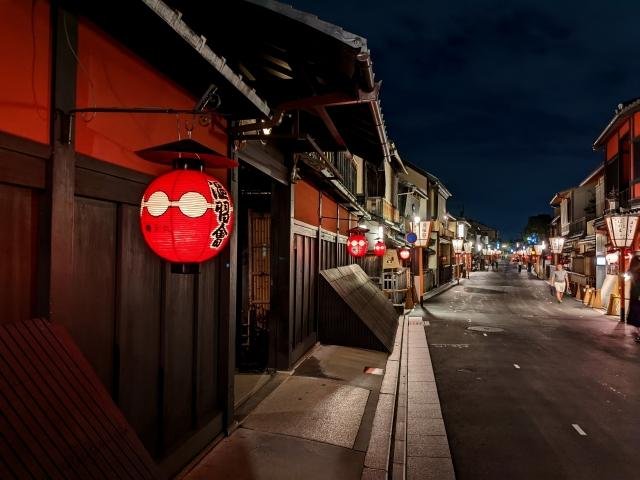
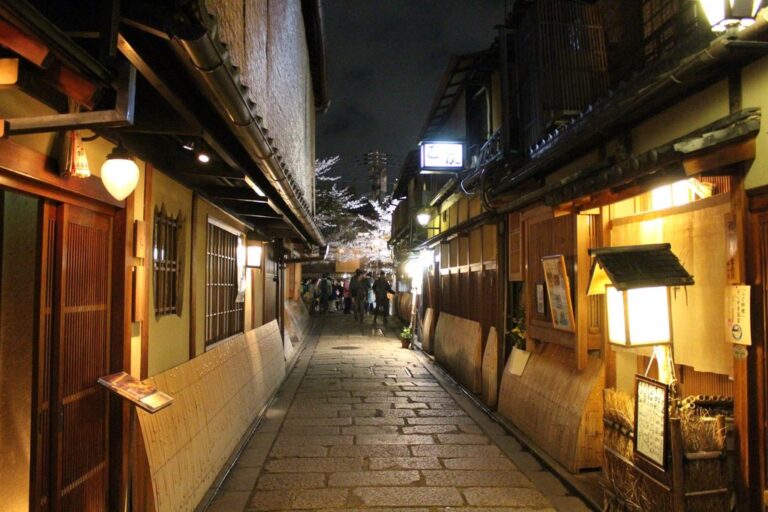
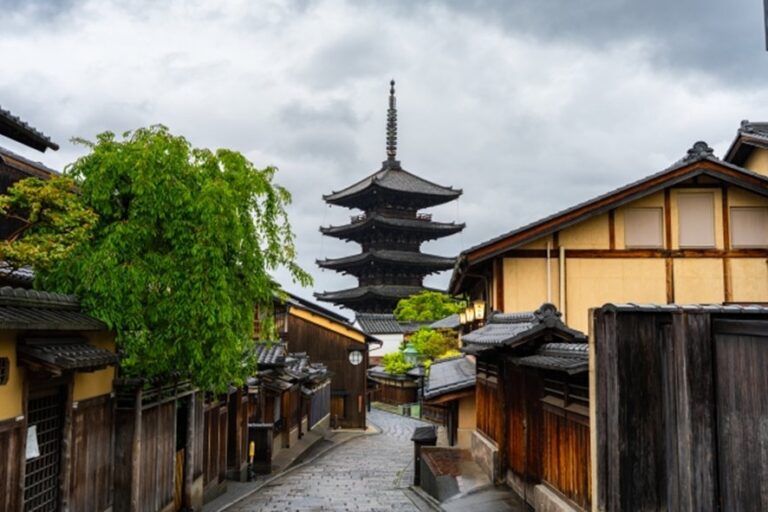
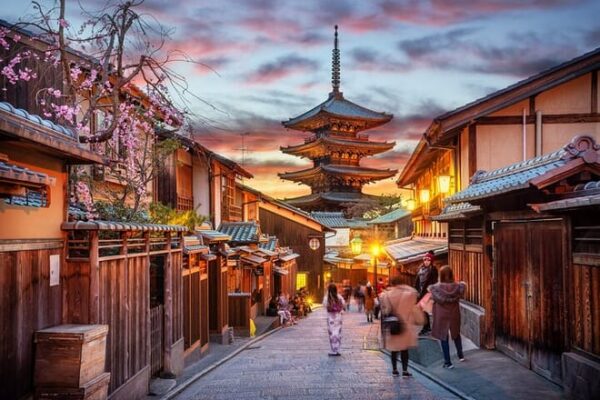
To end the day, join an English-speaking guide for a two-hour walking tour of Gion, Kyoto’s geisha district, known for its traditional teahouses where geiko and maiko work. Sunset in Kyoto is around 4:50 pm in December and between 5 pm and 5:20 pm in January. This timing lets you explore the lanes while there is still some daylight and watch the lights come on beneath the eaves of the traditional wooden townhouses.
In the early evening, geiko and maiko may be on their way to appointments at teahouses, so you might catch a glimpse of them on the streets. Please do not stop them or photograph them without permission. Some streets in Gion are private roads where photography and entry are prohibited, so follow your guide’s instructions and respect local rules.
Five Recommended English-Guided Tours and Activities for Kyoto in Winter

This section introduces five English-language tours and activities offered by Japan Guide Star that you can incorporate into your itinerary. You can find the full list of Japan Guide Star’s Kyoto tours here.
Arashiyama: An English-Guided Tour of the Bamboo Grove and Tenryu-ji
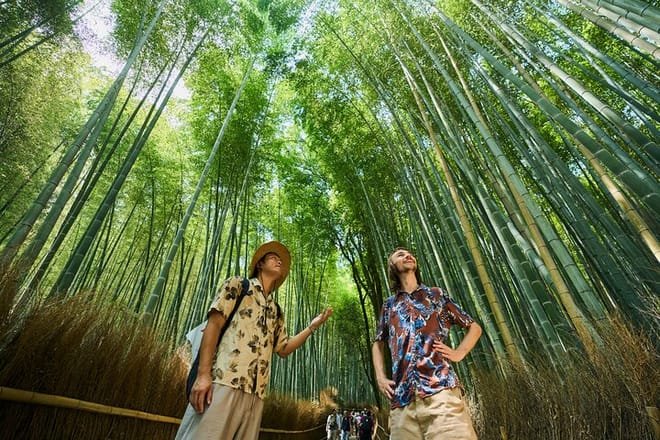
Japan Guide Star’s “Kyoto: Arashiyama UNESCO Walking Tour with Admission” is the walking tour featured at noon in the itinerary. Led by an English-speaking guide, the tour lasts about an hour and a half and includes the Bamboo Grove Path, Tenryu-ji’s Sogenchi Garden, Arashiyama Park, and Togetsukyo Bridge. Admission to Tenryu-ji is included, so you can enter the garden without waiting at the ticket counter. You will need to remove your shoes when entering the temple buildings.
The meeting point is on the street in front of the Chopsticks Studio Kyoto building, about a two-minute walk from Arashiyama Station on the Randen tram line. This is also where the 2 pm chopstick-making workshop takes place, making it easy to continue to your next activity. Reviewers often praise the guide’s clear explanations, and some note that the tour is enjoyable for families with children.
Details
| Meeting point | 2F, 3-25 Sagatenryuji Susukinobaba-cho, Ukyo-ku, Kyoto, Kyoto Prefecture, in front of Chopsticks Studio Kyoto |
| Duration | About 1.5 hours |
| Price includes | English-speaking guide, Tenryu-ji admission |
| Booking site | https://japanguidestar.com/tour/kyoto-arashiyama-unesco-walking-tour-with-admission/ |
| Recommended for | First-time visitors to Arashiyama, travelers who want a guided tour of the highlights of the garden and bamboo grove |
Kyoto: Arashiyama UNESCO Walking Tour with Admission
Arashiyama: An Indoor Chopstick-Making Workshop Where You Can Warm Up

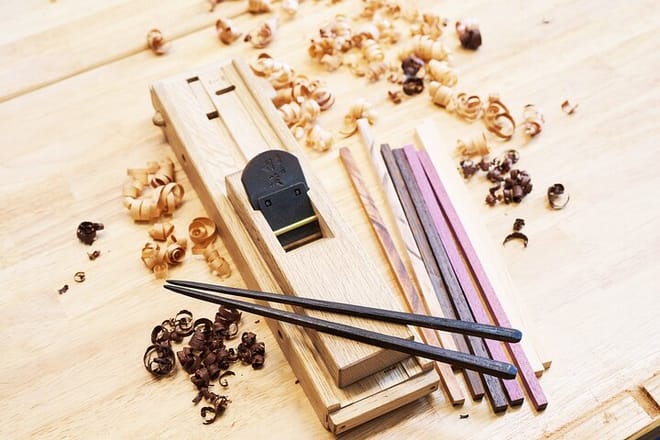
Japan Guide Star’s “Kyoto Arashiyama Chopstick Making Workshop” is the indoor activity featured at 2:00 pm in the itinerary. The workshop lasts about an hour and takes place in the same building as the Arashiyama walking tour meeting point. You can choose from different types of wood, each with its own scent, color, and hardness, before shaping the wood and taking your finished chopsticks home the same day. Part of the experience is handling the different pieces of wood and comparing their weight and grain before making your choice.
English-speaking staff guide you through each step of the process. The minimum age for participants is six. The workshop is on the second floor, accessible by stairs only. Reviewers often praise the friendly staff and clear English explanations, and some mention that having their names engraved on their chopsticks makes the finished pair a memorable souvenir.
Details
| Meeting point | Chopsticks Studio Kyoto, 2F, 3-25 Sagatenryuji Susukinobaba-cho, Ukyo-ku, Kyoto, Kyoto Prefecture, on the second floor of the same building as the Arashiyama tour meeting point |
| Duration | About 1 hour |
| Price includes | Wood with a choice of 3 types, all tools, instruction from English-speaking staff, name engraving for an additional fee |
| Booking site | https://japanguidestar.com/tour/kyoto-arashiyama-chopstick-making-workshop/ |
| Recommended for | Travelers who want to spend time indoors between outdoor walks, travelers who want to take home a handmade souvenir |
Kyoto Arashiyama Chopstick Making Workshop
Gion: An English-Guided Tour of the Geisha District’s Lanes
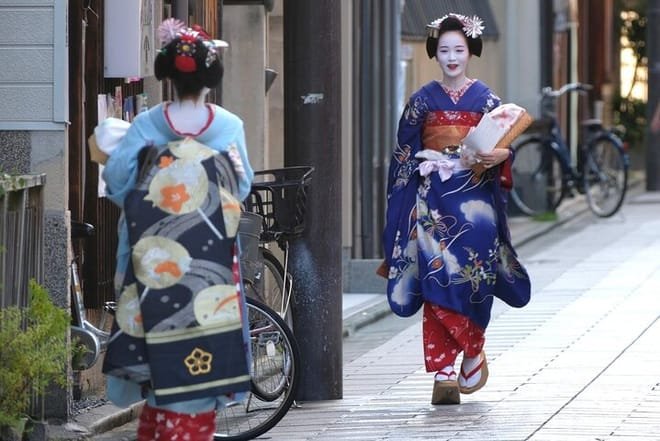
Japan Guide Star’s “Kyoto: Gion Hidden Gems & Geisha Culture Tour” is the tour featured at 5 pm in the itinerary. Over approximately two hours, an English-speaking guide will take you through lesser-known lanes, including streets lined with traditional wooden townhouses and a shrine with a history spanning more than 1,000 years. The meeting point is in front of McDonald’s Shijo-Ohashi, and the tour operates even in rainy weather.
Free cancellation is available up to 24 hours before the tour starts, giving you flexibility if your plans change due to weather or other circumstances. Reviewers often praise the guide’s detailed explanations of the history of Gion and the lives of geiko and maiko.
Details
| Meeting point | 105-1 Hashimoto-cho, Shijo-kobashi Higashi-iru, Shimogyo-ku, Kyoto, Kyoto Prefecture, in front of McDonald’s Shijo-Ohashi |
| Duration | About 2 hours |
| Price includes | English-speaking guide |
| Booking site | https://japanguidestar.com/tour/kyoto-gion-hidden-gems-geisha-culture-tour/ |
| Recommended for | Travelers who want to learn about the history of the geisha district and the culture of geiko and maiko |
Kyoto: Gion Hidden Gems & Geisha Culture Tour
Gion: A Private Tour Just for Your Group
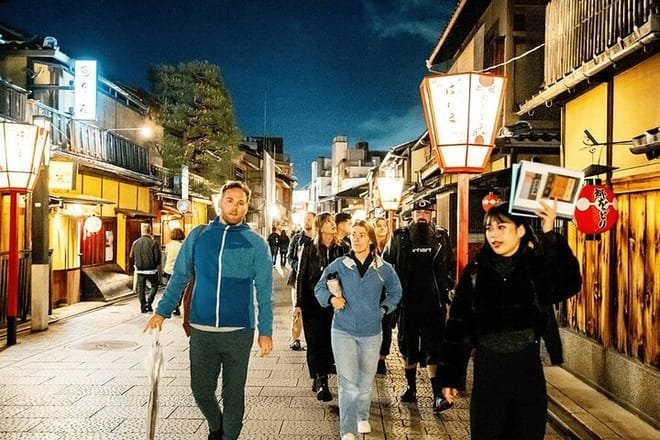
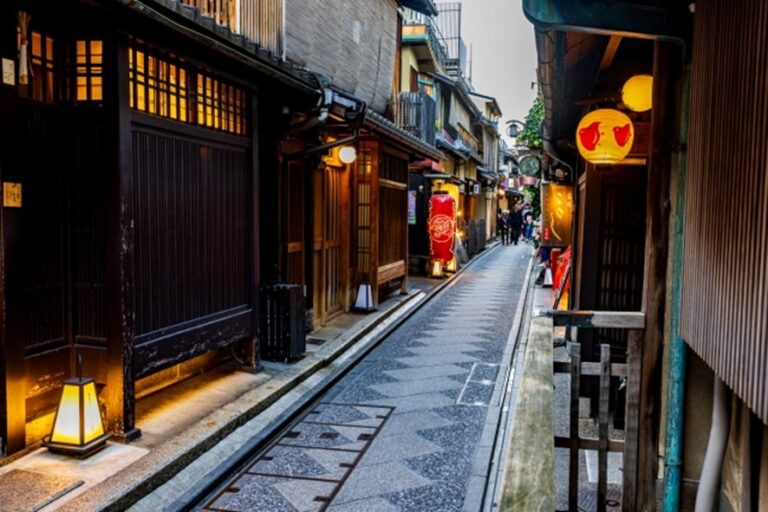
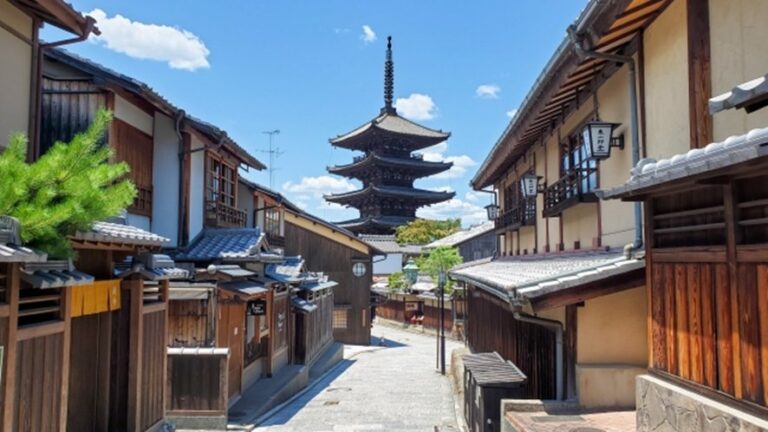
Japan Guide Star’s “Kyoto Gion Private Tour: Geisha Culture and Hidden Streets” is an alternative to the 5 pm Gion tour in the itinerary for those who prefer to explore with their own group. Over approximately two hours, a guide will take you through Gion’s lanes, shrines, and streets lined with traditional wooden townhouses. Groups of up to 10 people can book the tour.
With no other participants, you can take breaks and explore at your own pace, making this a convenient option for families with children. The meeting point is in front of McDonald’s Shijo-Ohashi, and the tour is available in English or Spanish.
Details
| Meeting point | 105-1 Hashimoto-cho, Shijo-kobashi Higashi-iru, Shimogyo-ku, Kyoto, Kyoto Prefecture, in front of McDonald’s Shijo-Ohashi |
| Duration | About 2 hours |
| Price includes | Private local guide (English or Spanish) |
| Booking site | https://japanguidestar.com/tour/kyoto-gion-private-tour-geisha-culture-and-hidden-streets/ |
| Recommended for | Travelers who want to explore Gion with just their family or friends |
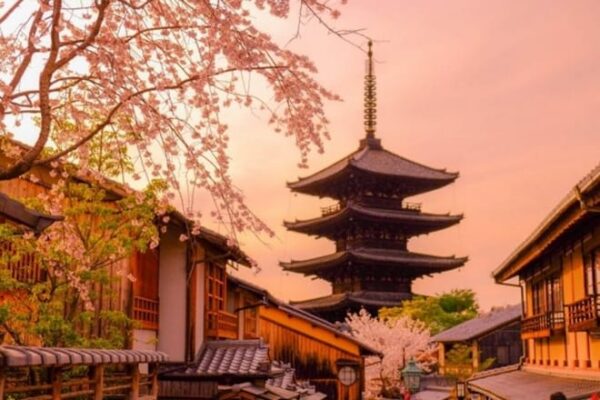
Kyoto: Gion Geisha District Sunset Tour in Spanish and en Español
Nijo Castle: A Tour Including Admission That You Can Take Instead of Arashiyama
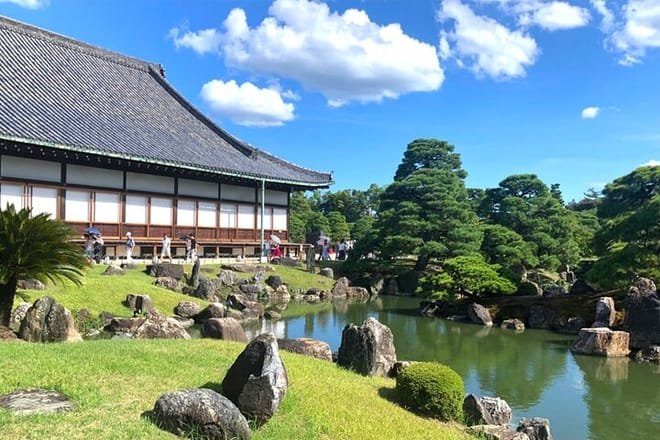
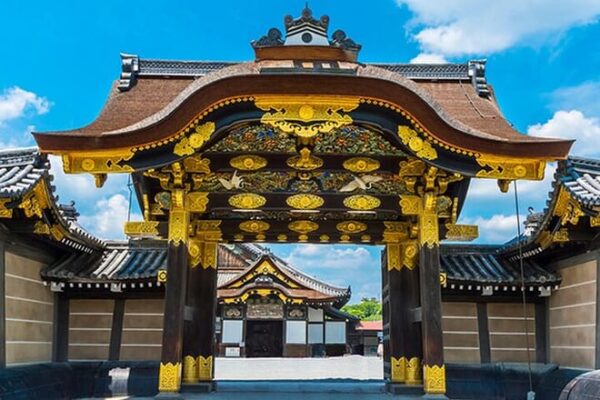
Japan Guide Star’s “Kyoto: Nijo Castle World Heritage Guided Tour with Admission” is an alternative to the noon Arashiyama walking tour and the 2:00 pm chopstick-making workshop in the itinerary. Take City Bus Route 12 from Kinkaku-ji to the Nijojo-mae bus stop to join the tour starting at 12:30 pm. In a group of up to 10 people, you will spend approximately an hour and a half exploring Nijo Castle, built by Tokugawa Ieyasu. Admission is included in the tour price, and you will need to remove your shoes when entering Ninomaru Palace.
The meeting point is outside Exit 1 of Nijojo-mae Station on the Tozai Subway Line. Reservations are unavailable on days when Ninomaru Palace is closed to visitors, including certain Tuesdays in December and January and the following day when a Tuesday closure falls on a national holiday. Reviewers often praise the guide’s English explanations of the castle’s history and details that visitors might otherwise overlook.
After the tour, you can take the subway toward Shijo and visit Nishiki Market, giving you time to explore the market before heading to Gion in the evening.
Details
| Meeting point | Nijojo-cho, Nakagyo-ku, Kyoto, Kyoto Prefecture, outside Exit 1 of Nijojo-mae Station on the Tozai Subway Line |
| Duration | About 1.5 hours |
| Price includes | English-speaking guide, castle admission |
| Booking site | https://japanguidestar.com/tour/kyoto-nijo-castle-world-heritage-guided-tour-with-admission/ |
| Recommended for | Travelers who want to spend less time walking outdoors on cold days, travelers interested in Japanese castles and history |
Kyoto: Nijo Castle World Heritage Guided Tour with Admission
FAQs About Kyoto in Winter

Finally, here are answers to some frequently asked questions about visiting Kyoto in winter.
Can You See Autumn Leaves in Kyoto in Early December?
Yes, in a few places. In a typical year, the autumn leaves at Tenryu-ji’s garden, Tofuku-ji, and Kiyomizu-dera often retain their color from mid-November to early December, so you may still see some foliage in the first few days of December.
Are There Warming Dishes to Try in Kyoto in Winter?
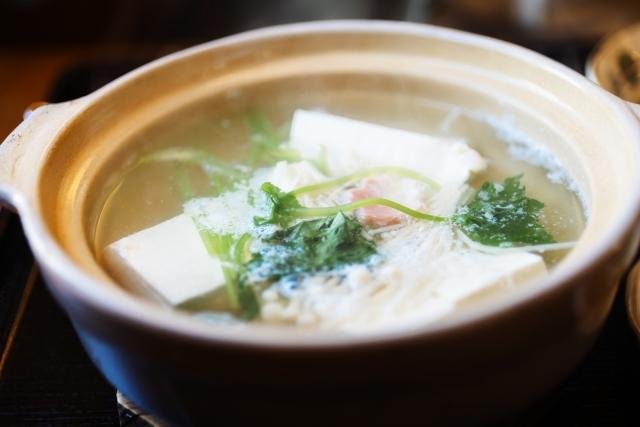
Yes. One option is yudofu, tofu gently simmered in kelp broth. Several restaurants near Tenryu-ji in Arashiyama serve yudofu, making it a convenient lunch choice after a chilly walk through the bamboo grove and gardens. You can also find yudofu restaurants along the approach to Nanzen-ji in eastern Kyoto.
Are There Indoor Places to Visit in Kyoto on Cold Winter Days?
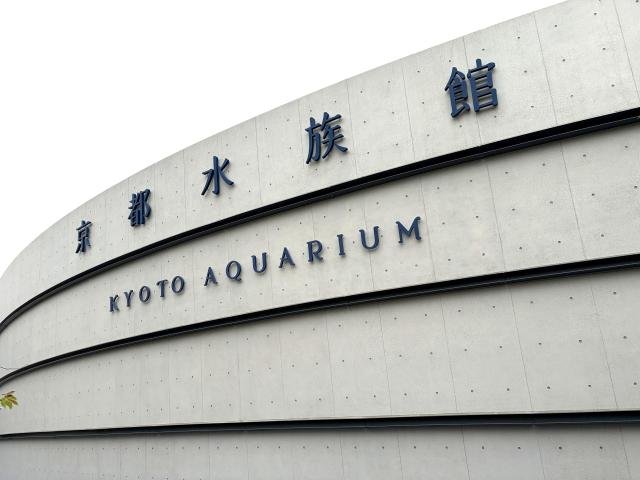
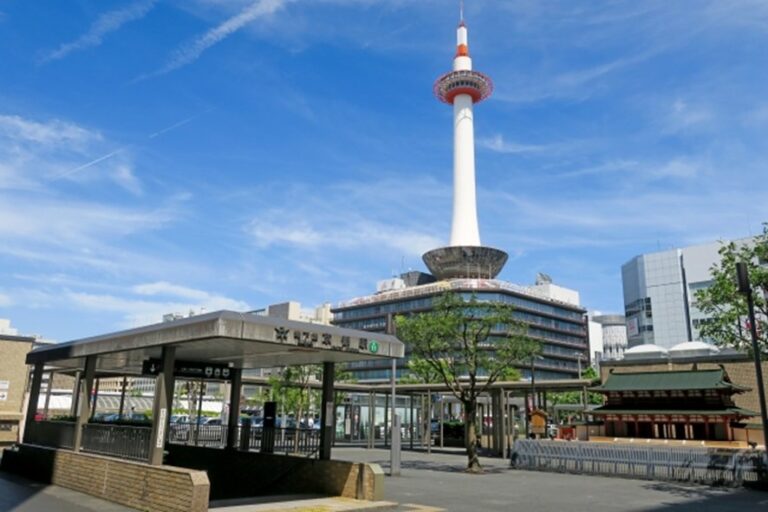
Yes. Near Kyoto Station, the Kyoto Railway Museum, where you can see actual train cars on display, and Kyoto Aquarium are located next to Umekoji Park. Both offer indoor exhibits, making them good options for a cold or rainy day.
Are Any Kyoto Sights Closed During the New Year Holidays?
Yes. Nijo Castle is closed from December 29 to 31, while Ninomaru Palace, a National Treasure within the castle grounds, is closed to visitors from December 26 to January 3. Some museums and art galleries also close over the New Year holidays, so check opening hours in advance when planning your itinerary.
Do Kyoto’s Trains and Buses Run Late at Night on New Year’s Eve?
It depends on the line. Many train and bus services do not operate throughout the night on New Year’s Eve, so you may not be able to return to your accommodation by public transport after late-night events.
If you plan to attend Okera Mairi or hear the temple bells, consider staying in Gion or Higashiyama, within walking distance of Yasaka Shrine and the temples in the area. Alternatively, check the last train and bus times for your routes in advance, and make sure you leave in time to catch them.
Head to Kyoto in Winter for Snowy Scenery and Seasonal Events
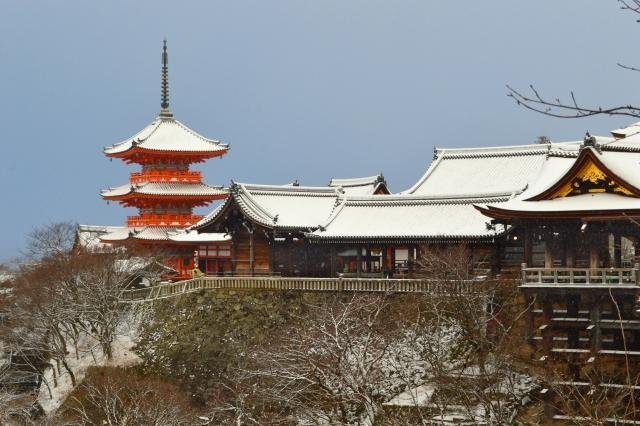
In winter, Kyoto offers seasonal scenery and events you can experience only at this time of year, from Kinkaku-ji covered in snow and vermilion lanterns at Kifune Shrine dusted with snow to Okera Mairi and temple bell ceremonies on New Year’s Eve, as well as outdoor tea ceremonies beneath the plum blossoms. To stay comfortable in the cold, wear a thick coat, warm socks, and slip-resistant shoes, and alternate outdoor walks with indoor activities.
Accommodation can fill up quickly around popular events and the New Year holidays, so book as soon as your travel dates are set. If you hope to see snowy scenery, check the latest weather and snow conditions before heading out, and plan to visit early in the morning after snowfall. For New Year’s Eve events, check train and bus schedules in advance so you can plan your journey back to your accommodation.
Kyoto Arashiyama Chopstick Making Workshop