Deciding what to prioritize during a half-day visit to Arashiyama can be challenging.
With major attractions such as the Bamboo Grove and Togetsukyo Bridge spread across the area, attempting to see everything often results in a rushed and less enjoyable experience.
Arashiyama naturally divides into a northern and southern section. Focusing on just one side allows for a more comfortable visit of around 3–4 hours, with greater flexibility in timing, pacing, and optional add-ons to suit your schedule.
This approach also leaves the remaining half of the day free for exploring other parts of Kyoto at a relaxed pace.
What to Know Before Planning Your Half-Day Arashiyama Itinerary
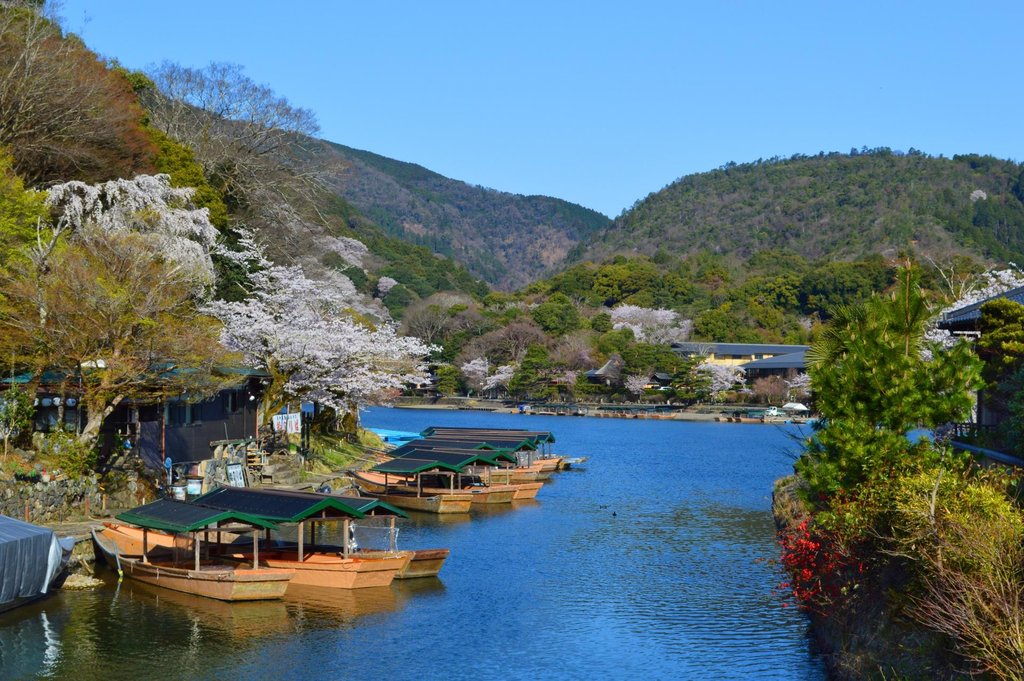
Without a bit of advance planning, Arashiyama can quickly eat up your time. Understanding the area layout, ideal arrival times, basic budget considerations, and the best station to start from makes choosing a route much easier and helps ensure a smoother, more enjoyable visit.
Arashiyama’s Attractions Split into North and South
Arashiyama’s main attractions fall into two distinct areas: north and south. Understanding this basic layout makes route planning much easier.
The north side is home to Tenryuji Temple, the Bamboo Grove, and other spots where temples and nature sit side by side. It suits visitors who want to take their time enjoying gardens and mountain scenery.
The south side centers on Togetsukyo Bridge and includes Arashiyama Monkey Park, hands-on workshops, and lively streets. It’s ideal for photography, activities, and a more energetic atmosphere.
The two areas are about a 15–20 minute walk apart, and crowds can slow you down further. For a half day of 3–4 hours, three to four spots plus one meal is a realistic target.
Focusing on one area is the most effective way to enjoy a half-day visit without feeling rushed.
Arrive by 8 am to Beat the Crowds
To photograph the Bamboo Grove without other visitors in your frame, aim to arrive by around 8 am.
At that hour, both the Bamboo Grove and the Togetsukyo Bridge area are still quiet. Tenryuji Temple’s garden opens at 8:30 am, so you can begin your visit almost immediately afterward.
By around 10 am, when tour buses start arriving, the main sights begin to fill up. Arriving at 8 am gives you roughly two uninterrupted hours before the main crowds arrive.
An afternoon start is also possible, but expect peak congestion between 10 am and 2 pm.
| Time | Crowd Level |
|---|---|
| 6:00–8:00 am | Nearly empty |
| 8:00–10:00 am | Relatively quiet |
| 10:00 am–2:00 pm | Peak crowds |
| 2:00–5:00 pm | Somewhat calmer but still busy |
Weekends during cherry blossom and autumn foliage seasons are the exception, early mornings can still be crowded, so visiting on a weekday or arriving by 7:00 am is a safer option.
If you plan an early weekend start, check train schedules the night before. A light breakfast at your hotel can help keep your morning moving smoothly.
¥5,000 in Cash Is Plenty for a Half Day
About ¥5,000 (roughly $35 USD) in cash is enough for a comfortable half-day visit to Arashiyama.
The Bamboo Grove and Togetsukyo Bridge are free to visit, so most expenses will go toward temple admission fees and food.
| Item | Approximate Cost |
|---|---|
| Tenryuji Temple garden admission | ¥500 |
| Okochi Sanso Garden admission (includes matcha) | ¥1,000 |
| Jojakko-ji Temple admission | ¥600 |
| Street food and snacks | ¥1,000–2,000 |
| Total | Around ¥3,000–4,000 |
Many temples operate on a cash-only basis, and a number of street food vendors also do not accept card payments. Carrying a little extra cash helps avoid any last-minute inconvenience.
Optional experiences such as a rickshaw ride (approximately ¥8,000 for 30 minutes for two people) or a Hozu River cruise (¥6,000 per adult) require a separate budget.
Your Starting Station Depends on Your Route
The station you choose depends on your planned route. For the north route, JR Saga-Arashiyama Station is the most convenient starting point. For the south route, Hankyu Arashiyama Station is the closest. It is best to decide your route first, then select the appropriate train line.
| Station | Access and Travel Time | One-Way Fare |
|---|---|---|
| JR Saga-Arashiyama | About 17 min. from Kyoto Station | ¥240 |
| Hankyu Arashiyama | 20–30 min. from Kyoto-Kawaramachi Station (transfer at Katsura) | ¥240 |
| Randen Arashiyama | About 25 min. from Shijo-Omiya Station (direct) | ¥250 |
JR Saga-Arashiyama Station is closest to the Bamboo Grove and Tenryuji Temple, making it a natural starting point for the north route. Hankyu Arashiyama Station opens directly near Togetsukyo Bridge, making it ideal for the south route. Randen Arashiyama Station sits between the two and can be used for either direction.
If you are carrying heavy luggage, it is recommended to store it at Kyoto Station or your accommodation before heading out. Coin lockers in the Arashiyama area are limited and often fill up by mid-morning.
Traveling with only a small bag makes a half-day visit significantly more comfortable. Arashiyama also pairs well with other Kyoto neighborhoods if you are planning a full-day itinerary.
Arashiyama Itinerary 1: Temples and Gardens on the North Side (Half Day)
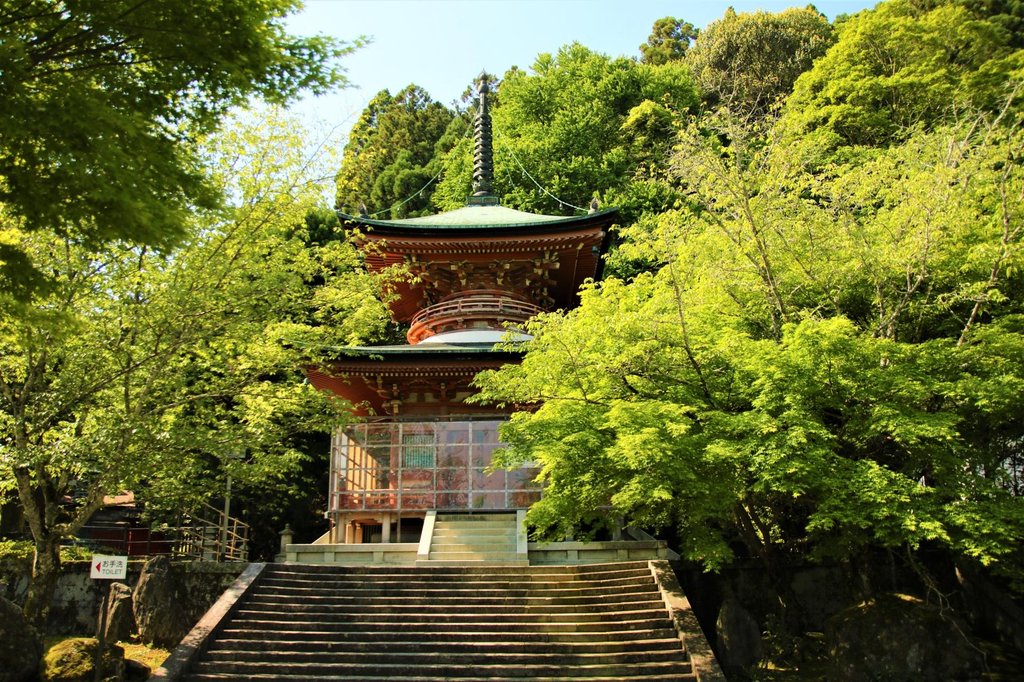
The north side of Arashiyama clusters a UNESCO World Heritage–listed temple, a famous bamboo-lined path, and serene gardens all within walking distance. A four-stop route covers the main attractions in roughly 3.5–4 hours.
Tenryuji Temple | A UNESCO Garden Leading Straight into the Bamboo Grove
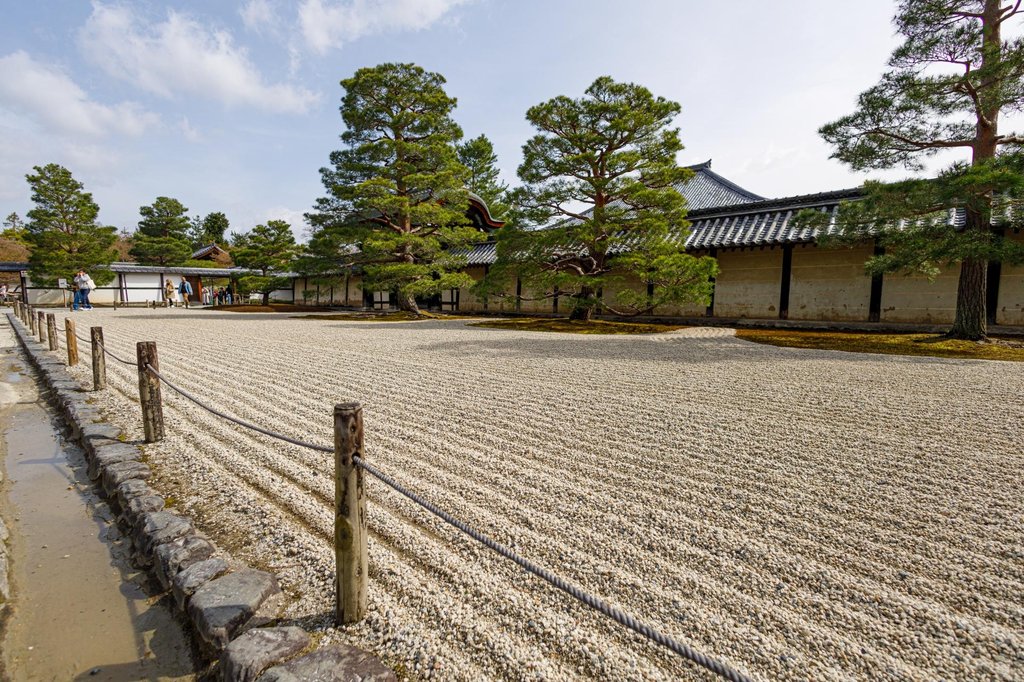
The north route begins at Tenryuji Temple, a UNESCO World Heritage site founded in 1339. The Sogenchi Garden is renowned for its shakkei (borrowed scenery) technique, incorporating the ridgeline of the Arashiyama mountains as part of the garden’s composition. The boundary between nature and human artistry is almost invisible.
For a half-day visit, the garden-only admission (¥500) is the best option. Touring the temple’s interior halls requires extra time, so focusing on the garden helps keep the itinerary on schedule.
After exploring the garden, exit through the north gate, which leads directly into the Bamboo Grove. There is no need to return to the main entrance. Note that re-entry is not permitted once you leave through the north gate, so it is best to take your time inside before exiting.
The gate opens at 8:30 am, and about 40 minutes is enough to appreciate the garden. In autumn, early-morning special viewings are sometimes offered, so checking the official website in advance is recommended.
Details
| Address | 68 Saga-Tenryuji Susukinobaba-cho, Ukyo-ku, Kyoto |
| Hours | 8:30 am–5:00 pm (last entry 4:50 pm) |
| Closed | Open year-round |
| Official Website | https://www.tenryuji.com/ |
| Best for | Visitors who want to experience a stunning traditional garden and UNESCO site in a short time |
Kyoto: Arashiyama UNESCO Walking Tour with Admission
Arashiyama Bamboo Grove | Walk Through a 400-Meter Tunnel of Bamboo
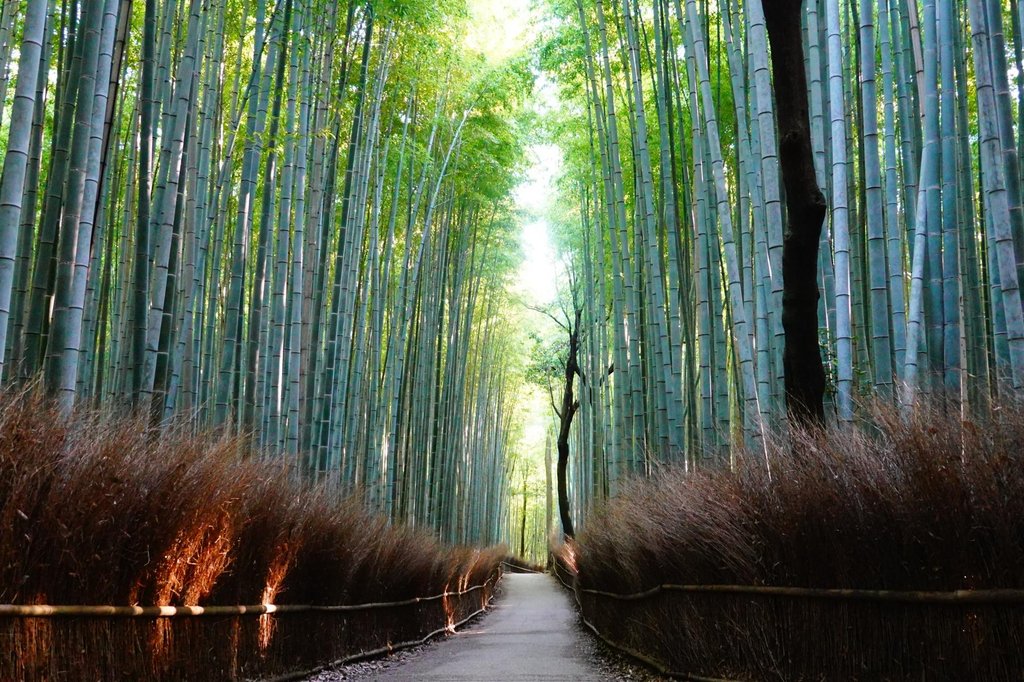
Exiting Tenryuji’s north gate, you step directly into the Bamboo Grove.
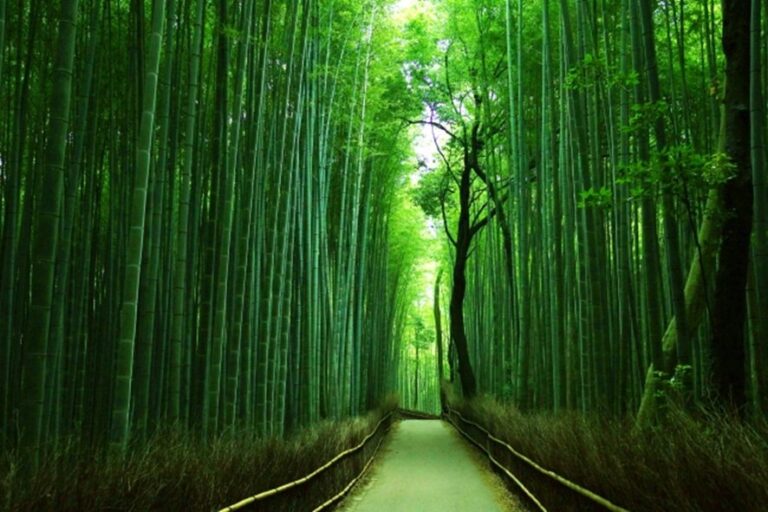
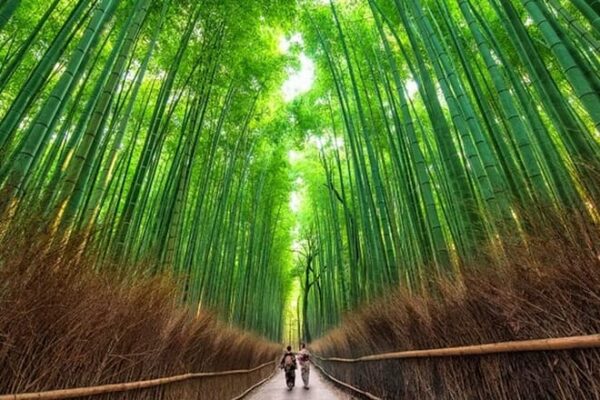
Towering moso (thick-culmed) bamboo lines both sides of the roughly 400-meter (about 1,300-foot) path, reaching heights of 10–20 meters (33–66 feet). Walking beneath the green canopy, you hear the distinctive creaking of bamboo swaying in the wind, a world away from the city.
The grove is open 24 hours and free to enter. Walking one way to the Okochi Sanso end takes about 15 minutes, making it easy to fit into any schedule.
The main challenge is timing. Between 9 and 11 am, the path fills with visitors, making it difficult to stop for photos.
For unobstructed shots of the grove, an early morning visit between 6 and 7 am is ideal. The quiet rustle of bamboo in the morning stillness is an experience in itself.
Details
| Address | Saga-Ogurayama Tabuchiyama-cho, Ukyo-ku, Kyoto |
| Hours | Open 24 hours |
| Closed | None |
| Official Website | Not listed |
| Best for | Anyone who enjoys iconic Kyoto scenery at a relaxed pace; early risers looking for a serene morning walk |
Okochi Sanso Garden | Sip Matcha While Taking in the Mountain Panorama
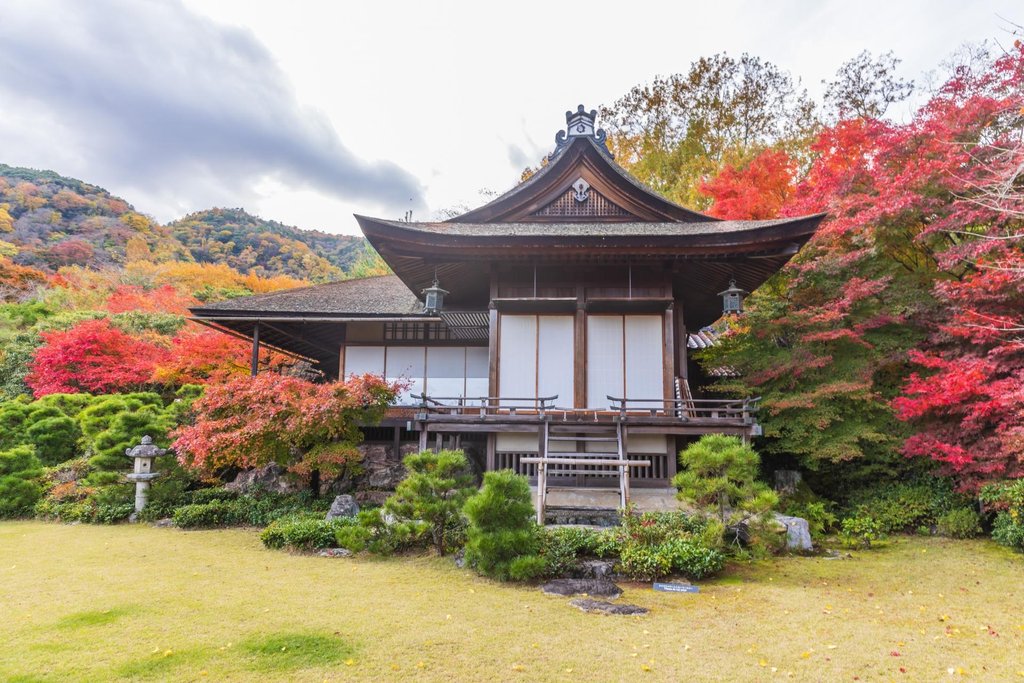
Just beyond the Bamboo Grove lies Okochi Sanso, a strolling garden that Showa-era (mid-20th century Japan) film star Denjiro Okochi spent nearly 30 years creating. He devoted most of his income to the project, and the result is a garden of exceptional beauty and care.
From the garden’s elevated paths, sweeping views extend across the Hozu Gorge to Mt. Hiei. The scenery changes beautifully with the seasons, from fresh spring greenery to vivid autumn foliage.
The ¥1,000 admission includes matcha and rakugan (a traditional pressed dry confection). After walking through the garden, visitors can sit in the tea pavilion, enjoy the mountain view, and rest their legs. It makes an ideal midpoint break on the route.
Allow around 40–50 minutes to explore the garden and enjoy the tea without rushing. The entrance on the Bamboo Grove side is easy to find.
Details
| Address | 8 Saga-Ogurayama Tabuchiyama-cho, Ukyo-ku, Kyoto |
| Hours | 9:00 am–5:00 pm (last entry 4:30 pm) |
| Closed | Open year-round |
| Official Website | Not listed (Phone: 075-872-2233) |
| Best for | Visitors who want garden beauty and a matcha experience in one stop |
Jojakko-ji Temple | Stroll Through a Maple-Covered Hillside
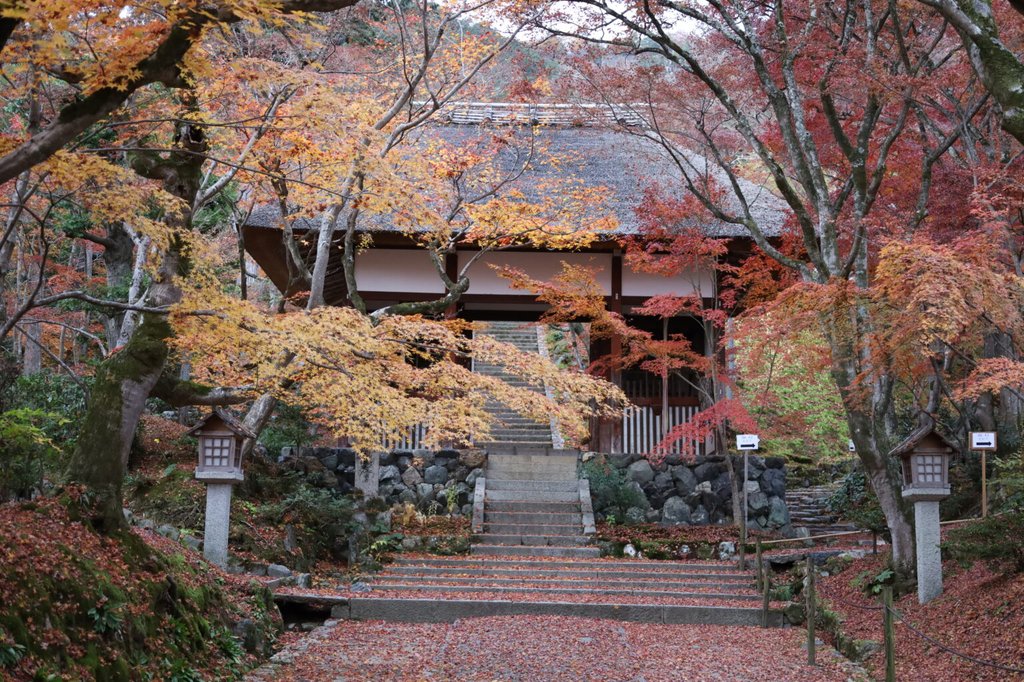
The turnaround point of the north route is Jojakko-ji Temple, perched on the slopes of Mt. Ogura.
About 200 maple trees fill the temple grounds, painting the hillside in gradients of red and gold from late November onward. Jojakko-ji is widely regarded as one of the finest fall foliage spots in all of Arashiyama.
The standout feature is the tahoto (a two-storied pagoda), an Important Cultural Property, reached by climbing a stone staircase. Whether framed by autumn leaves, spring greenery, or moss-covered stones, the pagoda is always striking. A visit takes about 30 minutes.
Ending the route at Jojakko-ji wraps up the north side in roughly 3.5 hours, leaving the afternoon open for another part of Kyoto. If time allows, a 15-minute walk to Gio-ji Temple leads to a tranquil moss garden that is well worth the detour.
Details
| Address | 3 Saga-Ogurayama Ogura-cho, Ukyo-ku, Kyoto |
| Hours | 9:00 am–5:00 pm (last entry 4:30 pm) |
| Closed | None |
| Official Website | https://www.jojakko-ji.or.jp/ |
| Best for | Visitors seeking spectacular fall foliage or fresh greenery in a peaceful setting |
Arashiyama Itinerary 2: Activities and Street Food on the South Side (Half Day)
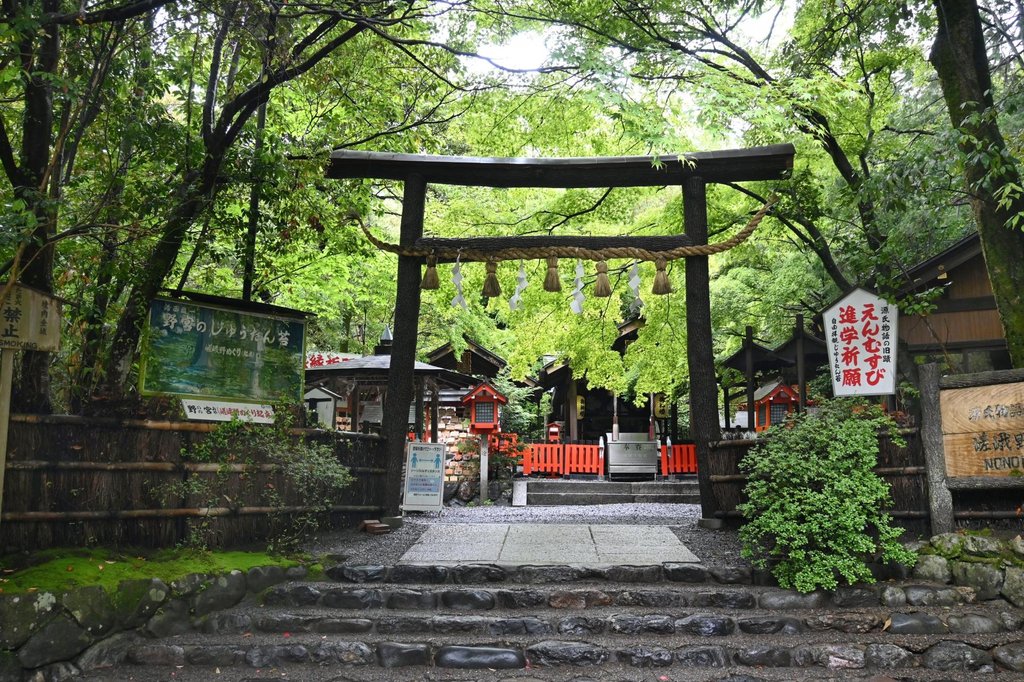
If you prefer hands-on activities and street food over quiet contemplation, the south side is the better fit.
Photography, animal encounters, craft workshops, and local food experiences can all be combined into a flexible half-day route that works well with either a morning or afternoon start.
Togetsukyo Bridge | Capture Arashiyama’s Signature View
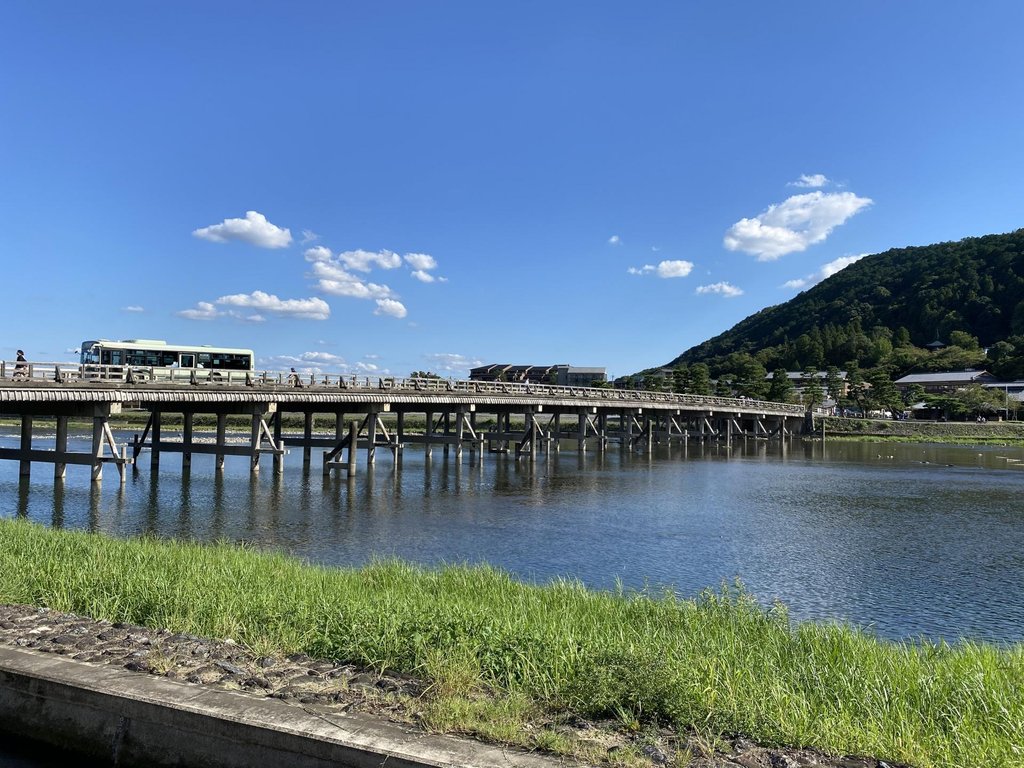
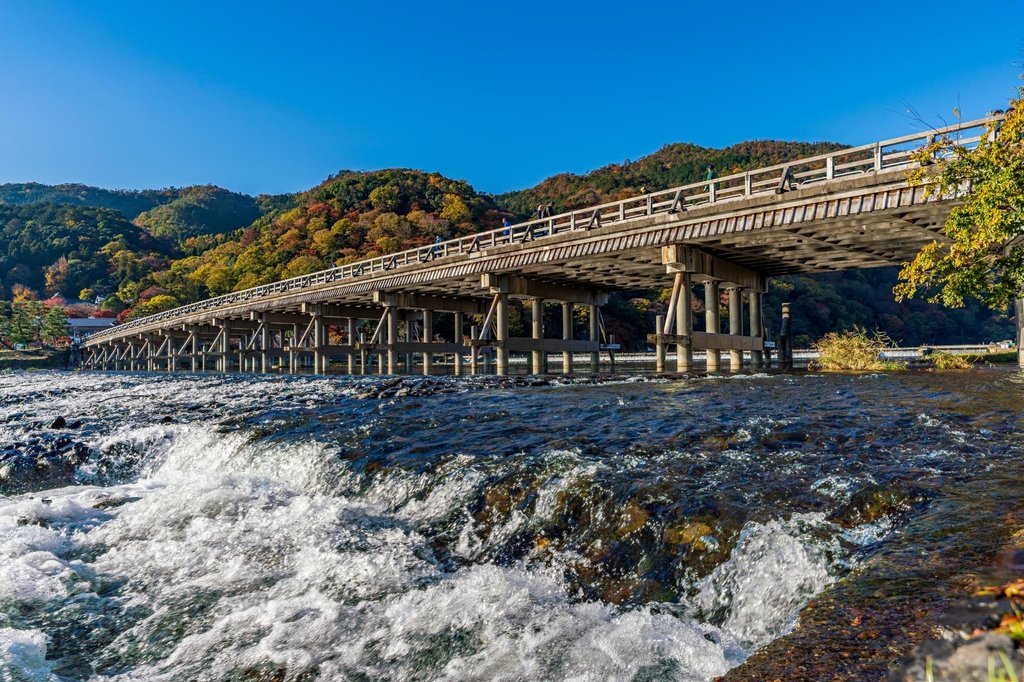
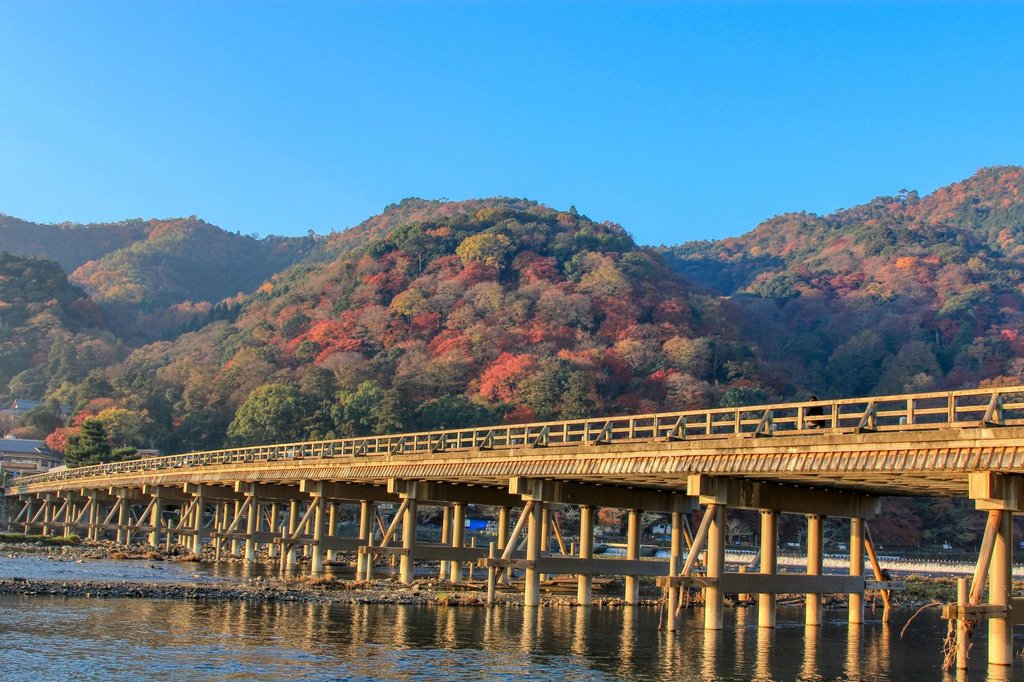
The south route begins at Togetsukyo Bridge, Arashiyama’s most recognizable landmark. A 5-minute walk from Hankyu Arashiyama Station, the 155-meter (about 510-foot) bridge is free to cross and easy to enjoy at a relaxed pace.
For photography, the time of day makes a noticeable difference. In the morning, shooting from the east bank of the Katsura River places the bridge and mountains in direct sunlight, bringing out vivid greens or autumn colors. In the afternoon, backlighting creates a dramatic silhouette of the bridge against the sky. Arriving around 8 am means fewer visitors and an easier time composing your shot.
From the center of Togetsukyo Bridge, the Katsura River opens into a wide panorama that shifts with the seasons. About 15 minutes is enough for photos and a walk across, so you can continue directly to Arashiyama Monkey Park afterward.
Details
| Address | Saga-Tenryuji Susukinobaba-cho, Ukyo-ku, Kyoto |
| Hours | Open 24 hours |
| Closed | None |
| Official Website | Not listed (public bridge managed by Kyoto City) |
| Best for | Anyone who wants a classic Arashiyama photo in just a few minutes |
Arashiyama Monkey Park | Feed Wild Japanese Macaques at the Summit
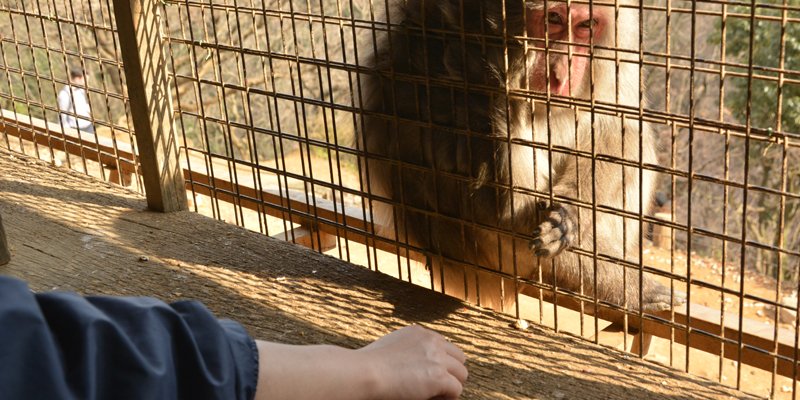
The entrance to Monkey Park is through the torii (traditional shrine gate) of Ichitani Munakata Shrine, about a 2-minute walk from the southern end of Togetsukyo Bridge.
After the ticket booth, an unpaved trail climbs to the summit at an elevation of about 160 meters (around 525 feet), a hike that takes roughly 15–20 minutes. Wear sturdy sneakers, as the path consists of uneven dirt and stone. The park may close in bad weather.
At the top, around 120 wild Japanese macaques roam freely. Feeding is permitted only inside the hilltop rest house, where visitors hand food to the monkeys through a wire mesh enclosure. Bags of feed cost ¥100 each, and bringing outside food for the monkeys is not allowed.
The rest house also offers a panoramic view of Kyoto’s cityscape, making the climb worthwhile even without interacting with the monkeys.
Allow 60–90 minutes for the round trip, including time at the summit. If the hike feels too demanding, it is perfectly reasonable to skip Monkey Park and spend more time on workshops or food experiences instead.
Details
| Address | 61 Arashiyama Nakaoshita-cho, Nishikyo-ku, Kyoto |
| Hours | 9:00 am–4:00 pm (summit area open until 4:30 pm) |
| Closed | Irregular closures (closed Jan. 1; may close in severe weather) |
| Official Website | http://monkeypark.jp |
| Best for | Animal lovers; families with children; anyone who wants hilltop views of Kyoto |
Chopsticks Studio Kyoto | Carve Your Own Pair of Chopsticks
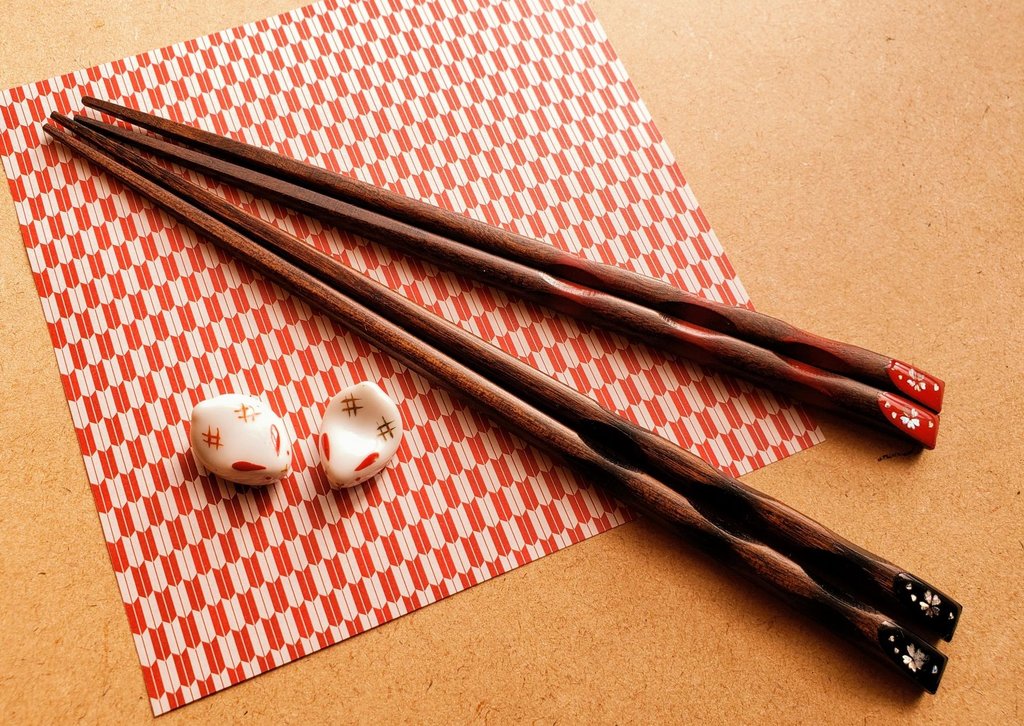
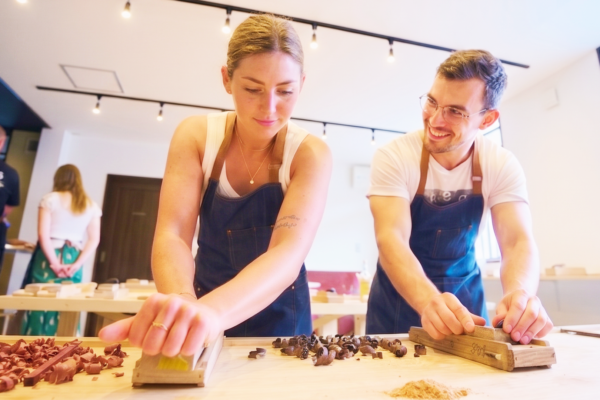
About a 10-minute walk from Monkey Park and just steps from Randen Arashiyama Station, this workshop lets you craft your own pair of chopsticks by hand.
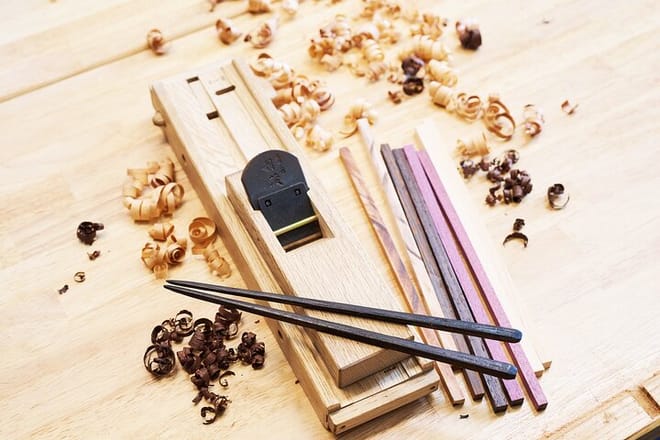
Choose from more than 12 types of wood and shape a single pair using a hand plane. The session takes about 60 minutes, and you take your finished chopsticks home the same day, a practical souvenir that brings Arashiyama to the dinner table.
English-language instruction is available; simply select your preferred language when booking. The experience costs ¥3,000 per person (tax included), and reservations can be made instantly online. Weekend slots fill up quickly, so booking as soon as your travel dates are confirmed is recommended.
Because the workshop takes place indoors, rain will not affect your plans, making Chopsticks Studio Kyoto a reliable option in wet weather. After the session, a stroll along Nagatsuji-dori in search of street food is a pleasant way to round out the south route in 3–4 hours.
Details
| Address | 3-25 Saga-Tenryuji Susukinobaba-cho, Ukyo-ku, Kyoto, 2F |
| Hours | 9:00 am–7:00 pm |
| Closed | Open year-round |
| Official Website | https://japanguidestar.com/collections/all-product (Booking Page) |
| Best for | Visitors looking for a unique handmade souvenir; craft-experience enthusiasts |
Kyoto Arashiyama Chopstick Making Workshop
Nagatsuji-dori | Eat Your Way Down Arashiyama’s Main Food Street
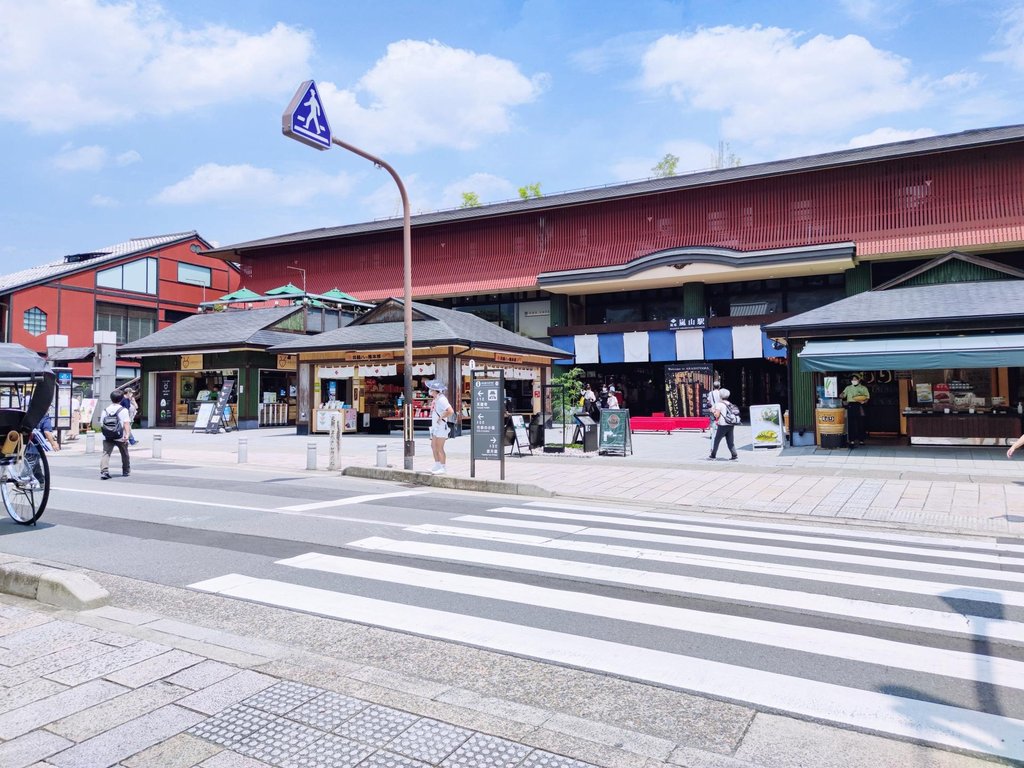
Running between Randen Arashiyama Station and Togetsukyo Bridge, Nagatsuji-dori is one of Arashiyama’s main food streets.
Matcha soft-serve ice cream, croquettes, and other handheld snacks line both sides of the street. Each stop typically takes just 5–10 minutes, making it easy to sample a variety of foods without disrupting the rest of your itinerary.
For a sit-down meal, look for restaurants along the street serving Kyoto specialties such as yudofu (simmered tofu). Many remain open past 2 pm, giving visitors flexibility in planning lunch. Allow around 30–45 minutes for a seated meal.
Restaurants and shops on Nagatsuji-dori change periodically, so checking the latest information online before your visit is recommended.
South Route Timetable
| Spot | Morning Start | Afternoon Start |
|---|---|---|
| Togetsukyo Bridge (15 min.) | 9:00–9:15 am | 1:00–1:15 pm |
| Walk (5 min.) | 9:15–9:20 am | 1:15–1:20 pm |
| Monkey Park (60–90 min.) | 9:20–10:50 am | 1:20–2:50 pm |
| Walk (10 min.) | 10:50–11:00 am | 2:50–3:00 pm |
| Chopstick Workshop (60 min.) | 11:00 am–12:00 pm | 3:00–4:00 pm |
| Meal on Nagatsuji-dori (15–45 min.) | 12:00–12:45 pm | 4:00–4:15 pm |
Time at Monkey Park can vary by about 30 minutes depending on crowd levels. Adjust by choosing a quick street-food stop (15 min.) or a sit-down meal (45 min.) to keep the total route within 3–4 hours.
Four Ways to Customize Your Half-Day Arashiyama Itinerary
Both base routes can be tailored to your interests, the season, and your budget. Four popular add-ons—a kimono-and-rickshaw experience, a scenic train ride, evening illuminations, and a signature meal—fit easily into the half-day framework without requiring major changes to the plan.
Explore the Bamboo Grove in a Kimono and Rickshaw
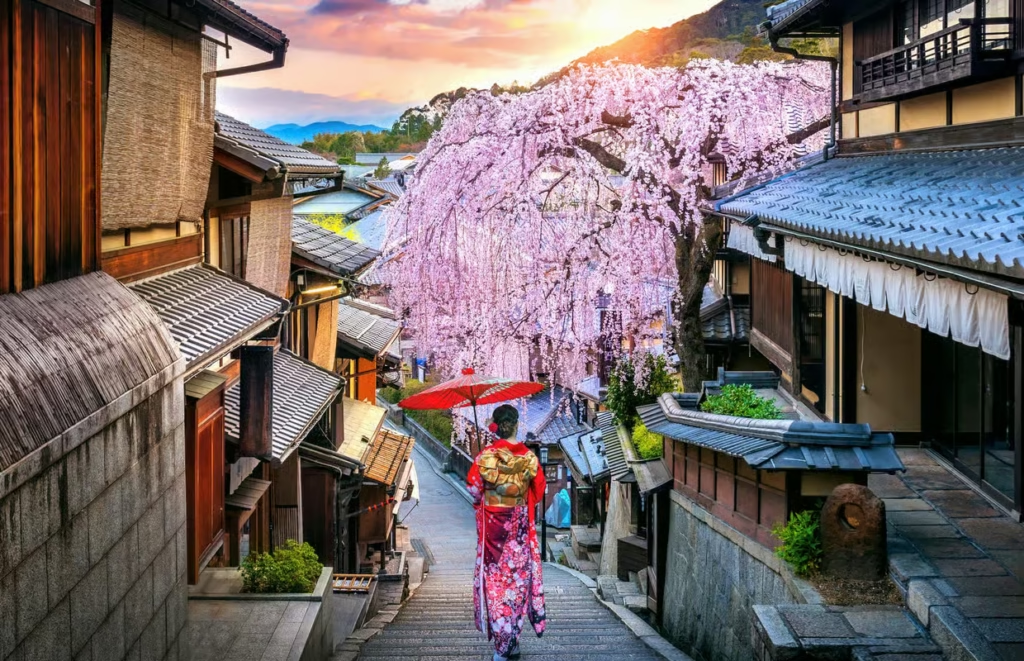
Combining a kimono rental with a rickshaw ride transforms a standard half-day route into a premium experience. Getting dressed typically takes about 45 minutes.
From the Togetsukyo Bridge area, the rickshaw carries you past Tenryuji Temple and through the Bamboo Grove while a guide provides commentary along the way. Major operators offer English-speaking guides, and many include photo services at scenic spots, allowing you to capture professional-quality images without having to set up your own camera.
Plan for 3.5–4 hours from getting dressed to returning the kimono. Return deadlines are the main consideration.
- Most rental shops require kimonos to be returned by 4:30–5:30 pm
- In autumn and winter (November–February), daylight fades by around 4 pm, reducing photo opportunities
- Weekend and autumn foliage season slots fill quickly, so booking at least two days in advance is recommended
If you are planning an afternoon start in autumn or winter, begin dressing by noon at the latest. This leaves enough time to enjoy the Bamboo Grove and surrounding sights at a relaxed pace without having to rush to meet return deadlines.
Ride the Scenic Railway and Cruise Down the Hozu River
A round-trip combination of the Sagano Scenic Railway (Torokko) and the Hozu River cruise takes about 3.5–4 hours in total.
The scenic train runs from Torokko Saga Station to Torokko Kameoka Station in approximately 25 minutes. From there, a bus takes passengers to the boat launch, and the roughly two-hour cruise returns downstream to Arashiyama. Because this itinerary fills an entire half day, careful time management is important.
- All seats on the scenic train are reserved; tickets go on sale one month before the ride date
- A one-way ticket costs ¥880 for adults; the open-air car is standing-only, available only as same-day tickets at the station
- The train does not run on Wednesdays as a rule; late December through the end of February is a full shutdown
- Check the official website for Hozu River cruise pricing and reservations
The current Torokko rolling stock is scheduled to make its final runs during fiscal year 2026, with new carriages debuting in spring 2027. For many visitors, this represents one of the last opportunities to ride in the classic trains.
Buses from Torokko Kameoka Station to the boat launch operate roughly every 15 minutes, but connections are limited. Confirming train, bus, and boat schedules on the official website in advance is strongly recommended.
Start in the Afternoon and Stay for the Kimono Forest at Night
Arriving in Arashiyama between 1 and 2 pm allows you to combine daytime sightseeing with evening illuminations in a single visit. Since most attractions close relatively early, it is best to begin exploring as soon as you arrive.
Tenryuji Temple’s garden accepts visitors until 4:50 pm, and Arashiyama Monkey Park’s last admission is at 4:30 pm. Whichever route you choose, aim to finish the main sightseeing spots by around 3–4 pm.
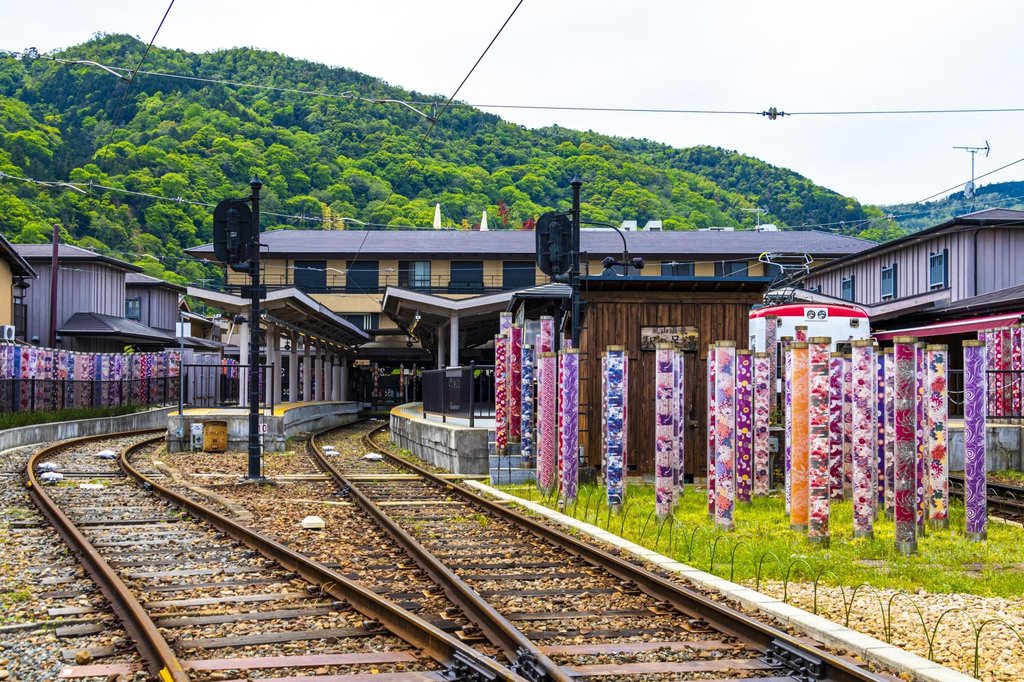
After sunset, head to the Kimono Forest inside Randen Arashiyama Station. About 600 pillars wrapped in Kyo-Yuzen (traditional Kyoto-dyed fabric) light up until 9 pm, turning the station into a glowing corridor. The best photo moment is just after sunset, when the fading sky and the pillar lights create a striking contrast.
Dining options near the station become more limited in the evening. After visiting the Kimono Forest, continuing toward Shijo-Omiya will give you access to a wider selection of restaurants.
The contrast between daytime and nighttime Arashiyama is one of the area’s most memorable qualities and is well worth extending your visit to experience.
Turn Lunch into a Signature Arashiyama Dining Experience
Elevating your Arashiyama meal from a quick bite to a memorable highlight of your visit is another way to enrich a half-day itinerary.
One option is shojin ryori (Buddhist vegetarian cuisine) at Shigetsu, located within the grounds of Tenryuji Temple. Combining a garden visit and a meal in a single seamless experience is one of Shigetsu’s greatest appeals. Operating hours and reservation availability vary by season, so it is best to confirm details in advance.
Another option is Bread, Espresso & Arashiyama Garden, a café housed in a Registered Tangible Cultural Property. Guests dine on tatami (woven straw mat) floors while looking out over a Japanese garden. The café is just a short walk from Tenryuji Temple and also serves breakfast sets from 8 am.
Both venues become crowded on weekends and during the autumn foliage season. Bread, Espresso & Arashiyama Garden does not accept reservations, so adding your name to the waiting list as soon as you arrive is recommended. You can explore the surrounding area while waiting for a table. If time is limited, joining the waiting list immediately upon arrival and sightseeing in the meantime is an efficient approach.
Common Questions About Half-Day Arashiyama Itineraries

Seasonal timing, rainy-day strategies, and how to combine both routes are among the most common planning questions for a half day in Arashiyama.
When Is the Best Time to See Cherry Blossoms and Fall Foliage?
Cherry blossoms typically reach their peak from late March to early April, while autumn foliage is at its best from mid-November to early December.
Both seasons attract large crowds, so arriving by 8:30 am is highly recommended. For any attractions or experiences that accept advance reservations, book as early as possible.
For a quieter visit, early summer (May–June) is an excellent alternative, when fresh bamboo shoots, vibrant greenery, and lush moss create a different but equally appealing atmosphere.
Below is a summary of seasonal highlights:
| Season | What to See | Crowd Level |
|---|---|---|
| Cherry blossoms (late Mar–early Apr) | Cherry trees along Togetsukyo Bridge and Nakanoshima Park | Very high |
| Early summer (May–Jun) | Fresh green bamboo; vivid moss | Low (a lesser-known window) |
| Fall foliage (mid-Nov–early Dec) | Maples at Jojakko-ji Temple and Tenryuji Temple | Very high |
Can I Still Enjoy the Half-Day Itinerary on a Rainy Day?
A rainy day does not ruin a half-day visit to Arashiyama.
At Tenryuji Temple, switching to the interior hall tour allows you to admire the garden from under cover. The Okochi Sanso rest house, and even the Bamboo Grove, take on a moody, atmospheric quality in the rain.
On the south route, the indoor chopstick workshop is a convenient rain-proof option. Bring comfortable walking shoes and a compact umbrella.
The Hozu River cruise may be suspended during heavy rain or high water levels, so it is important to check the day’s operating status in advance.
Kyoto Arashiyama Chopstick Making Workshop
Can I Combine Both Routes in a Single Day?
Starting at 8:30 am, covering both routes in one day is very doable. Including lunch, 8–9 hours is enough to see everything at a comfortable pace.
| Time | What to Do |
|---|---|
| 8:30 am–12:00 pm | North route (Tenryuji → Bamboo Grove → Okochi Sanso → Jojakko-ji) |
| 12:00–1:00 pm | Lunch and a break around Nagatsuji-dori |
| 1:00–4:30 pm | South route (Togetsukyo Bridge → Monkey Park → Chopstick workshop → Street food) |
If you are renting a kimono, arrive at the shop by around 8 am. Most shops close returns by 5 pm, so keep the afternoon schedule compact.
Adjust the balance of your itinerary based on your interests and energy level:
- Temple enthusiasts: Spend more time on the north side and consider skipping Monkey Park on the south side
- Activity-focused visitors: Limit the north side to Tenryuji Temple and the Bamboo Grove, freeing up more afternoon time for hands-on experiences
If your legs get tired, a rickshaw ride between the two areas lets you rest while still moving efficiently.
A full day is enough to take in everything Arashiyama has to offer.
Are There English-Guided Tours of Arashiyama?
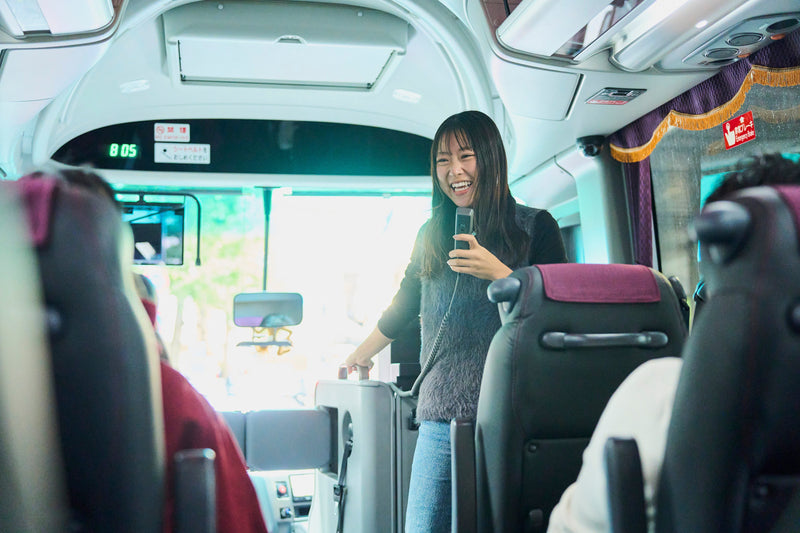
For an English-guided experience, the Japan Guide Star Arashiyama Walking Tour is a strong option.
The tour covers Arashiyama’s main attractions over about 90 minutes, including Tenryuji Temple’s garden, the Bamboo Grove, and Nonomiya Shrine, with commentary on history and culture along the way.
Tenryuji admission is included in the tour price, and the guide also points out photogenic spots and local souvenir shops. After the tour, you can optionally continue to Arashiyama Monkey Park (separate admission).
Departure times are available at 10 am, 12 pm, 2 pm, and 4 pm, and tours run in small groups. The tour is a good fit for first-time visitors who want to see the area efficiently or anyone interested in a deeper understanding of Arashiyama’s history and culture.
Kyoto: Arashiyama UNESCO Walking Tour with Admission
Plan Your Perfect Half Day in Arashiyama
The key to a great half-day in Arashiyama is choosing between the north side’s temple-and-garden route and the south side’s activities-and-food route.
Arriving by around 8:00 am helps you stay ahead of the crowds and leaves the afternoon open for exploring other Kyoto neighborhoods. Seasonal and weather-based adjustments can be easily incorporated once the basic plan is in place.
Choose your route, adjust for the season, and enjoy your own Arashiyama half-day experience.