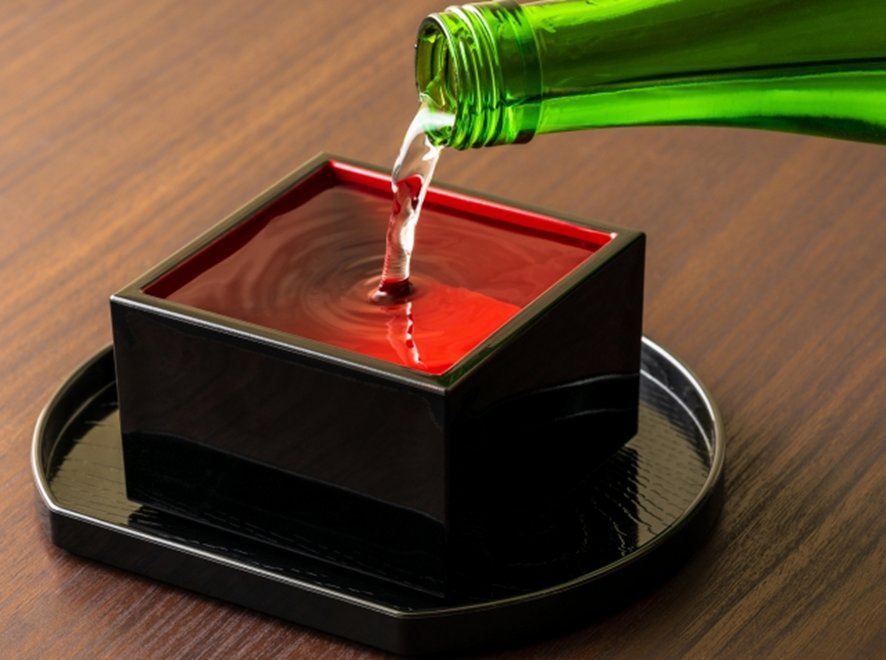
Ordering and paying at a Tokyo sake bar can work differently from a typical bar. Whether an English menu is available and whether you can walk in alone are just a few of the questions that often come up the first time.
Below are three recommended tours that let you visit sake bars with an English-speaking guide, plus two popular bars for anyone who prefers to explore independently. The guide also covers how payment works, how to choose a label, the differences between joining a tour and going solo, and answers to common questions.
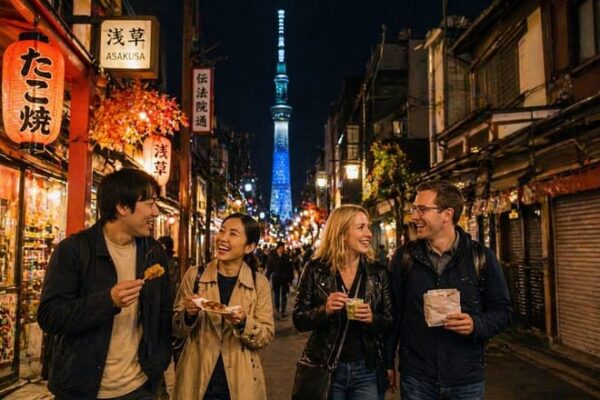
Asakusa: Guided Food Tour with 12 Dishes at 4 Local Eateries
The Short Answer: An English Guide Makes Your First Sake Bar Easy to Enter

“I don’t know which bar to pick” and “I might get stuck when ordering or paying” are natural concerns before a first sake bar visit. You have two options: join an English-guided tour that handles the bar selection and ordering for you, or choose and visit a bar on your own. Which option suits you depends on your experience with sake and what you want most from the evening.
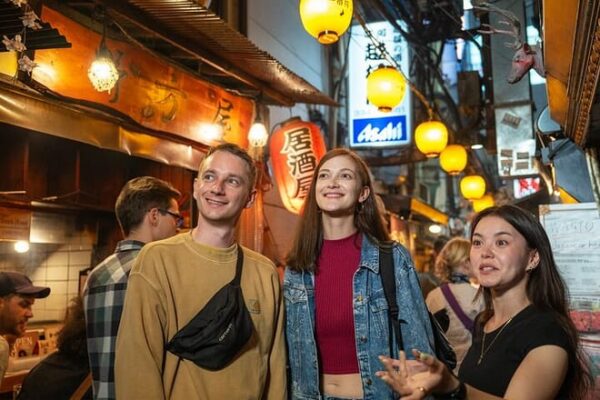
Shinjuku: Food Tour – 15 Dishes at 4 Eateries
Leave the Bar Selection, Reservations and Ordering to Someone Else
If you have never set foot in a sake bar, a food tour that visits several venues with an English-speaking guide is the approach with the fewest unknowns. The guide decides which places you enter, so you do not have to linger outside wondering whether to go in or sit down only to discover that the bar does not serve sake. These are food tours where sake is served alongside dishes, not tasting-only sake flights. They suit beginners for a few concrete reasons:
- No guesswork when choosing a bar: The guide takes you to venues that welcome visitors from abroad, helping you avoid places where no one speaks English or where tourists may be turned away.
- Most of the evening’s cost is settled in advance: Food and some drinks are included in the tour price, so unless you order extras, you know most of the cost before you start.
- You can compare several bars in one night: If the first stop is not to your taste, the second and third offer different styles. Visiting a place where you drink shoulder to shoulder at the counter and then one where you sit around a table with dishes lets you quickly see which atmosphere you prefer.
In Tokyo, you can choose tours in three areas, Asakusa, Shinjuku and Shibuya, so you can pick the one closest to your hotel or easiest to reach at the end of a day of sightseeing.
Tour listings and availability are on the Japan Guide Star official site. ▶ See the Japan Guide Star food tour list
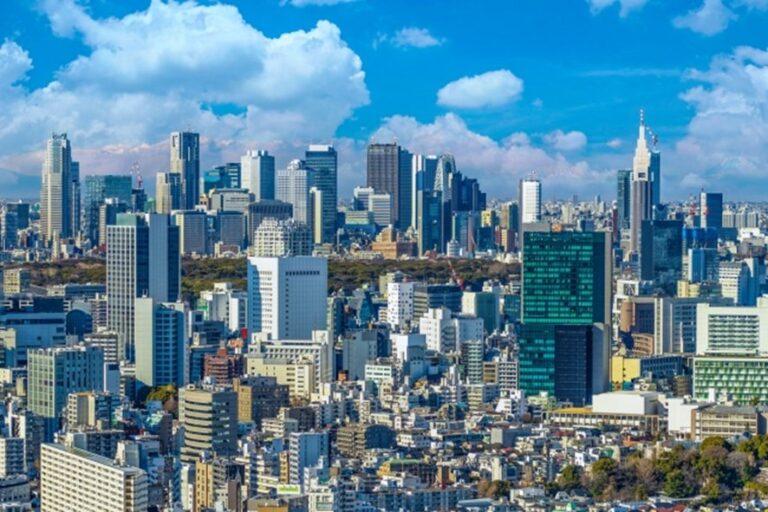
Experienced Drinkers Can Pick a Bar Themselves
If you already know sake, or simply want to settle in at a single venue, choosing a specialist sake bar yourself is a reasonable option. Some bars stock more than 50 labels, allowing you to compare sake from different regions and brewing methods without leaving your seat. You can also ask a kikisake-shi (a certified professional who evaluates the taste and quality of sake) or the owner what to try next.
Reservation policies and payment systems vary from bar to bar, so there are a few practical details to check before you go. Look into the following before your visit:
- Reservations: Depending on the bar, reservations may be available by phone, through a dedicated booking site, or not accepted at all.
- Payment system: Check whether there is an otoshi (a small dish brought to your seat automatically and charged in place of a seat fee), and how much it costs.
- Hours and closing days: Unscheduled closures can happen, so check the official website or social media on the day of your visit.
- Solo customers: Bars with counter seating tend to be easier to enter alone.
- Soft drinks: Check the menu if someone in your party does not drink alcohol.
If that much research sounds daunting, the four common difficulties covered next provide clear criteria for choosing a bar.
Asakusa: Guided Food Tour with 12 Dishes at 4 Local Eateries
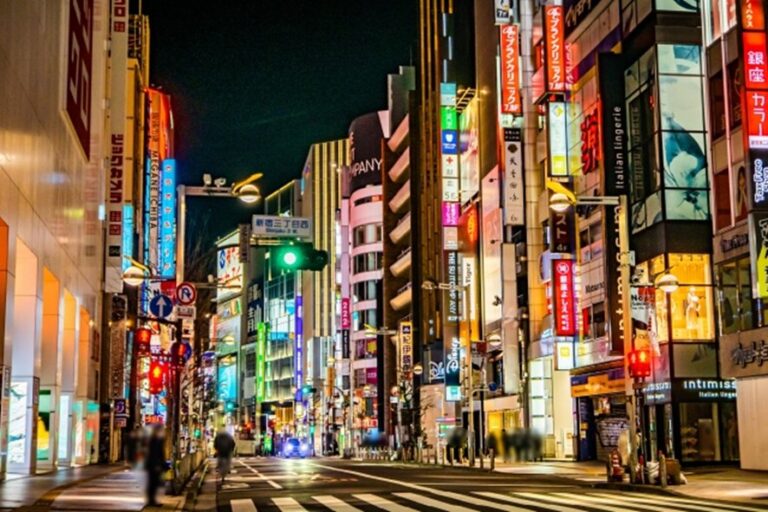
4 Things Visitors Find Confusing at Japanese Sake Bars
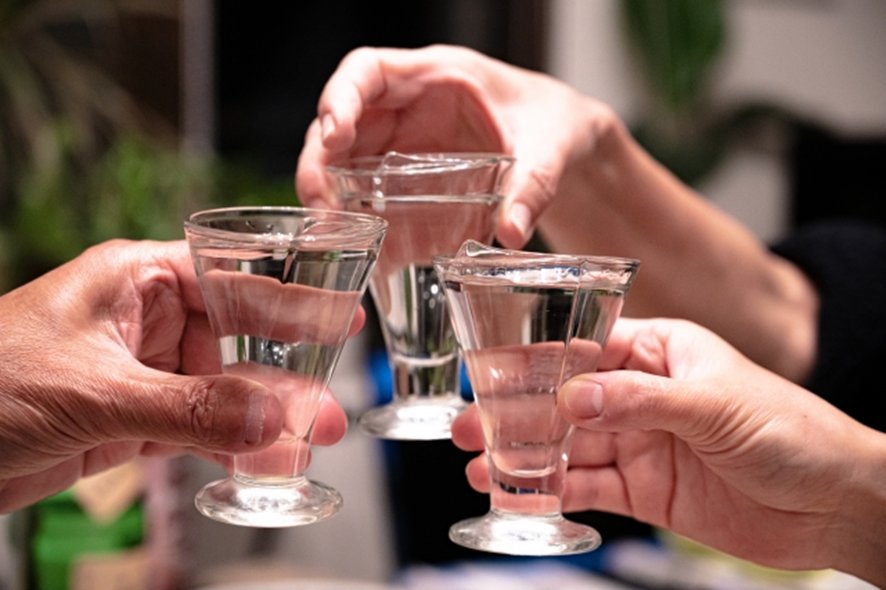
At sake bars, ordering and payment can work differently from what you might expect at a typical bar, and first-time visitors can feel lost once they are inside. Four points tend to cause the most confusion: the payment system, how to choose a label, what kind of English support is available, and how comfortable the bar is for solo visitors or small groups. These same four points provide useful criteria for choosing a bar that fits you.
1. How Payment Works
Every sake bar handles the bill differently, which can make the total difficult to predict. Three systems are common: paying per glass as you order, paying a table or admission fee on arrival, and paying a flat rate for a fixed period. With the same amount of money, how much you can drink can vary considerably depending on the system.
The otoshi is another charge that can catch visitors off guard. At Japanese restaurants and bars, a small dish may arrive without being ordered, with its cost added to the bill. For example, a ¥1,000 table charge, a ¥1,500 glass of sake, and a ¥500 otoshi would bring the total to ¥3,000 (about $20 USD) even if you drink only one glass. Because this is often where travelers feel they have been charged for something they did not order, confirm the following before you go:
- Table charges and otoshi: Check whether either applies and how much it costs. When making a reservation, asking for the minimum spend per person is the surest way to avoid surprises.
- Service charges: Some bars add around 10% to the cost of food and drinks.
- Payment methods: Cash-only bars are common, so check whether credit cards are accepted.
2. Choosing a Label
Without any background in sake, you can end up seated at the counter with no idea what to order. Label names are usually written in kanji (Japanese characters), and the name alone rarely tells you whether a sake is karakuchi (crisp and dry, with little sweetness) or sweet.
How easily you can choose your first glass depends on how the bar helps you make a selection. Bars that cater to international visitors generally take one of three approaches:
- Staff recommendations: Tell the staff you like something fruity or clean-tasting, and they can suggest a label to match.
- Tasting notes: Each label comes with a card or menu entry describing its sweetness, aroma, and mouthfeel.
- Tasting sets: Around three small pours are served side by side, allowing you to compare the differences yourself.
When choosing a bar, check its official website or photos of the menu. Whether labels include flavor descriptions and whether tasting sets are available can give you a good idea of how manageable ordering will be without prior sake knowledge.
3. What Form English Support Takes
Whether you can communicate in English depends on whether the support comes from the menu or from the staff. One survey found that choosing dishes and placing an order accounted for 65.8% of the difficulties reported by diners, showing that translating the menu alone does not always solve the problem. English support at sake bars usually takes one of the following forms, each with its own limits:
- Printed English menus: Label names and flavor notes are often translated literally, so you can read them without necessarily understanding how one label differs from another.
- Multilingual displays via QR code: You can read the information at your own pace, but daily rotations and seasonal labels may not be included.
- English-speaking staff: Staff can suggest a sake once you describe your preferences, though an English-speaking employee may not be on shift every day.
Sake is often chosen through conversation, with the bar suggesting a flavor profile and serving temperature based on what you like. Even with an English menu, finding a glass that suits you can take longer if you cannot communicate with the staff. Before visiting, check Google Maps reviews for comments mentioning both “English menu” and “English-speaking staff.” This can give you a clearer idea of what kind of English support the bar actually provides.
4. How Comfortable a Bar Is for One or Two People
How comfortable an evening feels alone or as a pair depends largely on the seating. Counter-focused bars put you close to the staff and the people beside you, so conversation starts naturally and solo visits are easy. Tachinomi bars (standing bars with no chairs) are harder to linger in, while venues built around tables let you talk in comfort, though two people can find themselves rattling around a large table.
Reservation policies matter too. Some bars accept bookings from solo customers, while others do not take reservations at all, leaving you to rely on whatever seats are available that night. Arriving without a reservation on a Friday or Saturday evening can mean finding the bar full. Check the following before you go:
- Seating layout: Check whether the bar has counter seating and whether it is standing or seated.
- Reservations: Check whether bookings are available online, by phone, or not accepted.
- Solo customers: Look for information on the official website or booking page stating whether single guests are welcome.
- Last order time: Essential to confirm if you expect to arrive late.
If that preparation feels like too much work, or walking into an unfamiliar bar alone does not appeal, consider the guided tours below.
3 Recommended Tokyo Tours That Visit Sake Bars with an English Guide
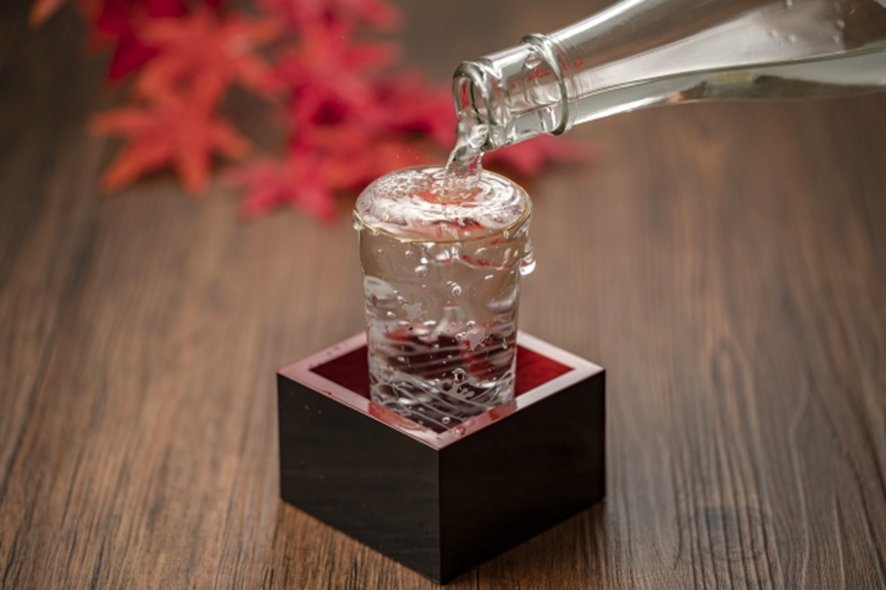
On a tour with an English-speaking guide, the guide handles all four of the points above on the spot. Japan Guide Star runs food tours in three areas: Asakusa, Shinjuku, and Shibuya. Each tour differs in length, number of venues, and atmosphere, so choose one based on where you are staying and how your schedule fits.
Asakusa if You Can’t Decide: A Tour of Sake Bars the Locals Use
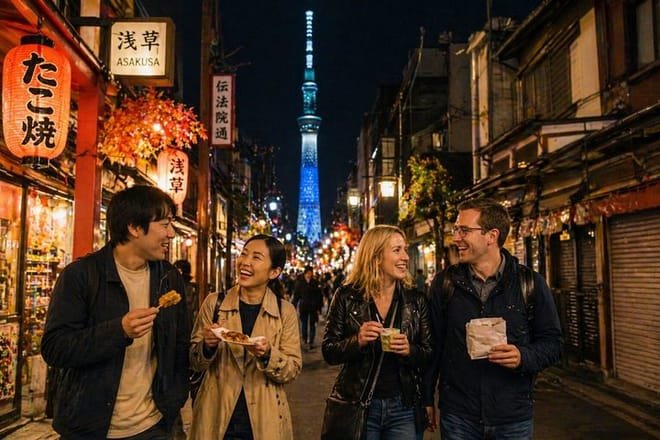
Tokyo: Asakusa Guided Food Tour with 12 Dishes & 3 Drinks – JapanGuideStar
Tokyo: Asakusa Guided Food Tour with 12 Dishes & 3 Drinks is a food tour with a sake bar built into the itinerary. You visit sake bars and eateries frequented by local residents with an English-speaking guide, so your first sake bar visit requires no advance research into which places welcome visitors from abroad.
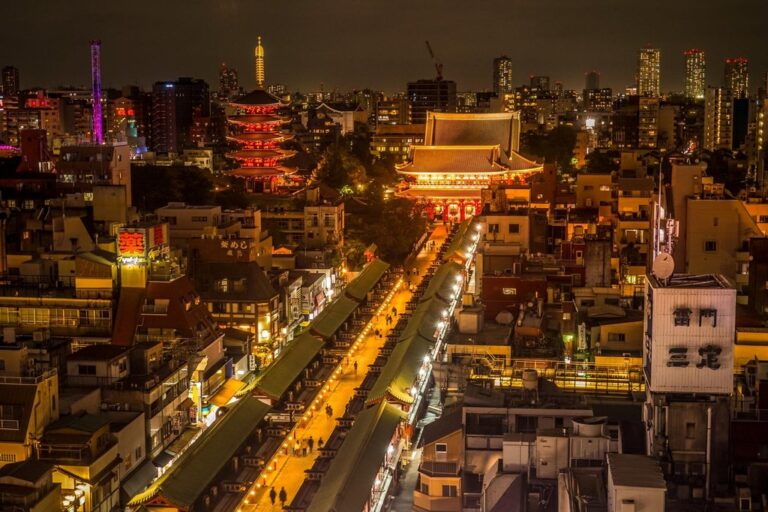
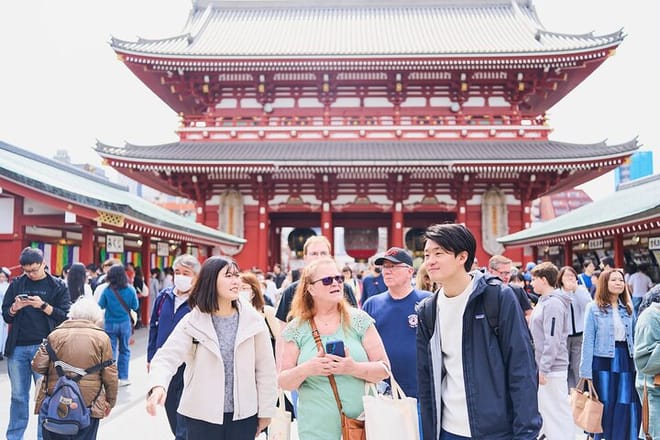
The meeting point is in front of the police box by Kaminarimon Gate, about a three-minute walk from Asakusa Station on the Tokyo Metro Ginza Line. You eat your way through Asakusa specialties along Hoppy Street, a row of old-style izakaya (Japanese pub-style restaurants) with tables set out along the street, and finish with taiyaki (a fish-shaped cake filled with sweet red bean paste). The tour runs for 2.5 hours and is conducted entirely in English. Your guide chooses the venues and handles the bills, and with a maximum of 20 participants per departure, you stay close enough to ask questions about sake.
Reviews from past participants frequently mention the guides’ knowledge of sake and food, and several describe trying small pours of labels they would not have come across on their own. Others note that the guides keep conversation going among strangers, so joining alone does not leave you on the edge of the group. Free cancellation is available up to 24 hours before the start, and participants under 20 may join but are not served alcohol.
Details
| Item | Information |
| Meeting point | In front of Kaminarimon Gate police box, 1-3-1 Asakusa, Taito-ku, Tokyo |
| Duration | About 2 hours 30 minutes |
| Included | 12 dishes, drinks, English-speaking guide |
| Booking site | https://japanguidestar.com/tour/tokyo-asakusa-food-tour-12-dishes-3-drinks/ |
| Suits | First-time sake bar visitors; anyone wanting a short introduction to Asakusa’s food culture |
Asakusa: Guided Food Tour with 12 Dishes at 4 Local Eateries
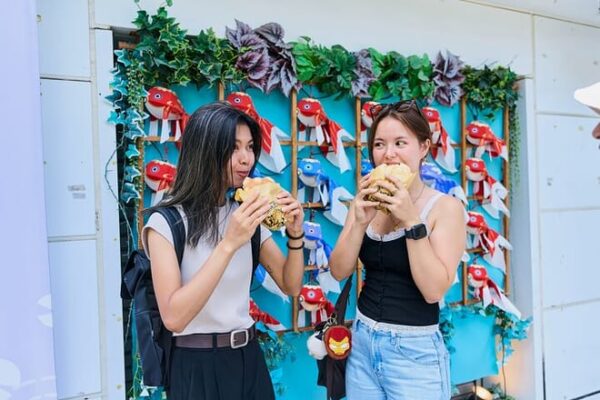
Tokyo: Asakusa & Sensoji ー Oldest Temple Walking Tour (2hrs)
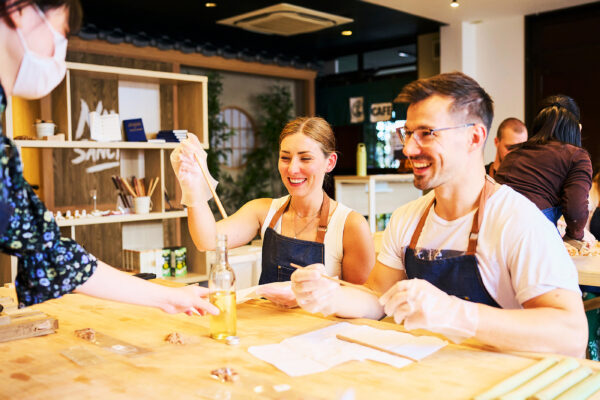
Tokyo Shibuya Chopstick Making Workshop
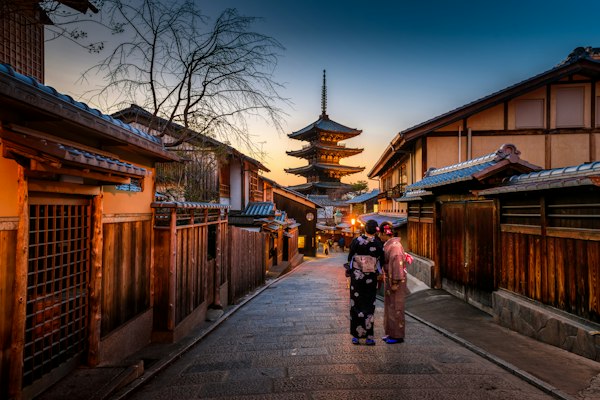
Shinjuku: 15 Dishes and a Range of Sake Across 4 Venues
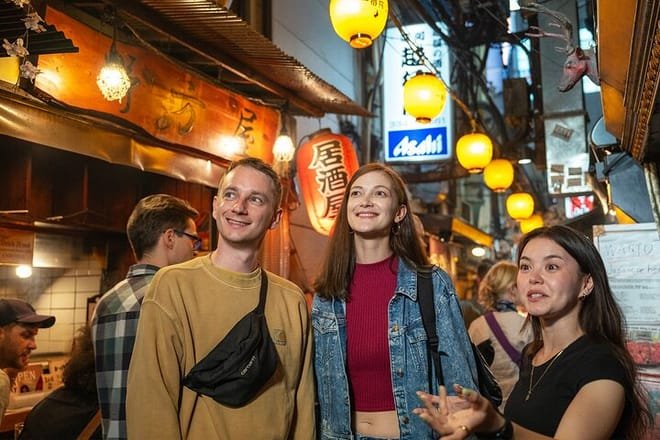
Shinjuku: Food Tour – 15 Dishes at 4 Eateries – JapanGuideStar
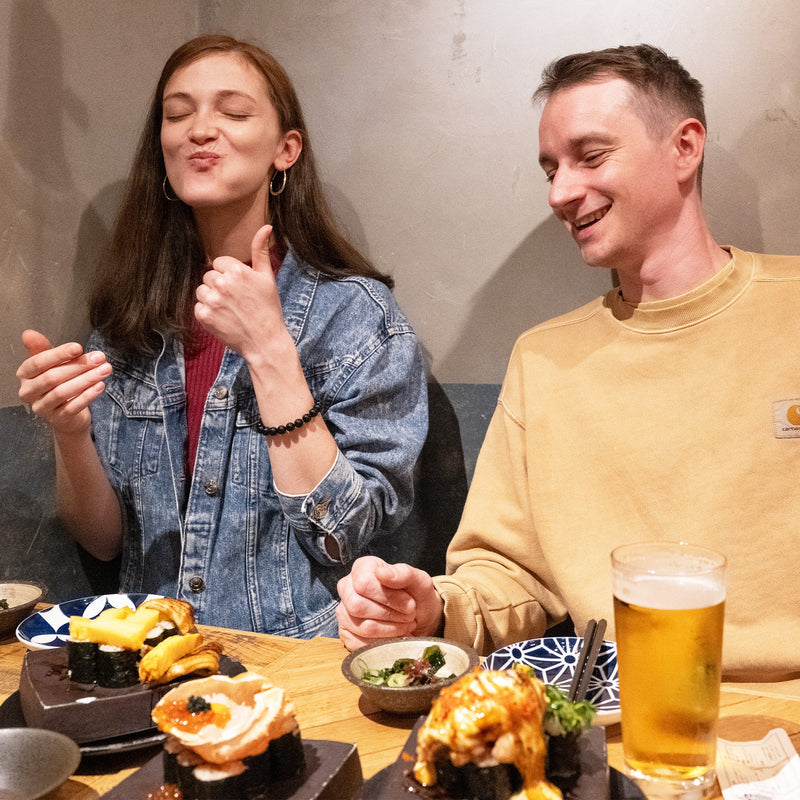
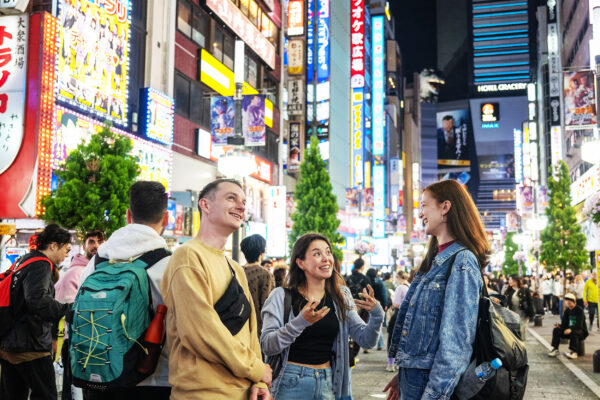
Shinjuku: Food Tour – 15 Dishes at 4 Eateries suits anyone who wants to try a wide range of dishes and sake in a single evening. With an English-speaking guide, you visit four venues frequented by local residents, trying 15 dishes including sushi, kushikatsu (skewered meat and vegetables that are breaded and deep-fried), and gyoza (dumplings), along with drinks that include a range of sake, over about three hours.
What sets this tour apart is that the venues are places locals visit regularly rather than restaurants aimed at tourists. Along the way, you pass through Omoide Yokocho, where small drinking spots with counter seating and yakitori (grilled chicken skewers) line a narrow lane, and Golden Gai, a district packed with bars that seat only a handful of people. Both are classic Shinjuku alleyways. Since sake accompanies the food at all four stops, you can explore different styles and work out your own preferences as the guide explains each one, whether that turns out to be something clean-tasting or something with a strong aroma.
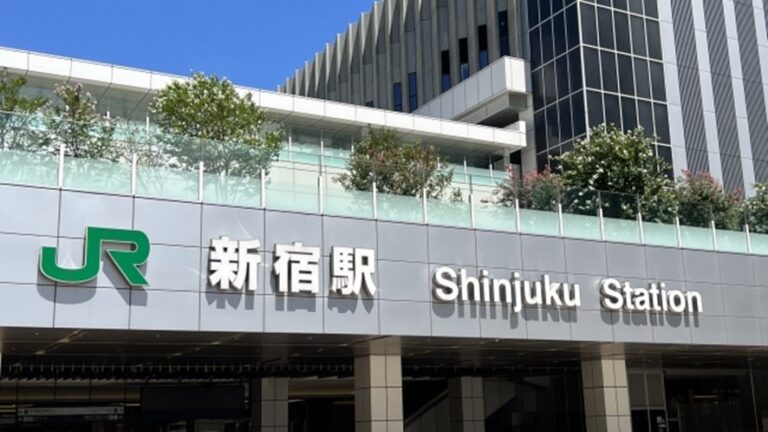
The group meets in front of the police box at the East Exit of Shinjuku Station. Free cancellation is available up to 24 hours before the start.
Details
| Item | Information |
| Meeting point | In front of the police box, JR Shinjuku Station East Exit, 3-38-1 Shinjuku, Shinjuku-ku, Tokyo |
| Duration | About 3 hours |
| Included | 15 dishes, drinks (a range of sake included), English-speaking guide |
| Booking site | https://japanguidestar.com/tour/shinjuku-food-tour-15-dishes-at-4-eateries/ |
| Suits | Anyone wanting to try many dishes and sake at once; anyone curious about Shinjuku’s back alleys |
Shinjuku: Food Tour – 15 Dishes at 4 Eateries
Tokyo: Shinjuku Historical Walking Tour & Secret Backstreets

Tokyo: Japanese Gold Repair Kintsugi Workshop in Shinjuku
Shibuya: 4 Venues of Different Kinds, Including a Street Stall and a Specialist Bar
Tokyo: Shibuya Food Tour with 15 Dishes at 4 Eateries – JapanGuideStar
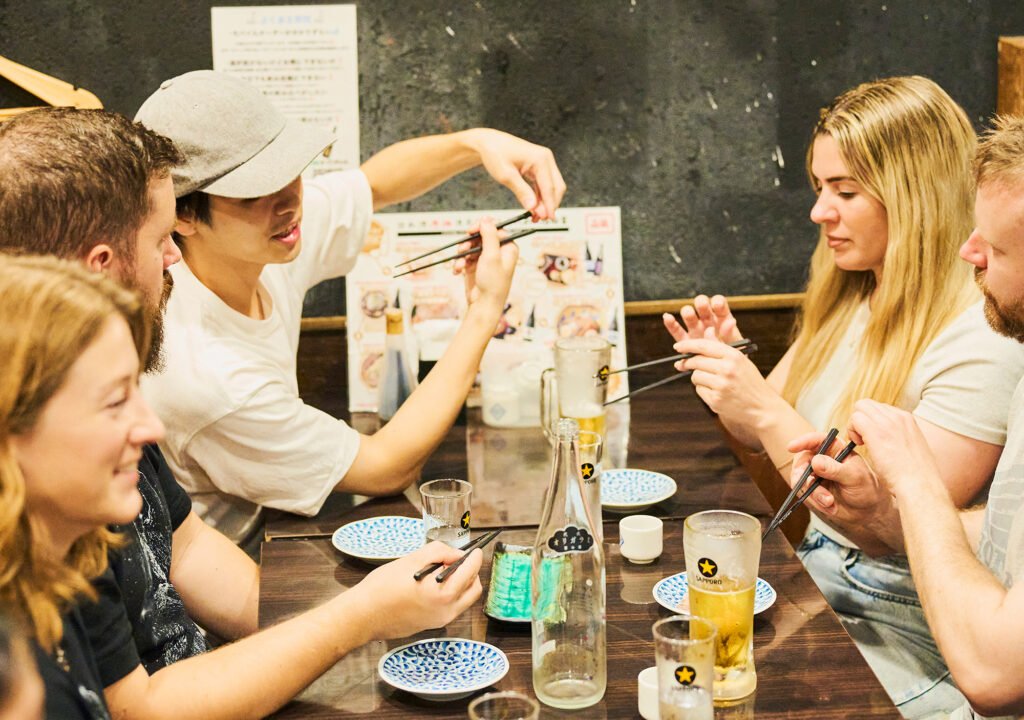
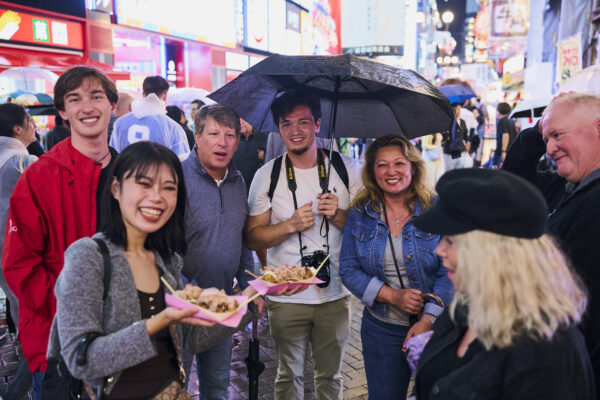
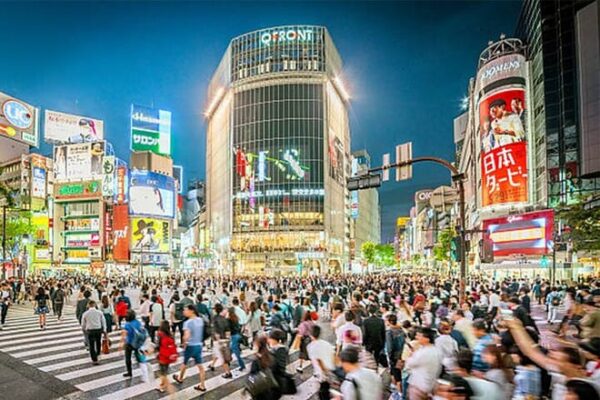
Tokyo: Shibuya Food Tour with 15 Dishes at 4 Eateries takes you with an English-speaking guide to four distinctly different types of venue: a back-alley yatai (a small, simply built food stall), an izakaya, a specialty restaurant, and a gastro bar (a bar with serious cooking).
The seating and cooking styles change from stop to stop, so a single evening takes in everything from a stall where diners stand elbow to elbow to a bar where dishes arrive one plate at a time. The price includes 15 dishes and three drinks, with a different food-and-drink pairing at each venue.
The tour departs at 5:00 pm, 6:00 pm, and 7:00 pm, making it easy to join after a day of sightseeing. Groups can have up to 30 participants, so the tour also works for friends, families, and colleagues traveling together. Free cancellation is available up to 24 hours before the start.
Details
| Item | Information |
| Meeting point | In front of SHIBU HACHI BOX, 2-1 Dogenzaka, Shibuya-ku, Tokyo |
| Duration | About 3 hours (departures at 5:00 pm / 6:00 pm / 7:00 pm) |
| Included | 15 dishes, 3 drinks, English-speaking guide |
| Booking site | https://japanguidestar.com/tour/tokyo-shibuya-food-tour-with-15-dishes-at-4-eateries/ |
| Suits | Anyone wanting several styles of venue in one night; groups travelling together |
Tokyo: Shibuya Food Tour with 15 Dishes at 4 Eateries
Tokyo: Shibuya Highlights Walking Tour & Secret View Spot
2 Popular Sake Bars Worth Knowing if You Go on Your Own
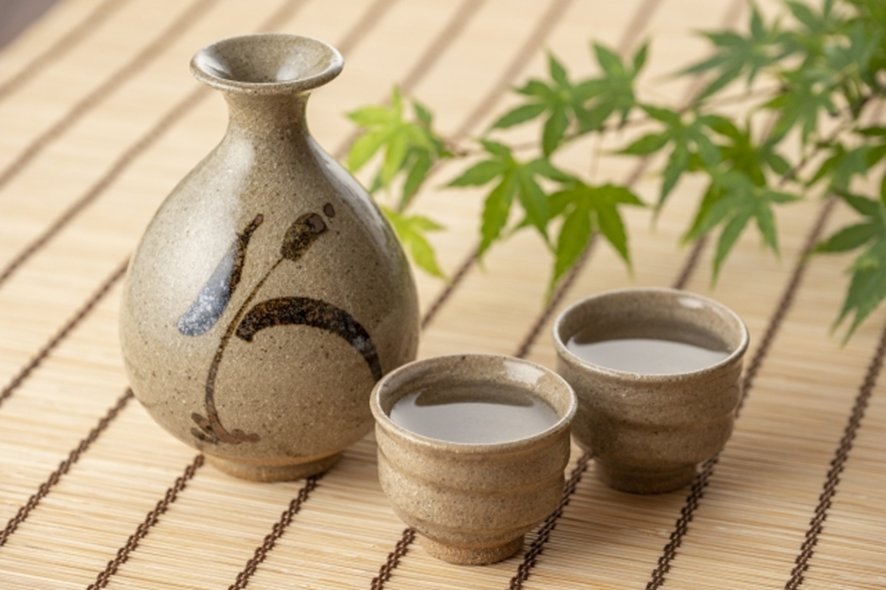
For anyone who would rather enjoy a sake bar at their own pace, here are two Tokyo bars that are easy to visit without a guide: one where you can try labels by the glass, and another specializing in junmai sake (sake brewed from rice, rice koji, and water alone, with no added distilled alcohol). Payment and label selection work differently at each.
Without a guide, practical details such as opening hours and reservation methods become more important, so the basics for each bar are set out in the tables below.
Nihonshu Genka Sakagura Shibuya Main Store: Over 50 Labels, One Glass at a Time
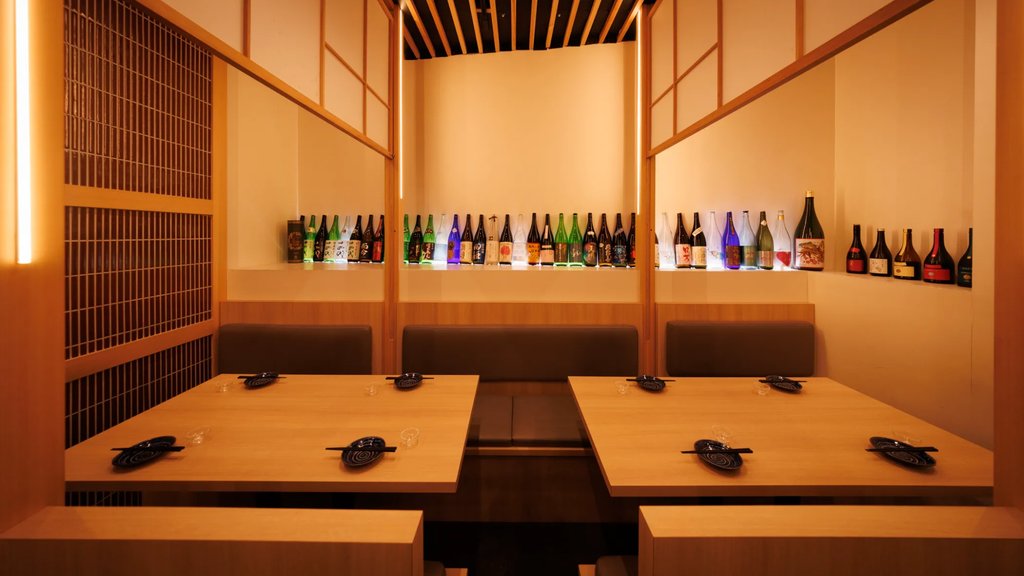
Nihonshu Genka Sakagura sources more than 50 sake labels from across Japan and serves them at wholesale prices. The Nihonshu Genka Sakagura Shibuya Main Store is located on the first basement floor of the Homareya Building on Dogenzaka.
There is no time limit, so you can compare labels at your own pace, trying one glass at a time while using the menu and staff explanations as a guide, even if you know little about sake.
The bill consists of an admission fee paid on arrival plus the cost of each glass you order, so the price of a single glass does not tell you much about the final total. Budget roughly ¥3,000–¥5,000 per person (about $20–$35 USD, as of May 2025). Reservations are available through the official website.
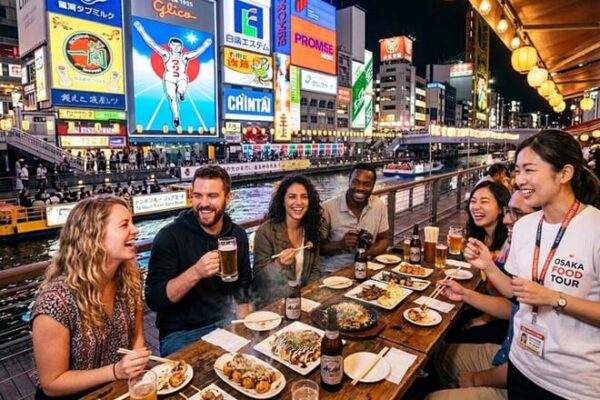
The same group operates branches in several areas, including Tokyo and Osaka, so you can enjoy the same format even if you are staying outside Shibuya. If Osaka is also on your itinerary, you can join an Osaka food tour that visits local eateries with an English-speaking guide.
Details
| Item | Information |
| Address | Homareya Building B1, 2-6-14 Dogenzaka, Shibuya-ku, Tokyo |
| Hours | Monday–Friday 3:00 pm–11:30 pm; Saturday, Sunday and public holidays 12:00 pm–11:30 pm |
| Closed | Open year-round |
| Official site | https://shop.sake-genkabar.com/detail/shibuya/ |
| Suits | Beginners who want small pours of many labels; anyone drinking alone |
Hours change with the season. Please check the official website before visiting.
Osaka: Guided Food Tour with 12 Dishes at 4 Local Eateries
Junmaishu Senmon YATA Shinjuku Sanchome: Compare Junmai Sake Only
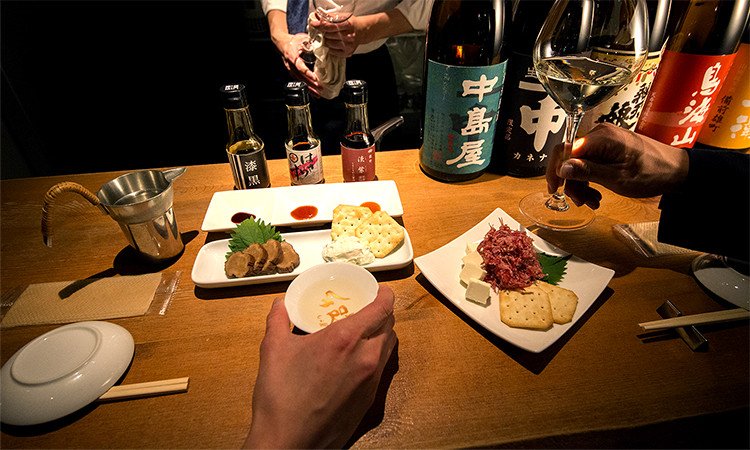
Junmaishu Senmon YATA Shinjuku Sanchome is a standing bar specializing exclusively in junmai sake, located on the 10th floor of the Ogawa Building. With no distilled alcohol added, junmai sake highlights the savory depth of the rice, while its aroma and flavor can differ noticeably from label to label. This makes it easy to compare sake from several sakagura (sake breweries).
A tasting course lets you try as many varieties as you like within a set time, with no repeat pours of the same label, allowing you to work through junmai sake from a range of breweries. You choose labels by telling the staff what you like: say you prefer something dry or want to try something fruity, and they can suggest a first glass even if you have little background in sake. Customers tend to move through quickly at a standing bar, making it easy to stop in briefly on your own.
The bar opens at 3:00 pm on weekdays and 2:00 pm on weekends and public holidays, and is open every day except January 1. You can reserve by phone or book a single seat through restaurant reservation services.
Details
| Item | Information |
| Address | Ogawa Building 10F, 3-14-22 Shinjuku, Shinjuku-ku, Tokyo |
| Hours | Monday–Friday 3:00 pm–11:00 pm (last order 10:30 pm); Saturday, Sunday and public holidays 2:00 pm–10:30 pm (last order 10:00 pm) |
| Closed | January 1 |
| Official site | https://junmaishu.net/shinjuku/ |
| Suits | Anyone wanting to compare junmai sake with the staff’s advice; anyone stopping in alone for a short visit |
Hours change with the season. Please check the official website before visiting.
Which Suits You? Guided Tour Versus Visiting a Sake Bar on Your Own
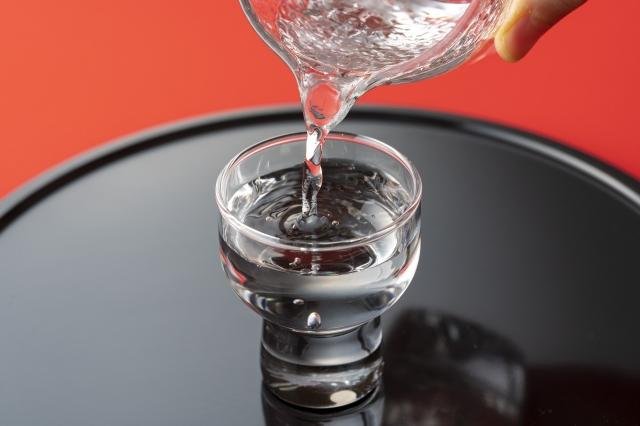
The table below compares those same four points for an English-guided tour and an independent visit.
| Point of comparison | Guided tour (recommended for first-timers) | On your own |
|---|---|---|
| How payment works | Food and some drinks are included, so the cost is settled in advance unless you order extras | Table charges, admission fees and otoshi vary by bar, so checking in advance is necessary |
| Choosing a label | The guide asks what you like and suggests labels while explaining their flavour | Some bars let you ask the staff, but the form that support takes varies |
| What form English support takes | The guide works in English, so the language of the menu or the staff doesn’t matter | Some bars offer only an English menu, others rely on staff |
| Comfort for one or two people | You enter alongside the guide, so an unfamiliar bar is easy to walk into | Bars with counter seats are easy to visit alone, but seating layouts and reservation methods need research |
For a first visit to a sake bar, a guided tour is a natural choice. The four points above no longer require your own research and judgment, leaving you free to concentrate on the sake and food rather than the bill or the language barrier. The Asakusa tour, with a sake bar built into the itinerary, is particularly suited to anyone who wants a guided introduction to the atmosphere and ordering process.
Once a tour has helped you discover what you like, visiting specialists such as Nihonshu Genka Sakagura Shibuya Main Store or Junmaishu Senmon YATA Shinjuku Sanchome on your own can be a different kind of pleasure. You can take your time comparing the labels that caught your interest and exploring them at your own pace.
Asakusa: Guided Food Tour with 12 Dishes at 4 Local Eateries
Shinjuku: Food Tour – 15 Dishes at 4 Eateries
Tokyo: Shibuya Food Tour with 15 Dishes at 4 Eateries
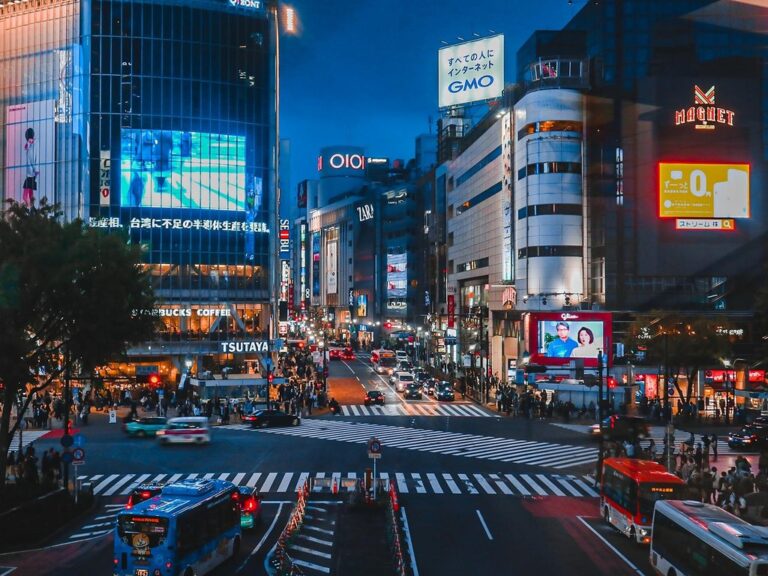
Common Questions About Sake Bars in Tokyo

The questions that come up most often before visiting a sake bar cover drinking etiquette, age restrictions, whether reservations are required, and other practical details that can cause problems on the night.
Are There Rules for How to Drink Sake?
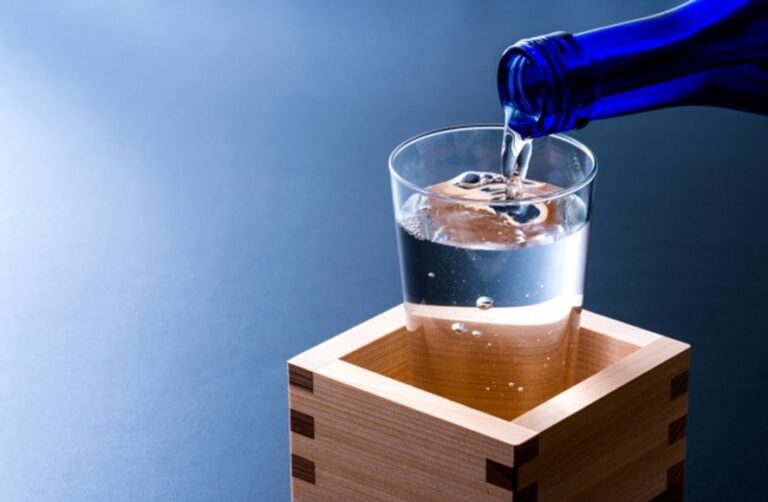
There are no strict rules. Sake is enjoyed across a wide temperature range, from reishu (chilled sake) at around 5°C (about 41°F) to atsukan (hot sake) at 55°C (about 131°F) and above, so you can simply tell the staff whether you would like something cold or warm.
At Japanese restaurants and bars, it is customary to wait for the toast before drinking, though simply lifting your glass or sakazuki (a small cup for sake) slightly is enough. There are no strict rules about pouring either: pour your own drink or pour for one another, as you prefer.
What Is the Minimum Age for a Sake Bar?
The legal drinking age in Japan is 20, and the rule applies to visitors in exactly the same way. The age of adulthood was lowered to 18 in 2022, but the drinking age did not change. As a result, 18- and 19-year-olds cannot legally drink in Japan, even if they may be legally permitted to drink at home in their country of residence.
There is no general law preventing people under 20 from entering a sake bar, and whether they may enter is left to each establishment. If someone under 20 is with you, ask at the entrance before going in, and carry a passport in case the bar checks your age.
Can People Who Don’t Drink Alcohol Come Along?
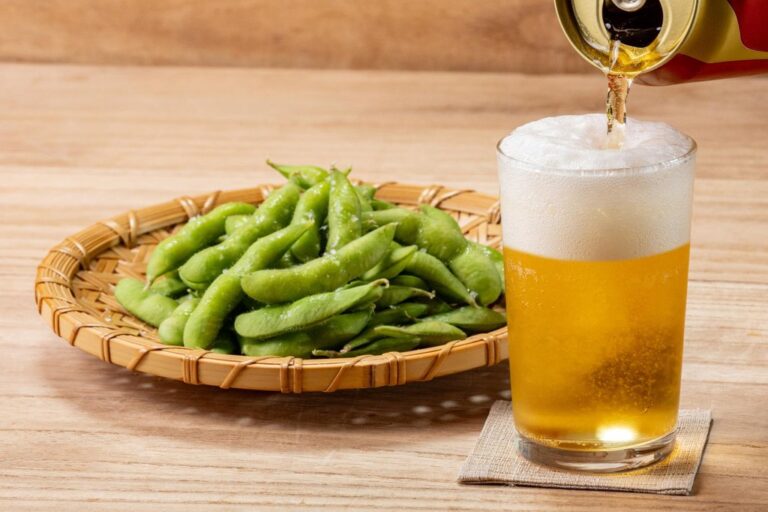
Most sake bars welcome non-drinkers, and soft drinks such as oolong tea and green tea are generally available. Specialist sake bars, however, may carry few soft drinks. Junmaishu Senmon YATA Shinjuku Sanchome, for example, is built around the concept that every sake served is junmai.
When someone in your group is not drinking, an evening can go more smoothly at a bar that serves both food and soft drinks. The guided tours above offer non-alcoholic options, so companions who do not drink can join comfortably.
Can I Order Food That Goes with Sake?
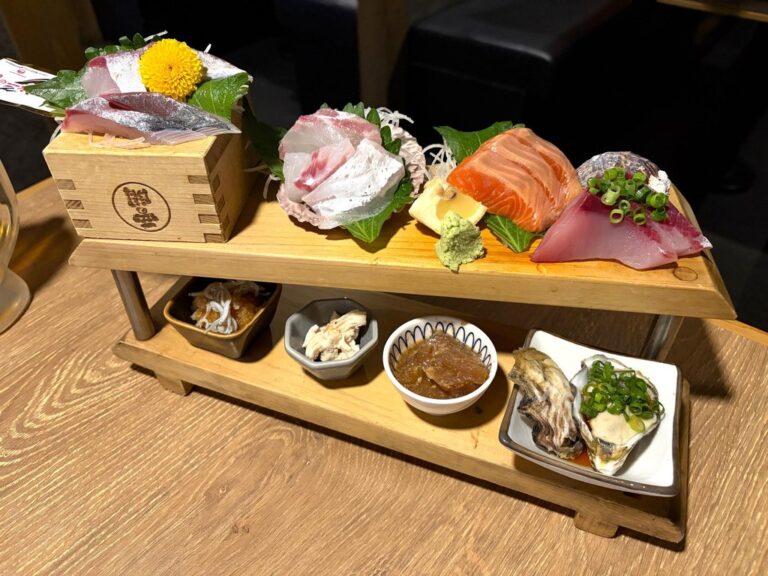
Yes. Most sake bars let you order small plates one at a time, including shiokara (a preserved delicacy of squid or other seafood salted with its innards), pickles, and fried dishes. Some also serve sashimi and rice dishes, enough to make a full dinner, while others offer only snacks, so check the menu if you want a complete meal. Some bars also require each guest to order at least one dish.
If you would rather not have to decide what to order, the food tours above pair dishes with sake for you.
Shinjuku: Food Tour – 15 Dishes at 4 Eateries
Tokyo: Shibuya Food Tour with 15 Dishes at 4 Eateries
Can I Get In Without a Reservation?
Many sake bars accept walk-ins, but they are often small, with roughly 10–40 seats, and can fill up around 7:00 pm on Fridays and Saturdays. To secure a seat, choose a bar that accepts online reservations, or arrive shortly after opening.
| Bar | Reservations |
|---|---|
| Nihonshu Genka Sakagura Shibuya Main Store | Online booking via the official site |
| Junmaishu Senmon YATA Shinjuku Sanchome | By phone or through restaurant reservation services |
Planning Your First Sake Bar Night in Tokyo
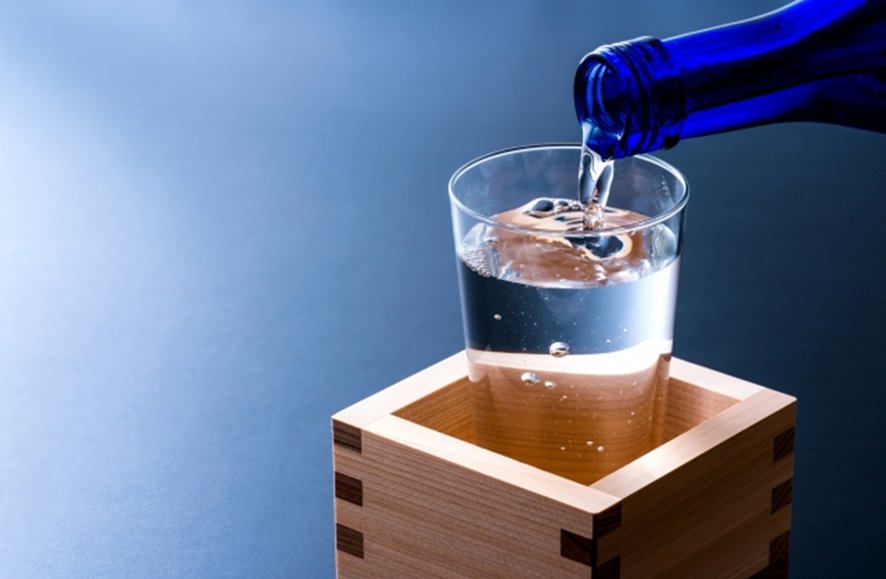
Payment systems, label selection, the form English support takes, and comfort for solo visitors or small groups all differ from bar to bar in Tokyo, leaving first-time visitors with a fair amount to check beforehand. Admission fees and otoshi can change the final bill, while kanji label names often give little indication of flavor, and ordering can be confusing once you are inside.
For a first visit, a food tour that takes you to several venues with an English-speaking guide is a straightforward option. The guide handles bar selection, ordering, and payment, and with food and some drinks included in the price, you can focus on the sake and dishes without worrying about the language barrier or the bill. Three areas are available: Asakusa, with a sake bar built into the itinerary; Shinjuku, with 15 dishes across four eateries; and Shibuya, which spans venues as different as a street stall and a gastro bar. Choose based on where you are staying and what else you have planned. All three offer free cancellation up to 24 hours before the start, so you can book while your itinerary is still taking shape.
If you already know sake, or a tour has helped you discover what you like, visiting a specialist bar on your own can also work well. Nihonshu Genka Sakagura Shibuya Main Store offers more than 50 labels served one glass at a time, while Junmaishu Senmon YATA Shinjuku Sanchome lets you compare junmai sake with help from the staff. In either case, checking the reservation and payment systems described above will make the evening easier to navigate.
The full list of food tours operated by Japan Guide Star is available here.