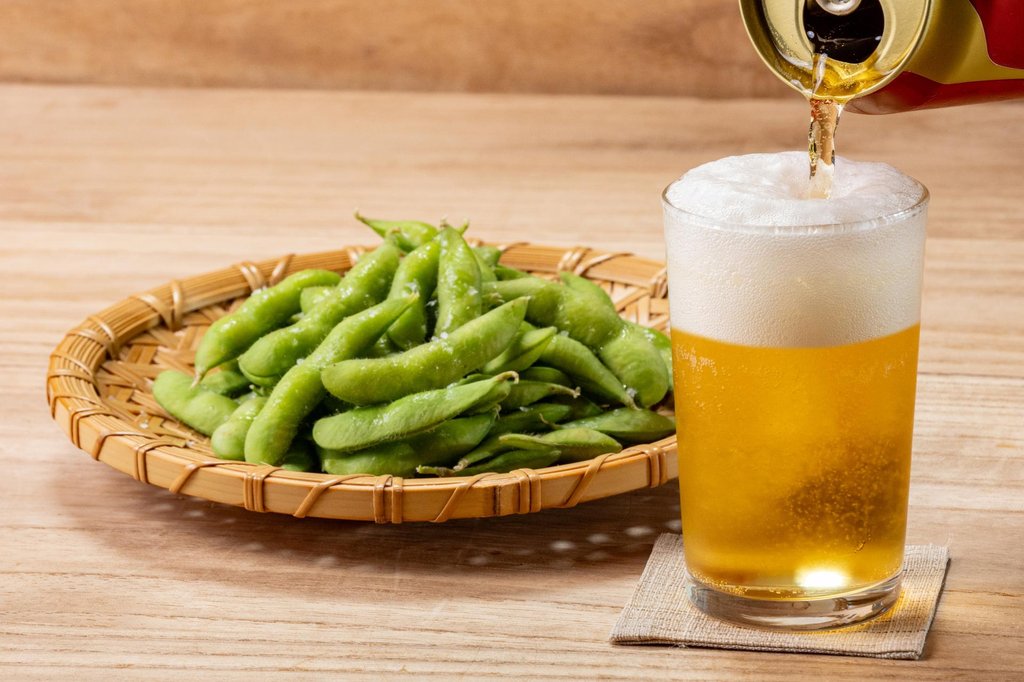
Planning a trip to Japan and wondering how old you need to be to drink alcohol? Japan lowered the age of adulthood from 20 to 18 in 2022, but the legal drinking age remains 20. Travelers unaware of this distinction may encounter problems.
Below, you’ll find the essential rules on Japan’s drinking age, how age verification works at convenience stores and izakaya (Japanese pub-style restaurants), the penalties for violations, and other age-related restrictions beyond alcohol. Understanding these points in advance will help you enjoy Japan’s drinking culture responsibly and with confidence.
Japan’s Legal Drinking Age: 4 Basic Rules to Know
Many visitors ask the same question before arriving: how old do you have to be to drink in Japan? Four fundamentals cover everything you need to know.
They include the legal basis for the drinking age, how it differs from the lowered age of adulthood, whether the rules apply to foreign travelers, and how the penalty system works. Once you understand these basics, drinking in Japan should feel straightforward.
1. Japan’s Legal Drinking Age Is 20
In Japan, it is illegal for anyone under 20 years old to drink alcohol. Under the Act Prohibiting Persons Under 20 from Drinking Alcohol, it is also illegal for businesses to sell or serve alcohol to anyone below the legal age.
One point deserves special attention: the law applies regardless of the type of alcoholic beverage. Beer and sake are covered, of course, but so are the canned chuhai (fruit-flavored alcoholic drinks) sold at any convenience store. Any beverage with an alcohol content of 1% or higher is subject to the restriction, including drinks that may appear mild.
If the drinking age in your home country is 18 or 16, Japan’s rule may feel strict, but Japanese law applies to everyone while they are in the country. The only factor that matters is whether your passport shows that you have already turned 20. Verify your age against this standard before your trip.
2. Still 20 Even After the Age of Adulthood Was Lowered in 2022
Many people assume that if the age of adulthood is now 18, the drinking age must have changed to 18 as well. In reality, Japan’s legal drinking age remains 20.
A revision to the Civil Code in April 2022 lowered Japan’s age of adulthood from 20 to 18. Here is how activities now divide between what becomes possible at 18 and what still requires being 20.
| Category | Allowed from 18 | Allowed from 20 |
|---|---|---|
| Main activities | Signing contracts, marriage, obtaining a 10-year passport | Drinking, smoking, betting on public races |
| Legal basis | Revised Civil Code | Kept at 20 under separate laws |
The drinking and smoking age remained at 20 due to concerns about health risks and addiction among young people. In other words, becoming a legal “adult” does not automatically mean being allowed to participate in every adult activity.
Since many countries tie the drinking age to the age of adulthood, this two-tier system can be confusing. Understanding the difference before your trip will help you avoid misunderstandings.
3. The Drinking Age Applies to Foreign Travelers Too
Japan’s drinking age of 20 applies to everyone inside the country, regardless of nationality or residence status. There are no exceptions for tourists, international students, or other foreign visitors.
Travelers from countries where the drinking age is 18 or lower may find this surprising, but Japan applies its own laws to everyone within its borders, no matter where you’re from. The argument that “it’s legal back home” carries no weight here.
Claiming “I didn’t know” or “it was legal in my country” does not exempt you from legal responsibility. If underage drinking is discovered, it may also lead to complications related to your visa or stay in Japan. If you are under 20, the safest choice is to avoid drinking alcohol while in the country.
If you are 20 or older, carrying your passport or another form of age verification is a good idea in case you are asked to confirm your age.
4. Penalties Fall Mainly on Sellers and Providers
You may wonder whether the person under 20 who drinks alcohol is the one who gets punished. Under Japanese law, the main penalties target those who sell or serve alcohol to minors, as well as people in supervisory positions, rather than the underage drinker.
Businesses that knowingly sell or serve alcohol to someone under 20 can face a fine of up to ¥500,000 (about $3,300 USD). If a licensed liquor retailer receives a criminal fine, the district tax office director may revoke its liquor sales license. This is why convenience stores and liquor retailers take age verification seriously.
Parents or guardians who knowingly fail to stop a minor from drinking can also face a petty fine. When a shop employee asks to see your passport, it is a legitimate measure to avoid legal liability, so please cooperate with age checks.
How Age Verification Works When Buying Alcohol in Japan
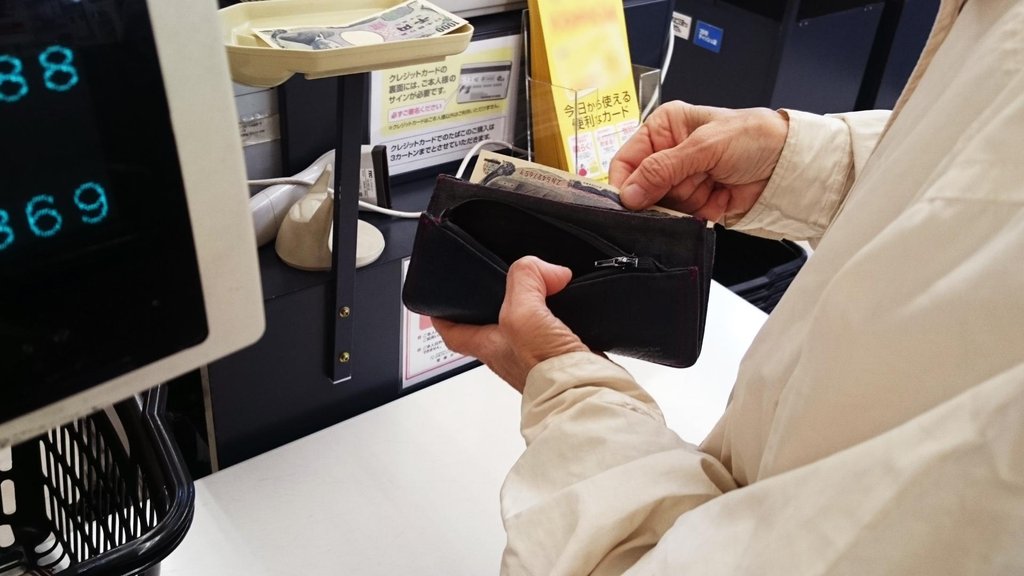
Knowing that the legal drinking age in Japan is 20 is one thing; understanding what actually happens when you try to purchase alcohol is another. Age verification in Japan follows fairly predictable patterns depending on where you buy alcohol.
The three main situations are the touchscreen confirmation at convenience stores, ID checks at izakaya and bars, and the restrictions on alcohol vending machines. Knowing how each process works in advance makes it clear what to prepare, allowing you to enjoy Japan’s drinking culture without unnecessary stress during your trip.
Convenience Stores Use a Touchscreen Confirmation
When you bring alcohol to the register at a Japanese convenience store, a confirmation screen automatically appears on the touchscreen asking you to confirm, “I am 20 years of age or older.” You simply tap the button yourself as a form of self-declaration.
However, tapping the screen does not guarantee that the sale will proceed. The touchscreen is only one part of the verification process, and if the clerk believes you appear underage, you may be asked to show identification. For foreign travelers, a passport is generally the only accepted form of ID, so you may not be able to purchase alcohol if you do not have one with you.
Convenience stores in tourist areas and entertainment districts tend to apply age checks more strictly. Some stores also have systems that restrict alcohol sales during certain late-night hours, so do not be surprised if you cannot purchase alcohol at every time of day.
Carrying your passport when you plan to buy alcohol is the easiest way to avoid delays and ensure a smooth purchase.
Izakaya and Bars May Ask for Your Passport
While convenience stores typically use a touchscreen confirmation at the register, izakaya and bars may ask for a passport or another form of photo ID when you enter or when you order alcohol.
Foreign visitors are often asked for identification because staff may find it difficult to determine age based on appearance alone. If you plan to drink during your trip, carrying your passport as proof of age will help avoid unnecessary delays or confusion.
ID Checks at Izakaya and Bars
At izakaya and bars, staff may request your passport at the door or when you order. An original government-issued photo ID is generally required; photocopies or images saved on your smartphone are usually not accepted.
ID Checks at Nightclubs
Nightclubs tend to be much stricter, with ID checks performed for everyone at the entrance. Because age verification is required under the Entertainment Business Act, an original government-issued photo ID is essentially mandatory, regardless of how old you appear.
Japanese guests typically show documents such as a driver’s license or My Number card, while foreign visitors are generally expected to present their original passport. As a rule, copies and photos of identification documents are not accepted, so be sure to bring the original document if you plan to visit a nightclub.
Alcohol Vending Machines Are Not an Option for Travelers
Alcohol vending machines do exist in Japan, but for foreign travelers, they are effectively not a practical option.
The reason is the age verification system. Modern approved machines confirm age by reading the IC chip in a Japanese driver’s license or My Number card. They do not support foreign-issued IDs or passports, so the authentication process cannot be completed.
Alcohol vending machines themselves are also disappearing fast. As of April 2024, only 9,313 remained nationwide, a decrease of more than 170,000 machines compared with March 31, 1996*1. The National Tax Agency has indicated a policy direction toward eventually phasing them out, and today they are mainly found in places such as rural inns and hotels.
For travelers looking to buy alcohol, these options are far more reliable:
- Convenience stores: Many are open 24 hours and offer a wide selection of beer, chuhai, and other drinks
- Supermarkets: Ideal for stocking up on local sake, wine, and other beverages
- Liquor stores: The best choice for finding regional sake and limited-edition products
Rather than searching for a vending machine, head to a convenience store or supermarket for a smoother and more reliable purchase experience.
More Than Just Age: Drinking Rules to Keep in Mind While Traveling in Japan
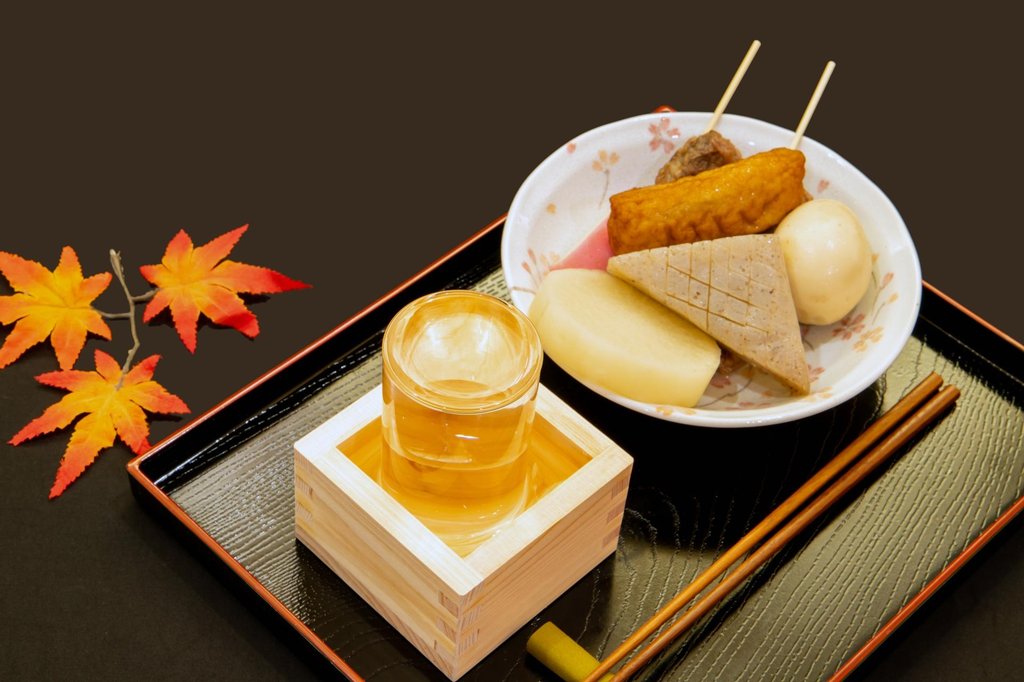
Being 20 or older is the baseline requirement for drinking alcohol in Japan, but it is not the whole story. Depending on where and how you drink, additional rules apply that travelers can easily overlook.
These include restrictions on drinking in public spaces, strict penalties for drunk driving, age limits at restaurants that allow smoking, and age verification for non-alcoholic drinks in some situations. Understanding these points in advance will help you avoid unexpected problems and simply enjoy your drinks in Japan.
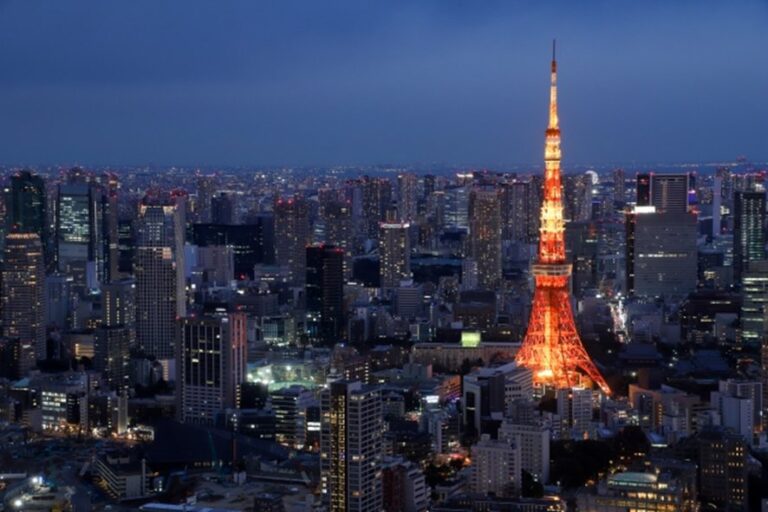
Public Drinking Is Increasingly Restricted
Japan has no nationwide law banning drinking on the street, so enjoying alcohol in a park or near a station is basically legal. In fact, having a beer in the park during hanami (cherry blossom viewing) season is practically a seasonal tradition.
In recent years, however, more local governments have introduced ordinances restricting public drinking, particularly in popular tourist areas. The best-known example is Shibuya Ward’s year-round ban on street drinking in designated areas around Shibuya Station. Although the ordinance does not include criminal penalties, patrol officers may issue warnings, and repeated violations or disruptive behavior can lead to further action. Some metropolitan parks in Tokyo have also introduced alcohol-free zones, so it is worth checking the local government’s website before visiting.
Whether drinking is acceptable on trains depends on the type of service:
- Shinkansen and long-distance trains: Drinking alcohol is common, and onboard sales are often available.
- Commuter trains and subways: While not illegal, drinking is generally considered poor etiquette and is best avoided.
In Japan, behaving appropriately for the location and time of day is highly valued. Taking a moment to check the local rules before you head out will help you avoid unnecessary problems.
Drunk Driving Carries Severe Penalties
Japan imposes extremely strict penalties for drunk driving, and they apply to foreign visitors just as they do to Japanese residents.
Driving under the influence of alcohol can result in up to 3 years in prison or a fine of up to ¥500,000 (about $3,300 USD). More serious cases involving intoxicated driving carry up to 5 years in prison or a fine of up to ¥1,000,000 (about $6,600 USD).
Japan also enforces a distinctive system of shared liability. Anyone who knowingly lends a vehicle to someone who has been drinking, serves alcohol to a person who intends to drive, or knowingly rides as a passenger with a drunk driver may also face legal penalties. Even accompanying a drunk driver can result in up to 2 years in prison or a fine of up to ¥300,000 (about $2,000 USD).
It is important to remember that these rules apply not only to cars but also to bicycles, including rental bicycles. Under the November 2024 revision of the Road Traffic Act, cycling under the influence of alcohol is punishable by up to 3 years in prison or a fine of up to ¥500,000.
If you plan to use a rental bicycle while sightseeing, keep in mind that even having a single beer with lunch could put you in violation of the law.
Restaurants That Allow Smoking Are Off-Limits to Anyone Under 20
Under the revised Health Promotion Act, which came fully into force in April 2020, anyone under the age of 20 is prohibited from entering a smoking area for any reason, even if they have no intention of smoking. At restaurants where smoking is permitted throughout the premises, people under 20 cannot enter, even if they only plan to eat.
In Japan, izakaya and bars generally fall into one of three categories: completely non-smoking, equipped with a separate smoking room, or smoking permitted throughout the premises. Establishments where smoking is allowed are legally required to display signs at the entrance, such as “Smoking Permitted” or “No Entry Under 20.” Be sure to check these signs before entering.
If your group includes anyone under 20, keep the following points in mind when choosing a venue:
- Choose a restaurant displaying a non-smoking sign at the entrance so everyone can enter regardless of age.
- Check the smoking policy in advance on the restaurant’s official website or through reservation platforms.
- Many non-smoking izakaya still offer extensive all-you-can-drink plans and a wide selection of sake.
Checking in advance avoids the inconvenience of being turned away at the door.
Even Non-Alcoholic Drinks May Require an Age Check
Non-alcoholic beer containing 0.00% alcohol is legally classified as a soft drink rather than an alcoholic beverage. However, some drinks marketed as “non-alcoholic” in Japan contain up to 0.9% alcohol and are classified differently. As a result, the rules that apply to these products may vary.
There is no law that directly prohibits people under 20 from purchasing or consuming beverages containing 0.00% alcohol. That said, major beverage manufacturers develop these products for adults aged 20 and over and generally do not recommend them for younger consumers. Based on this policy, convenience stores and restaurants may choose not to sell or serve them to anyone under 20, so do not assume you will always be able to order one simply because it is alcohol-free.
If you are under 20, or if someone in your group is, it is worth checking in advance that the izakaya offers a good selection of soft drinks.
Fortunately, travelers under 20 still have plenty of opportunities to enjoy beverages unique to Japan, including:
- Matcha lattes and hojicha (roasted green tea) lattes
- Ramune (Japanese marble soda) and Calpis soda
- Seasonal fruit juices and Japanese tea tasting flights
These drinks are widely available at convenience stores and cafés, making it easy to experience Japan’s distinctive beverage culture without alcohol.
Age Limits Beyond Drinking: Other Activities to Watch in Japan
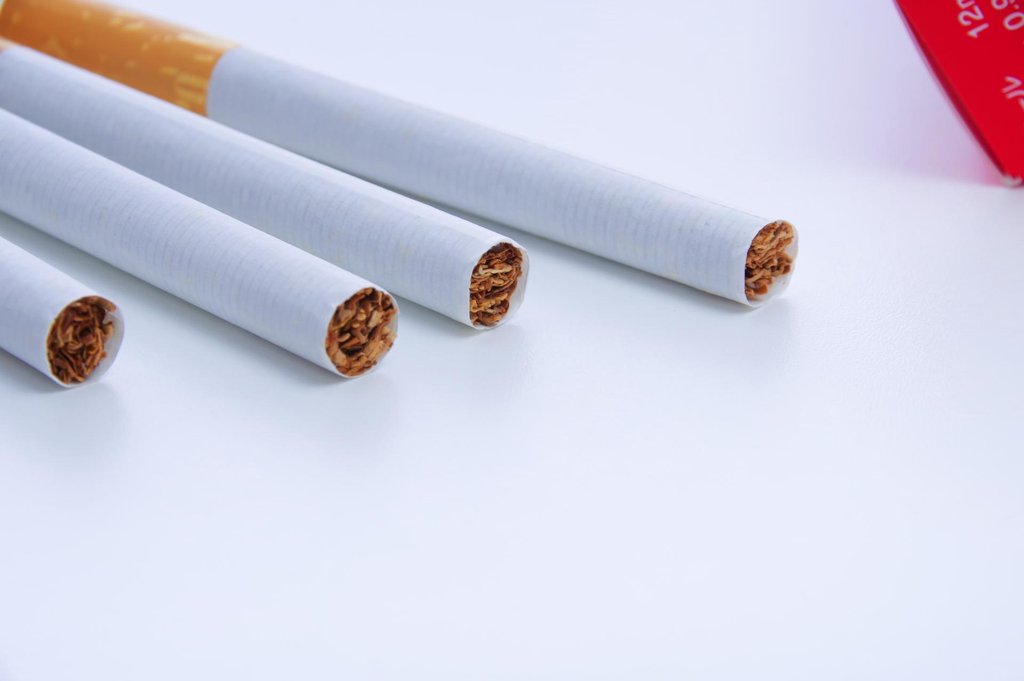
In Japan, age restrictions apply not only to drinking but also to smoking, gambling, and certain entertainment venues. Because some activities become legal at 18 while others remain restricted until 20, the rules can be confusing for visitors from overseas.
Four activities deserve attention: smoking, public race betting, pachinko (a Japanese pinball-style game), and late-night entertainment venues. Each has its own age requirements and rules, and knowing them in advance will help you avoid unexpected problems during your stay.
Smoking: Both Buying and Smoking Start at 20
In Japan, the legal minimum age for both purchasing and smoking tobacco is 20. Since it is the same as the legal drinking age, the two are easy to remember together.
When buying cigarettes at a convenience store, you will be asked to tap the age confirmation button on the register touchscreen, just as you would when purchasing alcohol. If the clerk believes you appear underage, you may also be asked to show identification. Foreign visitors are typically expected to present their passport, although age verification practices vary by store.
Cigarette vending machines are generally not a practical option for foreign travelers. Modern machines verify age using a Japanese driver’s license or My Number card, both of which are issued only to residents of Japan. As a result, most visitors cannot purchase cigarettes from vending machines.
For foreign travelers, the simplest and most reliable way to buy tobacco is at a convenience store, with your passport ready in case age verification is required.
Public Race Betting: Participation Starts at 20
Japan’s four forms of public race betting—horse racing, keirin (track cycling), boat racing, and auto racing—all have a minimum betting age of 20. This differs from the age requirement for pachinko, which is generally 18 and over, so be careful not to confuse the two.
Under the Horse Racing Act, purchasing betting tickets while under the legal age can result in a fine of up to ¥500,000 (about $3,300 USD). It is also illegal to ask someone else to purchase betting tickets on your behalf.
There is no age restriction on entering a racecourse or watching the races. Popular venues such as Tokyo Racecourse and Kyoto Racecourse are enjoyable sightseeing destinations, and visitors of any age are welcome to experience the atmosphere without placing bets. If you do wish to buy betting tickets, you may be asked to provide proof of age, so carrying your passport is recommended.
Online betting services are also restricted to users aged 20 and over and require strict identity verification during registration.
Even if you are under 20, visiting a racecourse to watch the races and experience the lively atmosphere can still be a memorable part of your trip.
Pachinko: No Entry Under 18
Pachinko is legally classified as a form of amusement rather than gambling. Unlike public race betting, which has a minimum age of 20, the Entertainment Business Act prohibits anyone under 18 from entering a pachinko parlor.
Because the legal age for drinking and smoking is 20, while the minimum age for entering a pachinko parlor is 18, this is a rule that many visitors find confusing.
One important detail is that high school students are not allowed to enter, even if they are already 18 years old. Under the industry’s self-regulatory rules, admission is permitted only after high school graduation.
Some travelers visit pachinko parlors with local friends or as part of a guided tour. Since parlors are required to display age restrictions at the entrance, staff may also ask to see identification. Anyone under 18 is prohibited from entering under any circumstances, even if accompanied by a parent, so it is worth checking your group’s eligibility before visiting.
Entertainment Facilities: Late-Night Age Limits Apply
Karaoke boxes, game arcades, and similar entertainment venues are subject to late-night age restrictions that are separate from Japan’s drinking and smoking laws. These restrictions are based on each prefecture’s youth protection ordinance, and 45 of Japan’s 47 prefectures have similar regulations.
The general rules are as follows:
- Under 16: Entry is often prohibited after 6 pm
- Under 18: Entry is generally prohibited after 10 pm or 11 pm
One important detail is that the definition of ‘late night’ varies by prefecture. In Aichi and Hiroshima, the restricted hours run from 11 pm to 6 am, while in Fukushima and Hyogo they run from 10 pm to 5 am, so the rules change with your destination.
In Tokyo, anyone under 18 is prohibited from staying in a karaoke box after the curfew, even if accompanied by a parent or guardian. Many other municipalities enforce similar rules, so having an accompanying adult does not necessarily guarantee entry.
If you are planning late-night activities, check the venue’s official website in advance for its operating rules and age restrictions. You may also be asked to present your passport or another form of proof of age at the entrance, so be sure to carry one.
Common Questions About Japan’s Drinking Age
Even after learning the basic rules, certain situations can still leave travelers wondering what’s actually allowed. The following five questions are among the ones visitors ask most often.
They cover topics such as entering an izakaya while underage, as well as the potential consequences of breaking Japan’s age-related laws. These answers address the gray areas that travelers are most likely to encounter during their trip.
Can I Enter an Izakaya If I’m Under 20?
No law prohibits entry itself. Visiting an izakaya just for the food, without drinking, is perfectly legal.
In practice, however, there are two potential obstacles. The first is Japan’s secondhand smoke regulations. Under the revised Health Promotion Act, which came fully into force in 2020, anyone under 20 is prohibited from entering restaurants where smoking is permitted.
The second is the restaurant’s own policy. Even at completely non-smoking establishments, some izakaya choose to admit only guests aged 20 and over in order to avoid complications related to alcohol service.
If your group includes someone under 20, these tips can help you find a suitable venue:
- Choose restaurants labeled non-smoking or family-friendly on map and review apps.
- Opt for major izakaya chains, which are typically completely non-smoking.
- Mention when making your reservation that your group includes someone under 20.
What Happens If a Traveler Breaks the Drinking Age Law?
Drinking under the age of 20 is prohibited in Japan, but the law does not impose a direct criminal penalty on the underage drinker. However, if the police discover an underage person drinking, they may question them or place them under protective guidance, which can disrupt their trip or stay in Japan.
International students may also face consequences under their school’s regulations. Depending on the circumstances, a school may report the incident or impose disciplinary measures, and it could affect a future visa renewal. These outcomes are not automatic, however, and depend on the individual case.
Using a forged ID or altering a legitimate identification document to misrepresent your age is a far more serious matter. Such actions may result in separate criminal charges that go well beyond the drinking violation itself. A criminal record can affect future visa applications and entry into Japan, so attempting to use false identification is never worth the risk.
Can I Drink on My 20th Birthday?
Yes. In Japan, you may legally drink alcohol beginning on your 20th birthday.
Under Japan’s Act on Calculation of Age, a person legally reaches a new age at the start of their birthday. From the moment your 20th birthday begins, you are legally permitted to drink alcohol.
In practice, however, you may still be asked to verify your age. Staff determine your eligibility based on the date of birth shown in your passport, and they may be especially careful when your birthday is that very day.
If you plan to celebrate your 20th birthday with a drink in Japan, keep the following in mind:
- Always carry a passport or other ID showing your date of birth
- If asked, simply explain that today is your 20th birthday
- If you’re unsure, plan your celebration for the following day or later
Even though the law is on your side, the day after tends to go more smoothly.
Are There Age Limits for Bringing Alcohol Into Japan?
Bringing alcohol into Japan involves two separate considerations: the duty-free allowance and the minimum age requirement.
Travelers aged 20 or older are entitled to a duty-free allowance of up to three 760 mL (about 25.7 fl oz) bottles of alcohol. Within this limit, no customs duty is charged. Any alcohol exceeding the allowance is subject to customs duty and consumption tax.
Travelers under the age of 20 are not eligible for the duty-free allowance. In addition, you cannot use or combine another family member’s duty-free allowance to cover alcohol that you are carrying.
If you are under 20 and the alcohol is not intended for your own consumption—for example, if it is a gift for family or friends—you may still be permitted to bring it into Japan, provided you declare it properly and pay any applicable duties and taxes.
To avoid problems at customs:
- Clearly explain that the alcohol is a gift and not for your own consumption.
- Complete the Declaration of Accompanied and Unaccompanied Articles accurately.
- Keep the quantity reasonable so that it is not interpreted as being for your personal use.
Before you travel, check both your eligibility based on your age and the amount of alcohol you plan to bring into Japan.
How Can I Enjoy Eating Out With Companions Under 20?
Traveling with family members or friends under the age of 20 may leave you wondering whether they can join you at an izakaya. While Japanese law does not prohibit their entry, some establishments have their own policies and may refuse admission to guests under 18 or under 20.
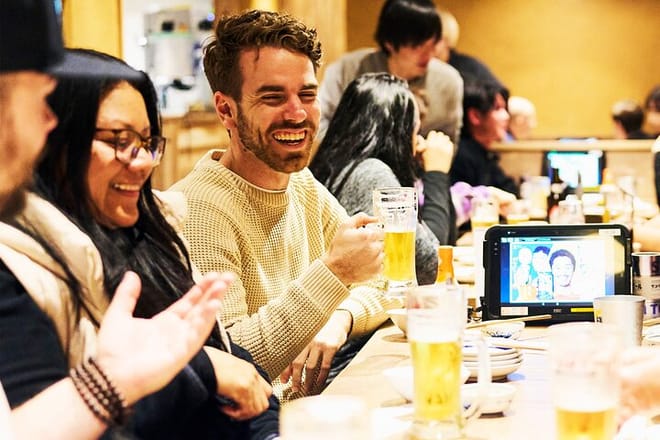
A guided food tour is an easy way to avoid this uncertainty. On tours operated by Japan Guide Star, an English-speaking guide takes care of selecting the venues, placing orders, and handling payment. Adults can enjoy alcoholic beverages, while younger participants can enjoy soft drinks and the food, allowing everyone in the group to take part comfortably.
Popular tours include the following.
- Tokyo: Shinjuku Food Tour — Visit four izakaya in Shinjuku and enjoy 15 dishes with drinks.
- Tokyo: Asakusa Guided Food Tour — Explore Asakusa’s drinking district while sampling 12 dishes and drinks.
- Osaka: Guided Food Tour — Visit four izakaya in Osaka and enjoy 12 dishes with drinks.
Every tour includes an English-speaking guide, so there is no need to worry about understanding Japan’s dining customs or local rules. For groups that include travelers of different ages, Japan Guide Star tours offer a convenient and enjoyable way to experience Japanese food culture together.
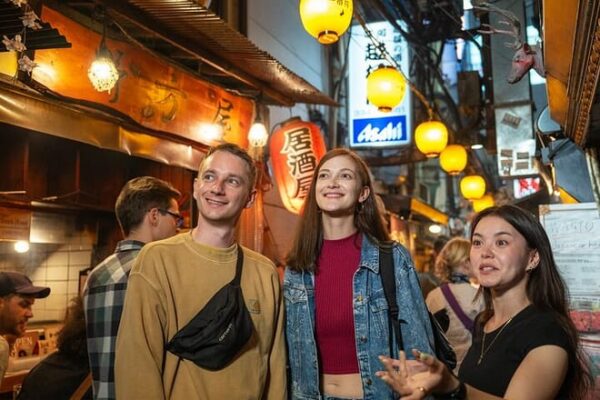
Shinjuku: Food Tour – 15 Dishes at 4 Eateries
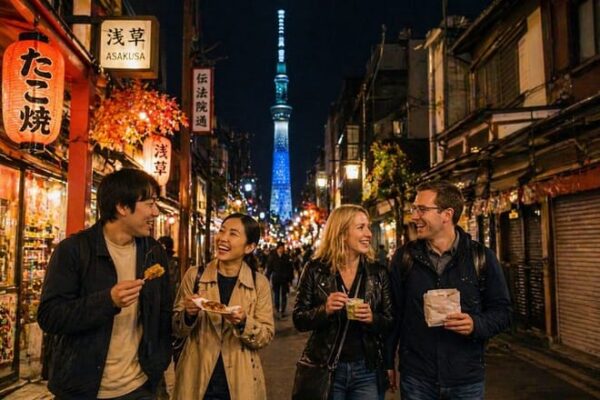
Asakusa: Guided Food Tour with 12 Dishes at 4 Local Eateries
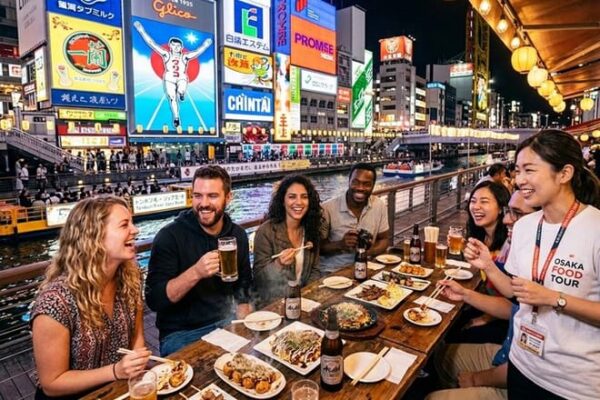
Osaka: Guided Food Tour with 12 Dishes at 4 Local Eateries
Enjoy Drinking in Japan the Right Way
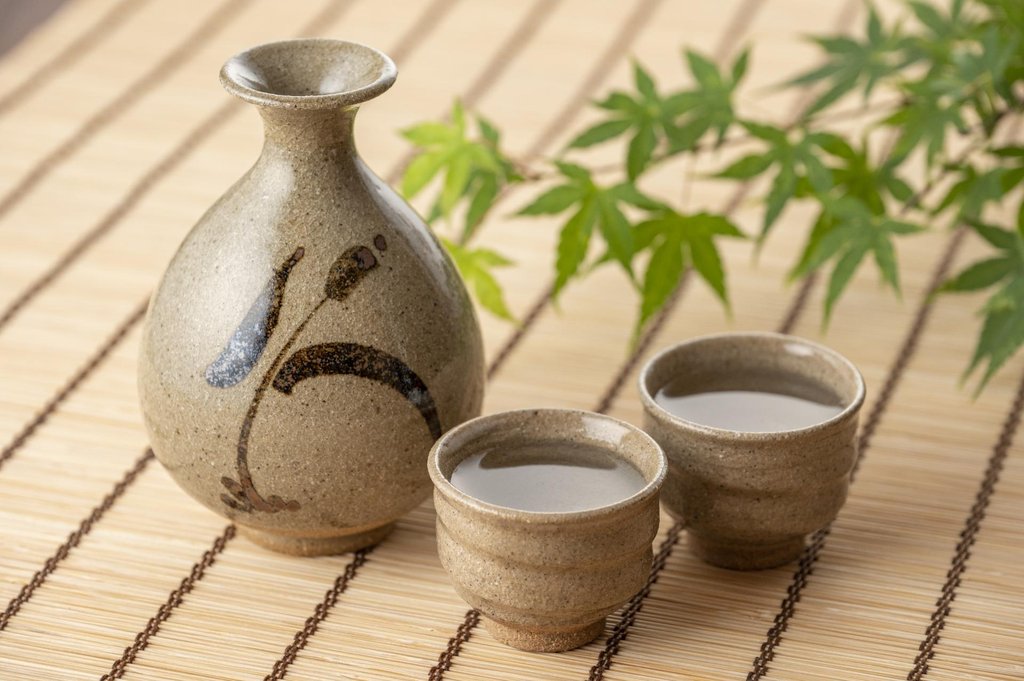
Japan’s legal drinking age is 20, and it has remained unchanged even after the age of adulthood was lowered to 18. Age verification is common when purchasing alcohol at convenience stores, supermarkets, izakaya, bars, and nightclubs, and the same rules apply to foreign visitors as they do to Japanese residents. Carrying your passport with you is the easiest way to avoid any problems if you are asked to confirm your age.
From convenience store chuhai to regional sake enjoyed at a local izakaya, Japan offers a rich and distinctive drinking culture that is well worth exploring. By understanding the rules in advance, you can relax and enjoy the experience with confidence.
*1 National Tax Agency, “Installation Status of Alcohol Vending Machines”