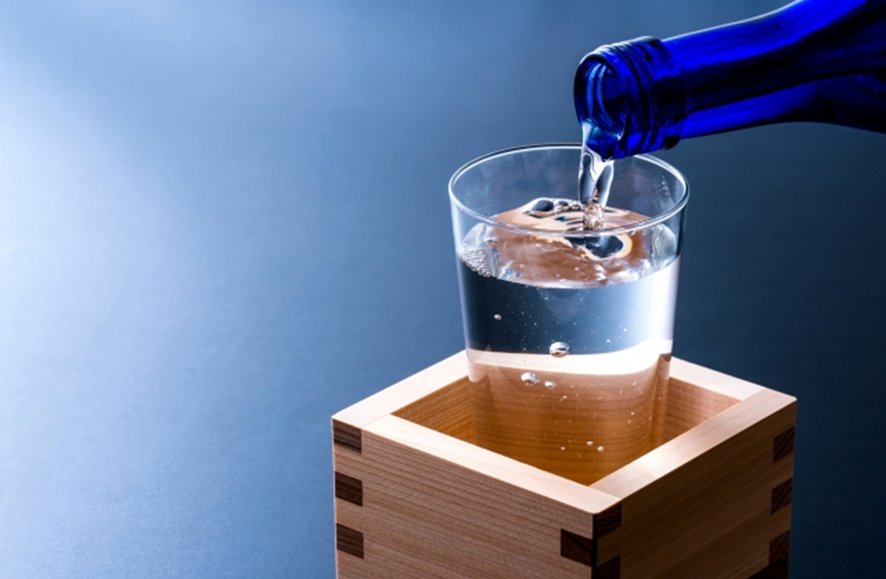
Comparing different types of sake (Japan’s rice-based brewed alcohol) in Tokyo requires more preparation than many travelers expect. You may need to consider whether English explanations are available, whether a reservation is required, and how to choose a bottle when every label is in Japanese.
The main ways to enjoy sake in Tokyo differ in four key respects: the format of English support, how the sake is selected, how long the experience takes, and whether advance booking is required. Three English-guided food tours are easy to join even if you cannot read Japanese. Common questions before booking—such as what to expect when traveling with someone under 20 or with companions who do not drink—also have straightforward answers.
The Easiest Route: Use a Food Tour to Compare Sake in Tokyo

Tokyo offers several ways to try sake, but for a first experience, an English-guided food tour is often the simplest option. Below are the reasons food tours work well for beginners, along with how more experienced drinkers can arrange their own kikizake (sampling several types of sake side by side in small pours) or visit a brewery.
The Guide Chooses and Orders the Sake for You
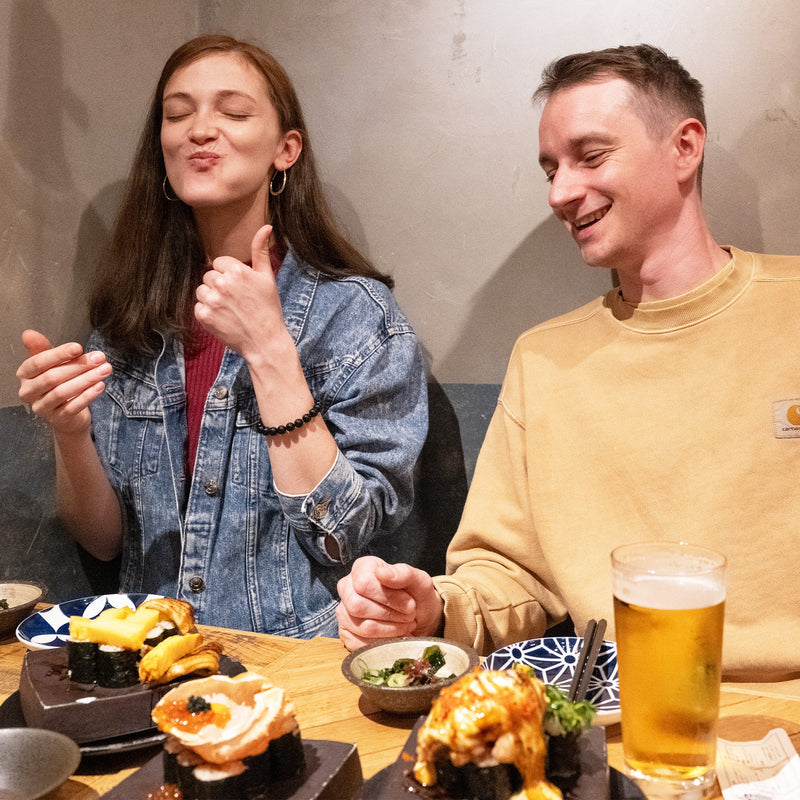
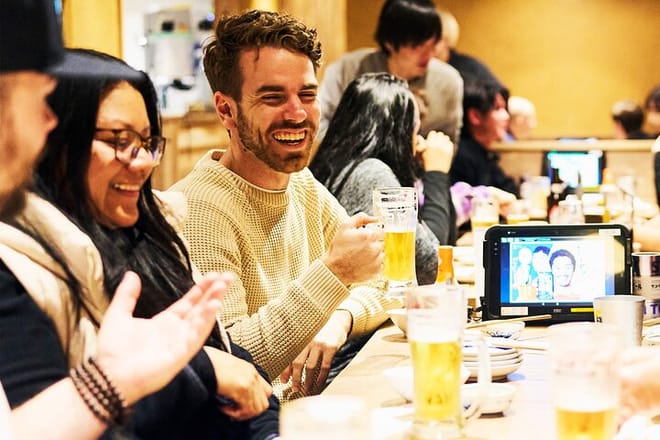
On an English-guided food tour, the guide takes you to three or four izakaya (Japanese pub-style restaurants serving small dishes with drinks) and orders sake that pairs well with the food at each stop. If you visit on your own, you may face dozens of Japanese labels lined up on the wall or listed on the menu. Figuring out which sake is dry, aromatic, or suited to your taste can be difficult without guidance. Dedicated English-guided experiences focused purely on sake tasting are relatively hard to find in Tokyo, so a food tour that pairs sake with local dishes is a practical way to explore different types.
A typical tour runs like this:
- About three hours across several venues, mostly izakaya. The atmosphere and signature dishes change at each stop, allowing you to experience several different establishments in one evening.
- 12–15 dishes and several drinks are included, with some stops offering a choice of beer or a soft drink instead of sake.
- The guide explains both the food and sake in English, so you can ask questions as you go and identify what you liked about a particular sake.
If you cannot decide which tour to take, use the Shinjuku: Food Tour – 15 Dishes at 4 Eateries as a benchmark. With start times at 5:00 pm, 6:00 pm, and 7:00 pm, it is easy to fit around your schedule. Of the three tours covered here, it also has the most reviews, giving you plenty of feedback from past participants to get a clearer picture of what the evening is like.
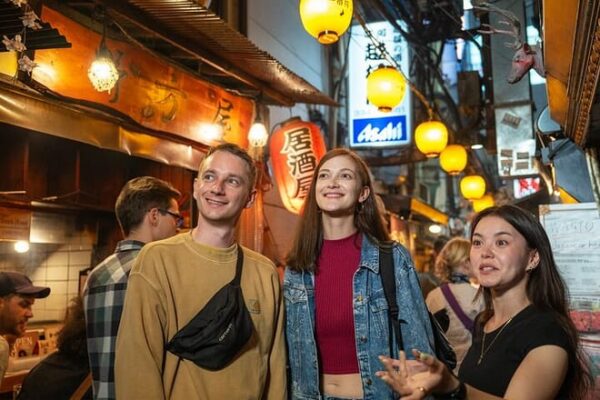
Shinjuku: Food Tour – 15 Dishes at 4 Eateries
Experienced Drinkers Can Arrange Their Own Tasting or Brewery Visit
If you already know the basic sake classifications and want to explore different labels at your own pace, you can visit a tasting bar or a sakagura (sake brewery) without a guide. Keep in mind that a food tour focuses on enjoying food and sake at an izakaya; it does not include a dedicated tasting session or a brewery visit.
For an easy option in central Tokyo, SAKE MARKET Shinjuku, a short walk from Shinjuku-sanchome Station, is convenient. You can pour your own sake from a refrigerated selection of around 100 labels. The flat rate of ¥2,700 (about $18 USD) for 90 minutes lets you try as many pours as you like without counting each drink. If you would rather sample only the labels that catch your eye, the Japan Sake and Shochu Information Center, about a three-minute walk from Toranomon Station, is another option. Tastings start at ¥100 (under $1 USD) per pour and are available on weekdays only.
To see sake being made, Ozawa Shuzo, a brewery in Sawai, Ome City, is another option. It takes about 1 hour 40 minutes each way from Shinjuku, but you can sample sake after the brewery tour and enjoy the scenery of the gorge along the Tama River where the brewery is located.
None of these places provide a guide, so check the official website before you go for information about English-language support, opening days, and booking requirements. The Ozawa Shuzo brewery tour requires an advance reservation.
4 Points for Choosing the Sake Tasting Experience That Suits You
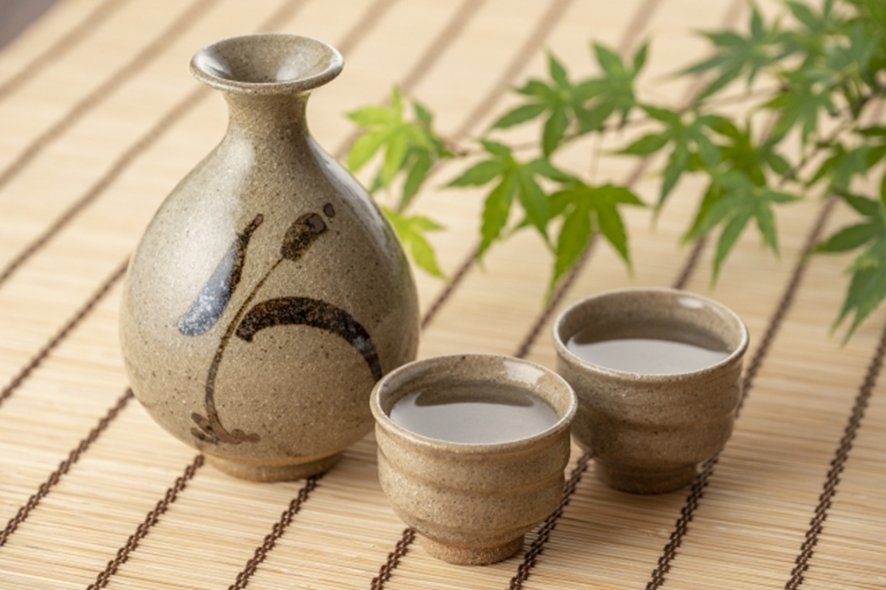
Sake experiences vary widely in both what they include and how much planning they require, even when they are all described as tastings. The four criteria below will help you narrow down the option that best fits your needs.
1. The Format of English Support
Even when a booking page says “English OK,” what that means in practice can differ from one experience to another. In an explained format, a guide or staff member who speaks English talks you through the differences in flavor and style. A labeled format is different: the shop provides English labels or menus, but there is no one to explain the sake in detail.
If sake is new to you, the explained format is generally the more useful choice. You can ask about terms such as junmai (sake brewed without added alcohol) and ginjo (sake brewed from rice polished to 60% or less) as they come up, so you finish the experience able to put the differences into words. With the labeled format, you have to look up the terms yourself, and it is easy to drink several types without ever understanding what distinguishes them.
If you cannot tell which format a given program uses, ask before booking: “Does an English-speaking guide accompany the group?”
2. How the Labels Get Chosen
An experience where someone selects the labels for you and one where you choose from a long lineup require different levels of background knowledge. The key differences are:
| Comparison Point | Guide Selects | You Select |
|---|---|---|
| Number of labels | A few, matched to the food | Several dozen to around 100 |
| Knowledge needed | Almost none | Helpful to read labels |
| Suits | Beginners; those who value efficiency | Intermediate drinkers looking for a favorite bottle |
The more labels on offer, the wider your choice—and the harder it becomes to choose when the information is mostly in Japanese. If you are selecting sake yourself, use the seimai buai (rice-polishing ratio, showing how much of the grain has been milled away) printed on the label as a guide. The smaller the figure, the more the rice has been polished. Sake with a polishing ratio of 50% or lower is made using the daiginjo method, which tends to produce more fragrant aromas. Alcohol content is generally around 15–16%.
3. Time Required
Sake experiences range from something you can fit into about 30 minutes of free time in the evening to an outing where travel alone takes three hours round trip. Search results can mix centrally located Tokyo shops with suburban breweries, so narrow down your options based on how much time you have available.
| Type of Experience | Typical Duration | Main Focus |
|---|---|---|
| Self-serve tasting in central Tokyo | 30–90 minutes | Comparing several to several dozen labels |
| Guided food tour | About 2 hours 30 minutes–3 hours | Pairing food with sake |
| Suburban brewery visit | About 3 hours of travel round trip (half a day) | Touring the brewery and tasting |
A food tour works well when you want dinner and sake together, while a self-serve tasting is convenient for a quick stop between sightseeing. A brewery visit makes more sense when you have several hours to spare. If you plan to visit a brewery, leaving central Tokyo in the morning and returning in the evening gives you more time to enjoy the visit without rushing.
4. Whether You Need to Book
Booking conditions differ by experience and generally fall into three main patterns:
- Immediate online booking: Some experiences can be booked online immediately. With food tours from Japan Guide Star, you select a date and time on the booking page and can confirm your reservation immediately if space is available.
- Walk-ins: Some self-serve tasting shops accept walk-ins, allowing you to drop in spontaneously between sightseeing stops without a reservation.
- Advance applications: Brewery visits and similar programs may require you to apply by phone or online by the previous day.
Popular shops in central Tokyo can fill up after 6:00 pm on Fridays and Saturdays, so booking in advance is advisable for a weekend evening. When booking, also check the cancellation deadline, meeting point, and any age restrictions.
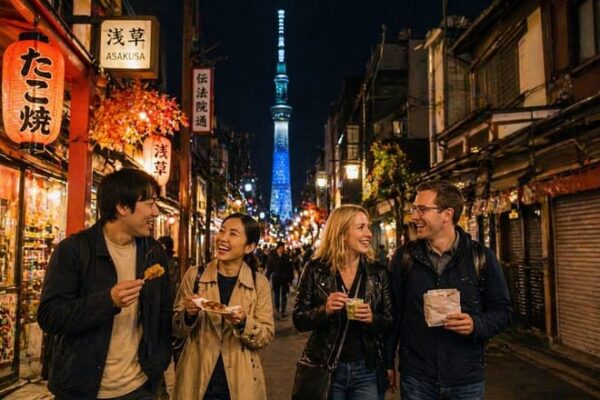
Asakusa: Guided Food Tour with 12 Dishes at 4 Local Eateries
Comparison Table: 3 Main Ways to Enjoy Sake in Tokyo
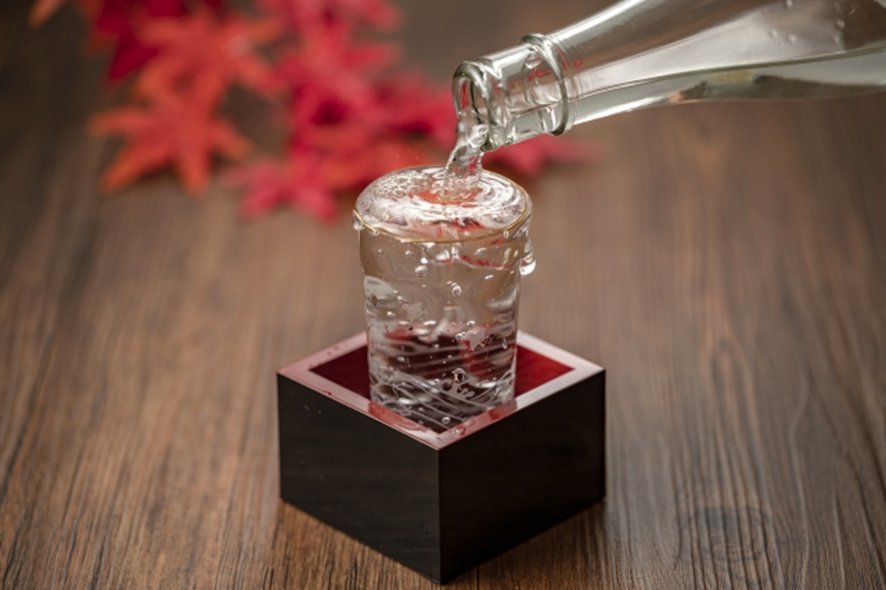
Ways to enjoy sake in Tokyo divide into three main types: a guided food tour, a self-serve tasting in central Tokyo, and a brewery visit in the suburbs. The table below compares a representative example of each type across the four points above.
The representative guided food tour is Shinjuku: Food Tour – 15 Dishes at 4 Eateries. The group meets in front of the police box a few steps from the East Exit of JR Shinjuku Station, then visits four izakaya in the Omoide Yokocho and Golden Gai alley districts over about three hours. For self-serve tasting in central Tokyo, SAKE MARKET Shinjuku is just a short walk from Shinjuku-sanchome Station. It offers around 100 labels at a flat rate of ¥2,700 for 90 minutes. For a suburban brewery visit, Ozawa Shuzo in Sawai, Ome City, takes about 1 hour 40 minutes each way from Shinjuku and offers sake tasting after the brewery tour, which requires advance booking.
| Comparison Point | Guided Food Tour | Self-Serve Tasting in Central Tokyo | Suburban Brewery Visit |
|---|---|---|---|
| Example | Shinjuku: Food Tour – 15 Dishes at 4 Eateries | SAKE MARKET Shinjuku | Ozawa Shuzo |
| Format of English support | English guide explains on the spot | No guide (English support varies by shop; check ahead) | No guide (check English support ahead) |
| How labels get chosen | Guide selects and orders to match the food | You choose from around 100 labels | You taste the labels brewed on site |
| Time required | About 3 hours | From 90 minutes | About 3 hours of travel round trip |
| Booking | Book online in advance | Walk-ins possible at some shops | Advance reservation required |
Choose the food tour if you want English explanations alongside your meal, the self-serve tasting if you want to sample many labels and discover your own preferences, or the brewery visit if you want to see how sake is made.
Shinjuku: Food Tour – 15 Dishes at 4 Eateries
3 Recommended Food Tours With Sake in Tokyo, by Area
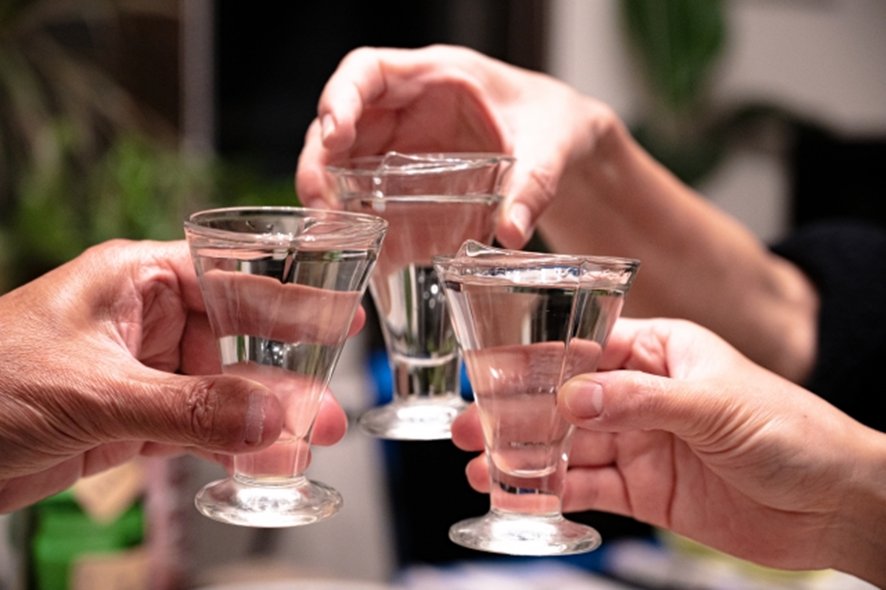
The English-guided food tours run by Japan Guide Star cover three areas: Shinjuku, Shibuya, and Asakusa. The atmosphere of the restaurants and the way sake is incorporated into each tour differ, so choose based on both access from your accommodation and your personal taste.
Shinjuku: Food Tour – 15 Dishes at 4 Eateries
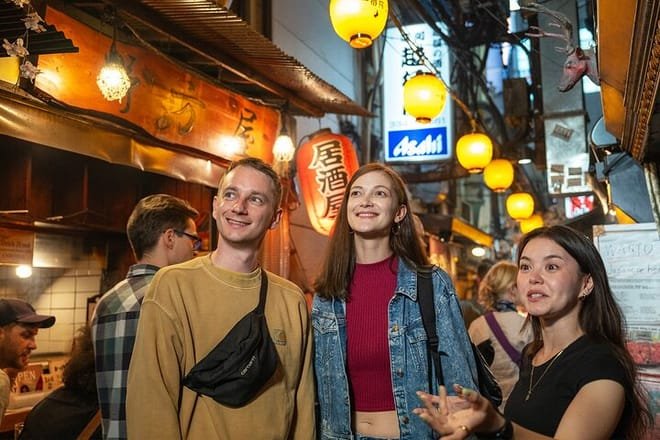
Shinjuku: Food Tour – 15 Dishes at 4 Eateries – JapanGuideStar
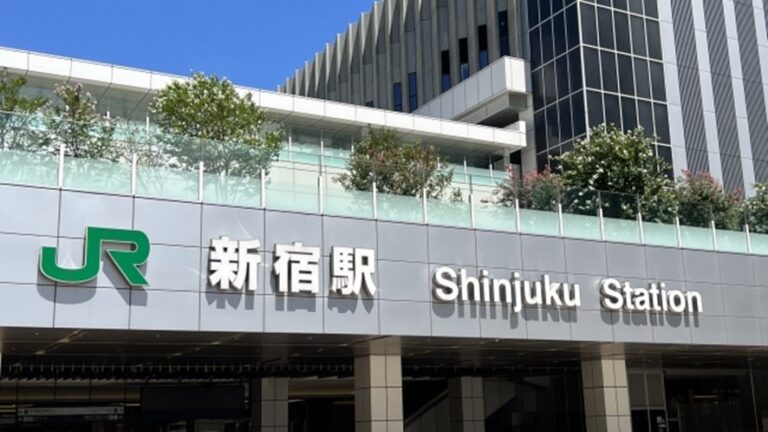
What sets the Shinjuku tour apart is the chance to explore its postwar drinking districts with a guide. You meet in front of the koban (small neighborhood police box) a few steps from the East Exit of JR Shinjuku Station. From there, you spend about three hours visiting four izakaya in Omoide Yokocho, an alley packed with tiny eateries along the train tracks, and Golden Gai, a block of bars with only a handful of seats each.
The tour includes 15 dishes, from kushiyaki (meat and vegetables skewered and grilled) cooked over smoky grills to sushi, along with drinks that include sake. Many of the small counter shops in this area have menus only in Japanese, and stepping through the noren (cloth curtain hung at a shop entrance) on your own can feel daunting. With a guide, you can leave both entering the shops and ordering to them. Participant reviews frequently mention the clarity of the guides’ explanations and the quality of the food at each stop.
Start times are 5:00 pm, 6:00 pm, and 7:00 pm, and free cancellation is available up to 24 hours before departure. That flexibility makes it easier to book in advance even if your itinerary may change.
Details
| Meeting point | In front of the police box at the East Exit of JR Shinjuku Station, 3-38-1 Shinjuku, Shinjuku-ku, Tokyo |
| Duration | About 3 hours (5:00 pm / 6:00 pm / 7:00 pm starts) |
| Included | 15 dishes across 4 shops, drinks including sake, English guide |
| Booking site | https://japanguidestar.com/tour/shinjuku-food-tour-15-dishes-at-4-eateries/ |
| Suits | Travelers who want to experience the tiny alley shops that are hard to enter alone |
Shinjuku: Food Tour – 15 Dishes at 4 Eateries
Tokyo: Shinjuku Historical Walking Tour & Secret Backstreets

Tokyo: Japanese Gold Repair Kintsugi Workshop in Shinjuku
Tokyo: Shibuya Food Tour with 15 Dishes at 4 Eateries
Tokyo: Shibuya Food Tour with 15 Dishes at 4 Eateries – JapanGuideStar
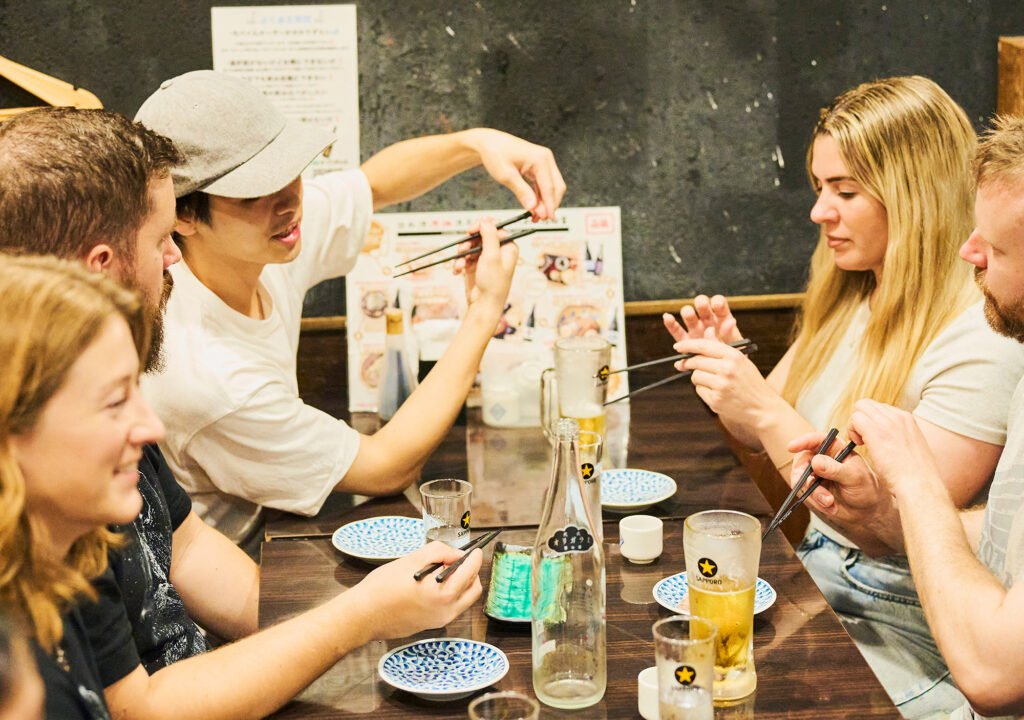
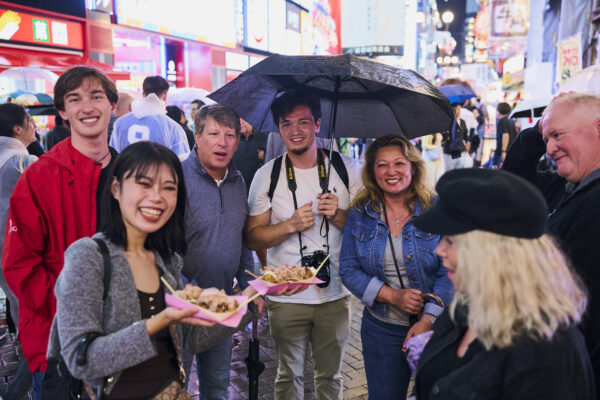
The Shibuya tour stands out for covering four completely different styles of establishment in one evening. You meet at SHIBU HACHI BOX by the Hachiko statue at Shibuya Station. From there, you spend about three hours visiting a back-alley tachinomi (a standing bar where you eat and drink at the counter), an izakaya, a specialty restaurant, and a gastro bar that takes its food as seriously as its drinks.
The tour includes 15 dishes and three drinks, with both alcoholic and alcohol-free options available. That makes it easy to join as a group with a mix of drinkers and non-drinkers: everyone shares the same dishes while choosing a drink that suits them. Where the Shinjuku tour immerses you in the atmosphere of narrow drinking alleys, the Shibuya tour lets you compare several different styles of establishment side by side.
Start times are 5:00 pm, 6:00 pm, and 7:00 pm, with free cancellation available up to 24 hours before departure.
Details
| Meeting point | In front of SHIBU HACHI BOX, 2-1 Dogenzaka, Shibuya-ku, Tokyo |
| Duration | About 3 hours (5:00 pm / 6:00 pm / 7:00 pm starts) |
| Included | 15 dishes across 4 shops, 3 drinks (alcoholic or alcohol-free), English guide |
| Booking site | https://japanguidestar.com/tour/tokyo-shibuya-food-tour-with-15-dishes-at-4-eateries/ |
| Suits | Travelers who want to try various types of shops; groups whose members drink very different amounts |
Tokyo: Shibuya Food Tour with 15 Dishes at 4 Eateries
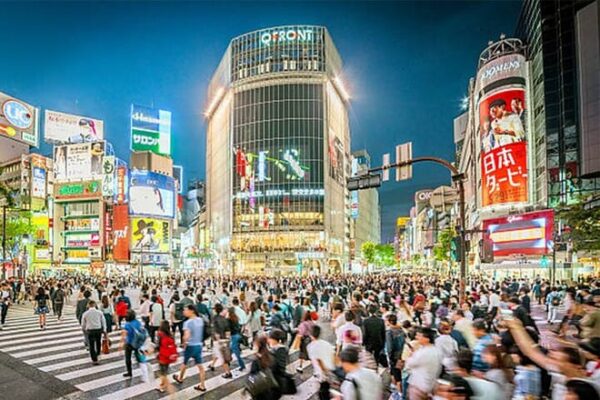
Tokyo: Shibuya Highlights Walking Tour & Secret View Spot
Tokyo Shibuya Chopstick Making Workshop
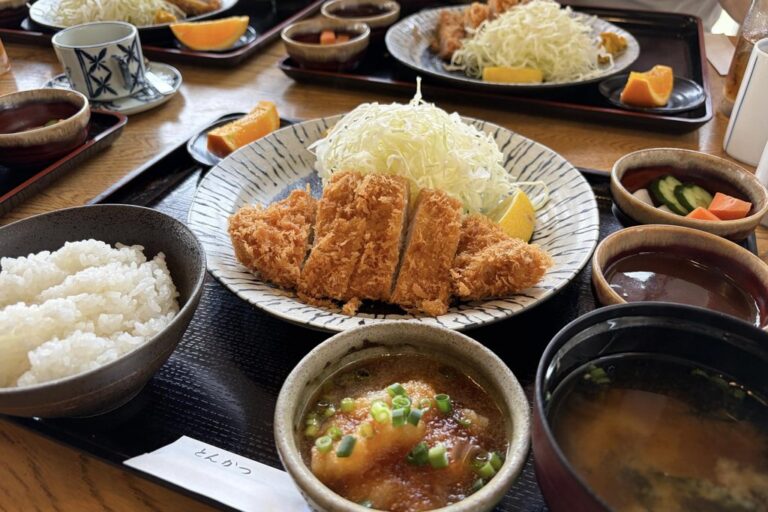
Tokyo: Asakusa Guided Food Tour with 12 Dishes & 3 Drinks
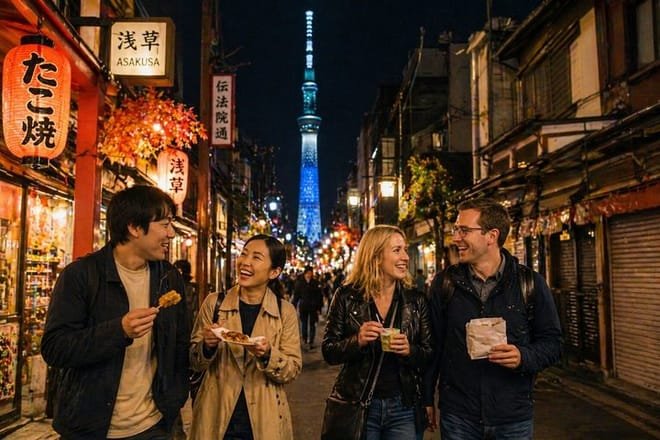
Tokyo: Asakusa Guided Food Tour with 12 Dishes & 3 Drinks – JapanGuideStar
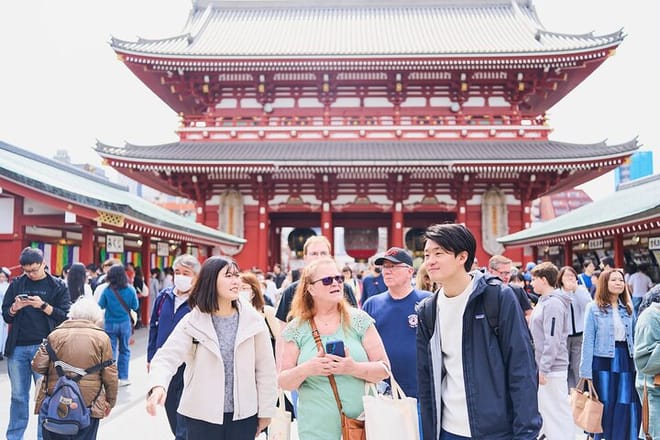
The Asakusa tour builds a dedicated stop at a sake bar into the route, making it a good fit for anyone who wants to spend more time exploring sake. You meet at the police box in front of Kaminarimon, the large red gate at the entrance to Sensoji Temple, for the single 6:30 pm departure. Over about 2.5 hours, the route covers the sake bar and Hoppy Street, a lane lined with old-style izakaya where tables are set outdoors.
At the sake bar, the guide selects the labels and places the order, so you can try sakes with distinctly different characteristics without having to read the labels yourself. The price covers 12 dishes and three drinks; anything ordered beyond that is paid for separately in cash, so bring a small amount with you. Participants under 20 are welcome and can join for the food and walking portion, but they are not served alcohol.
Free cancellation is available up to 24 hours before departure.
Details
| Meeting point | In front of the Kaminarimon police box, 1-3-1 Asakusa, Taito-ku, Tokyo (meet and depart at 6:30 pm) |
| Duration | About 2 hours 30 minutes |
| Included | 12 dishes, 3 drinks, English guide (additional orders paid in cash) |
| Booking site | https://japanguidestar.com/tour/tokyo-asakusa-food-tour-12-dishes-3-drinks/ |
| Suits | Beginners who want to compare labels at a sake bar; families including members under 20 |
Asakusa: Guided Food Tour with 12 Dishes at 4 Local Eateries
Tokyo: Asakusa & Sensoji ー Oldest Temple Walking Tour (2hrs)
Common Questions About Sake Tasting in Tokyo
Here are six questions travelers ask most before booking a sake experience.
Can People Who Do Not Drink Sake Join the Tour?
Yes. Food tours let you choose alcohol-free drinks, while the food included in the tour price is the same for everyone. Mentioning when you book that you would like alcohol-free drinks can help keep ordering smooth on the day.
Can Travelers Under 20 Join?
Food tours may accept younger travelers, while self-serve tasting shops may not. The Asakusa food tour accepts participants under 20, who simply are not served alcohol. Some self-serve tasting shops, by contrast, do not admit minors at all, while establishments that permit smoking cannot admit anyone under 20 under Japan’s Health Promotion Act.
How Do I Describe the Differences Between Labels When Ordering?
Three axes cover most of what you need to convey your preference.
| Axis | Difference | Tendency in Flavor |
|---|---|---|
| Rice-polishing ratio | 60% or below by the ginjo method is ginjo; 50% or below is daiginjo | The smaller the figure, the more fragrant the aroma |
| Junmai or honjozo | Junmai uses only rice, kome-koji (rice inoculated with koji mold, used to convert starches into fermentable sugars) and water; honjozo adds a small amount of distilled alcohol | Honjozo tends toward a lighter finish |
| Temperature | Chilled is reishu; warmed is okan | Chilling lifts the aroma; warming brings out the savory depth |
Combining the three axes, as in “Junmai ginjo, reishu, please,” makes your request easy for staff to understand.
How Many Glasses of Sake Do I Get on a Food Tour?
The number of drinks depends on the tour. The format typically pairs 12–15 dishes with several drinks; it is not an all-you-can-drink experience. Beer and soft drinks are often available alongside sake, and because the number of included drinks varies by tour, checking the booking page is the surest way to know what is included.
Shinjuku: Food Tour – 15 Dishes at 4 Eateries
Asakusa: Guided Food Tour with 12 Dishes at 4 Local Eateries
Can I Join a Tour or Brewery Visit With a Food Allergy?
Telling the operator about your dietary restrictions when you book may allow them to make adjustments. Izakaya cooking, however, often relies on dashi (savory stock made from kelp and bonito flakes) and soy sauce, which typically contains wheat. This can make gluten-free and fully vegetarian diets more difficult to accommodate.
Write out the specific ingredients you need to avoid and confirm your requirements with the operator when booking.
Can I Buy Sake I Liked on the Spot?
Some places sell sake on the spot, while others do not. The Japan Sake and Shochu Information Center and the shop at Ozawa Shuzo sell the labels you have tasted. Izakaya and food tour stops generally do not offer retail sales, so photograph the label or note the sake’s name, then look for it at a liquor store or department store food hall.
Pick the Sake Route That Matches Your Evening in Tokyo
To compare sake in Tokyo, an English-guided food tour where the guide selects and orders labels to match the food keeps things simple, even if you cannot read Japanese. If you prefer to work through a wide selection of labels yourself, a self-serve tasting such as SAKE MARKET Shinjuku is a better fit. If you want to see how sake is made, the brewery tour at Ozawa Shuzo offers a different experience. The comparison table above lays out the key conditions for each option.
Japan Guide Star runs English-guided food tours with a different character in each area: the alley izakaya of Shinjuku, four contrasting establishments in Shibuya, and a sake bar stop in Asakusa. All three offer free cancellation up to 24 hours before departure, so once your evening plans in Tokyo take shape, check availability starting with the tour closest to your accommodation.
See the full list of food tours operated by Japan Guide Star below.