Tokyo has more team-building options than most organizers can easily narrow down. Group size limits, English support, and what the price actually includes are all worth comparing, yet many of those details remain unclear until you inquire directly.
Below are seven activities you can organize in Tokyo, each listed with its group capacity and duration. They include cultural workshops such as chopstick making and kintsugi (the traditional Japanese technique of repairing broken pottery with gold), as well as food tours and a sumo show. You will also find four checkpoints where planning tends to stall, along with a comparison of booking directly with a venue versus going through a planning company, to help you match the options to your team’s goals and group size.
Quick Guide: Tokyo Team Building Activities by Group Size and Time
When planning team building in Tokyo, narrowing the candidates by group size and available time makes the choice much easier. Craft workshops typically take about an hour, and individual venues can often accommodate roughly 30–60 people at once. Food tours and guided walking tours are usually offered in small groups of about 6–10, although some accept around 15–30 participants.
The table below compares typical figures across four criteria.
| Type of Activity | Typical Group Size per Session | Duration | Indoor/Outdoor | Food and Drink |
|---|---|---|---|---|
| Craft workshops (chopstick making, kintsugi, calligraphy, Japanese sweets making, etc.) | About 30–60 per venue | About 1 hour | Indoor | None (except Japanese sweets making) |
| Food tours | 20–30 per group | About 2–3 hours | Outdoor (walking between eateries) | Included (food and drinks) |
| Guided walking tours | 15–30 per group | 1–2 hours | Outdoor | None |
| Sumo show | Varies by venue | About 90 minutes | Indoor | Drinks served at some venues |
Craft workshops and sumo shows take place entirely indoors, so weather does not affect them. This makes them easy to schedule before or after a meeting or group dinner.
Food tours and walking tours take place outdoors: large groups may need to split up with multiple guides, and you will need to prepare for rain or midsummer heat. Specific capacities and durations for each location are listed in the Details table for each activity in the next section.
7 Recommended Team Building Activities in Tokyo
The seven activities here were chosen based on three criteria: they work well for groups, can be conducted in English, and take about 1–2 hours, making them easy to fit before or after other company events. Each entry explains what the activity involves, why it works well for team building, and what to consider when planning.
The first four—chopstick making, kintsugi, calligraphy, and Japanese sweets making—are craft workshops. They take place entirely indoors, with participants seated side by side and working on the same task. This format allows everyone to participate equally, regardless of age or physical ability, so very few people end up simply watching.
Three of them—chopstick making, kintsugi, and calligraphy—involve no food or drink. This means you do not need to check for food allergies or religious dietary restrictions in advance, and participants can take their finished pieces home the same day.
Chopstick Making: Carve Your Own Pair from Wood
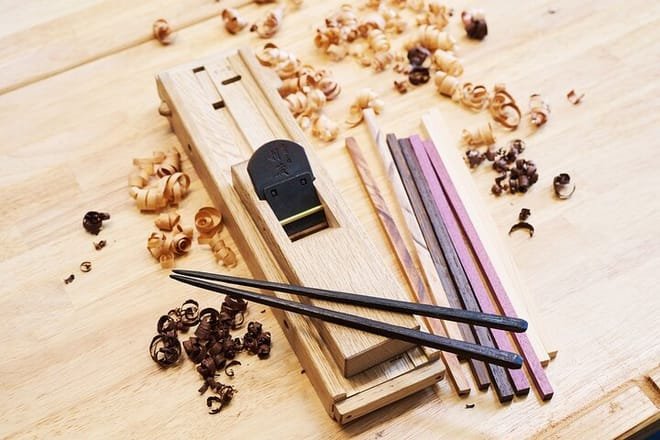
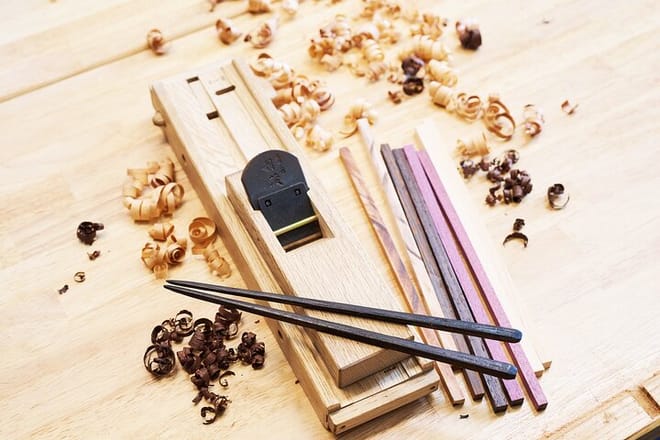
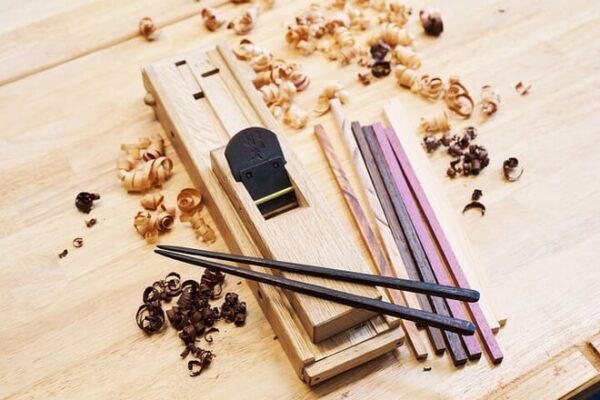
In a chopstick-making workshop, participants shave down a piece of wood to create their own pair of chopsticks. They shape the wood with a kanna (a hand plane that shaves thin layers from the surface), smooth it with sandpaper, and finish it with a coat of oil. The instructor demonstrates each step involving blades or files before participants begin. Individual guidance is also available for trickier parts, so even people with little handicraft experience can take part.
Everyone works with the same materials and follows the same steps, so differences in experience are less noticeable. Participants can work on equal terms regardless of seniority. Fine wood shavings fall with each stroke as the handle gradually takes shape. Comparing progress with the person next to you also creates natural opportunities to chat and exchange tips about pressure and technique.
The finished chopsticks are practical items for everyday meals, making them a useful memento of a company event.
Japan Guide Star offers chopstick-making workshops at its studios in Shinjuku, Shibuya, Asakusa, and Ginza.
Details
| Experience | Area | Max. Participants per Session | Duration | Private Booking |
|---|---|---|---|---|
| Chopsticks Studio Shinjuku | Shinjuku | 60 people | 60 minutes | Available on request |
| Chopsticks Studio Ginza | Ginza | 30 people | 60 minutes | Available on request |
| Chopsticks Studio Asakusa | Asakusa | 44 people | 60 minutes | Available on request |
| Chopsticks Studio Shibuya | Shibuya | 44 people | 60 minutes | Available on request |
See all chopstick making workshops run by Japan Guide Star.
Tokyo Chopstick Making Workshop in Shinjuku

Tokyo Chopstick Making Workshop in Ginza
Kintsugi: Try the Traditional Japanese Art of Mending Broken Pottery with Gold

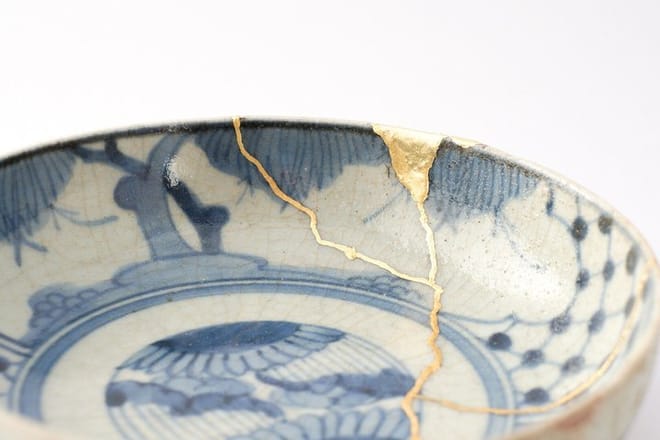
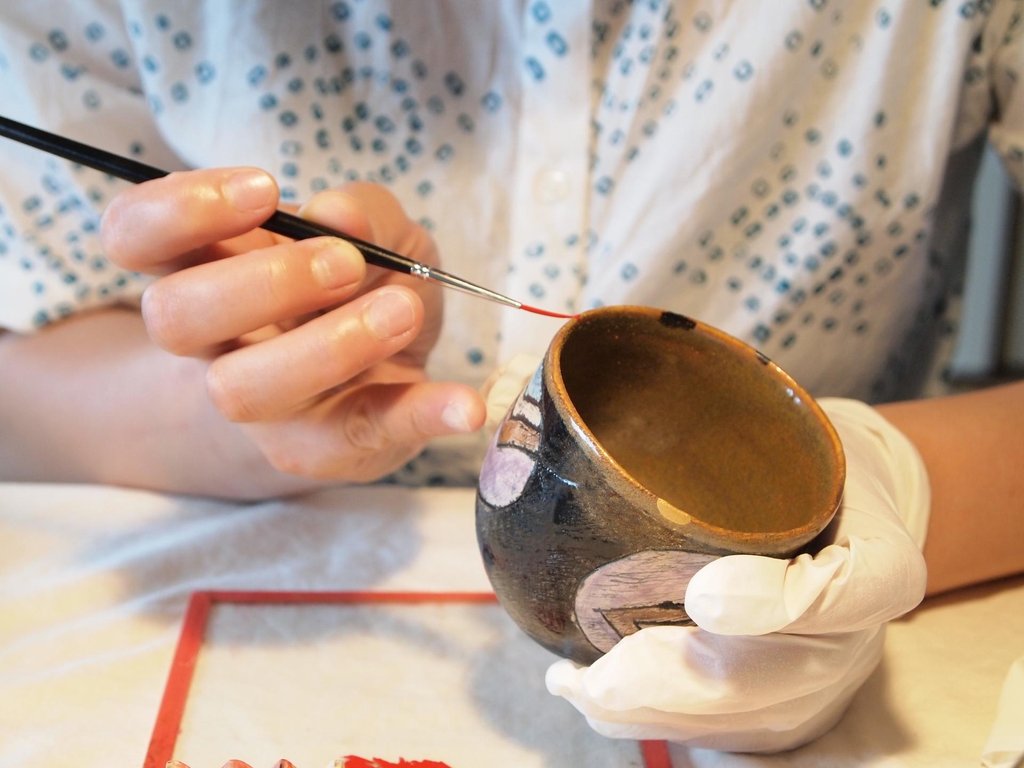
In a kintsugi workshop, participants glue the pieces of a broken dish back together and finish the seams with gold. Traditional kintsugi uses urushi (a natural lacquer made from tree sap) and can take anywhere from several weeks to several months to complete. Workshops for travelers, by contrast, typically use “simple kintsugi” with quick-drying resin. The work can be completed in a single session, and participants can take their pieces home right away.
Tracing a thin line along the seams with a fine brush and applying gold powder requires a delicate touch. The room often falls quiet as everyone concentrates on their work. When participants show each other their finished pieces, the gold lines differ in thickness and placement from person to person, even on dishes that broke in similar ways.
The instructor also explains the thinking behind kintsugi: rather than hiding cracks, the technique accentuates them in gold and turns them into part of the piece’s new character. This idea can work well as a starting point for debriefs in training sessions focused on handling failure and change, as well as discussions about how the team works together.
Japan Guide Star offers kintsugi workshops at its studio in Shinjuku.
Details
| Experience | Area | Max. Participants per Session | Duration | Private Booking |
|---|---|---|---|---|
| Tokyo: Japanese Gold Repair Kintsugi Workshop in Shinjuku | Shinjuku | 60 people | 60 minutes | Available on request |

Tokyo: Japanese Gold Repair Kintsugi Workshop in Shinjuku
Calligraphy: Write Your Name in Kanji with Brush and Ink
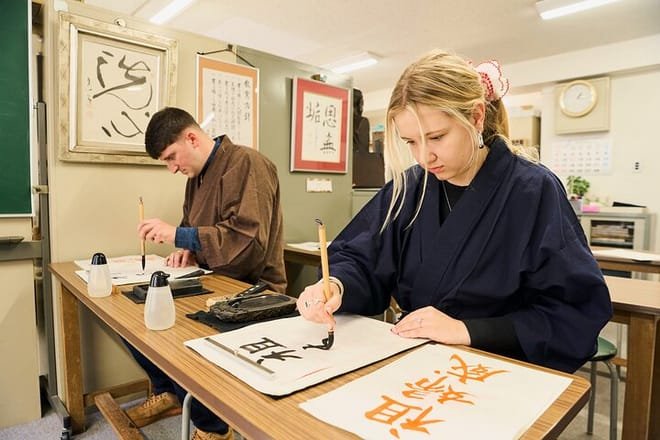
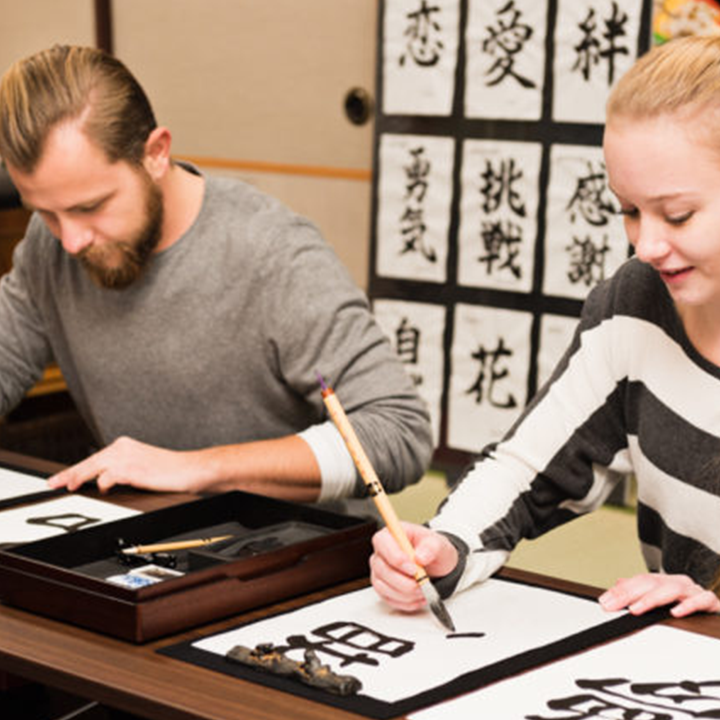
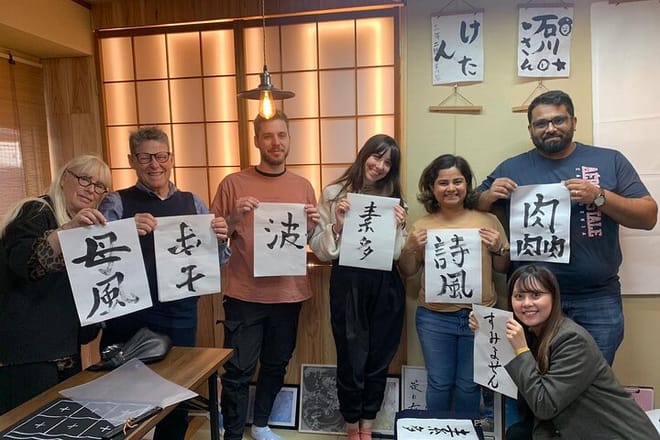
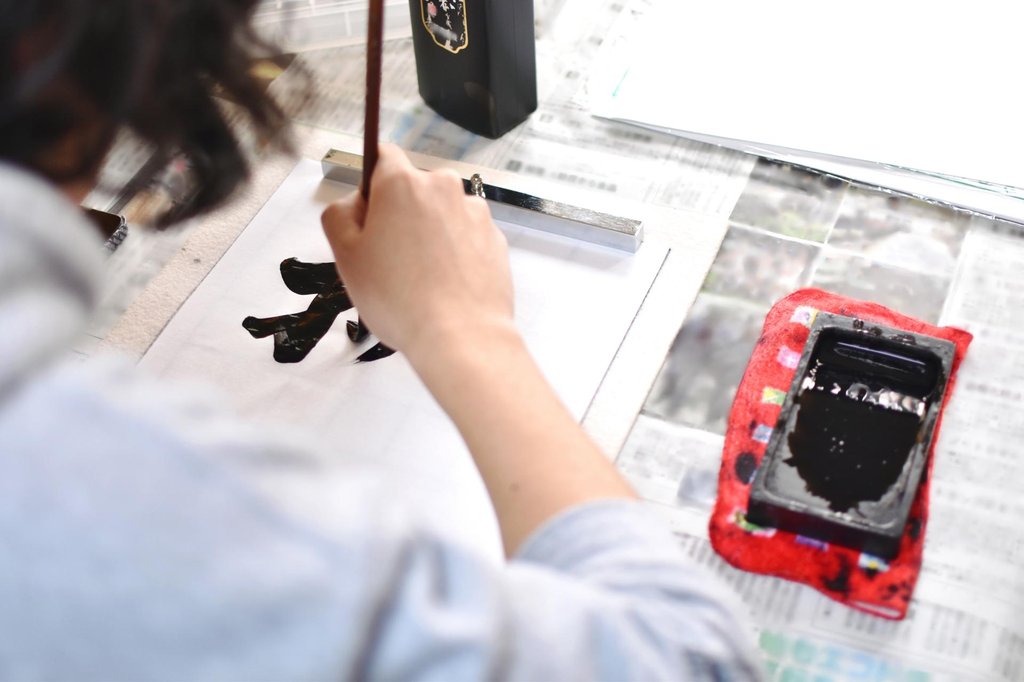
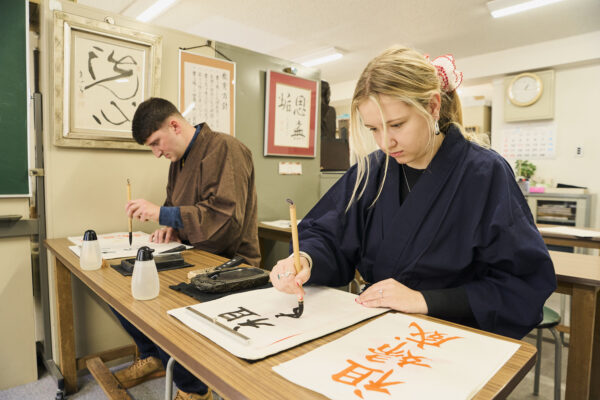
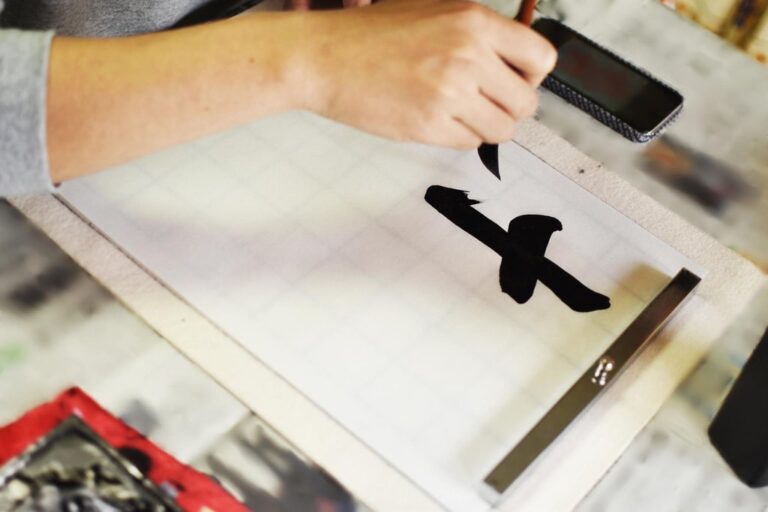
In a calligraphy workshop, participants write their names in kanji (the Chinese-derived characters used in written Japanese) with brush and ink, following the instructor’s model. Each name is rendered using ateji (kanji chosen for their sound rather than their meaning). The name “Emma,” for example, could be written as 恵真 or 絵麻. The distinctive element is that the chosen characters give each name a different meaning.
The instructor explains the candidate kanji and their meanings, so participants can choose their own characters without any prior knowledge. Once everyone has finished, set aside time to share your names and explain why you chose those characters. Each choice can offer a glimpse into personal tastes and values, helping even people who are meeting for the first time get to know one another.
Participants can take their finished work home as a personalized keepsake. Ink is difficult to remove from clothing, so check in advance whether aprons are provided.
Japan Guide Star offers calligraphy workshops at its studio in Shinjuku.
Details
| Experience | Area | Max. Participants per Session | Duration | Private Booking |
|---|---|---|---|---|
| Tokyo: Calligraphy Workshop & Original T-Shirt Creation | Shinjuku, Tokyo | 24 people | 90 minutes | Available on request |
Tokyo: Calligraphy Workshop & Original T-Shirt Creation
You’ll begin by exploring the fascinating history of kanji and its evolution
Japanese Sweets Making: Shape Seasonal Wagashi by Hand
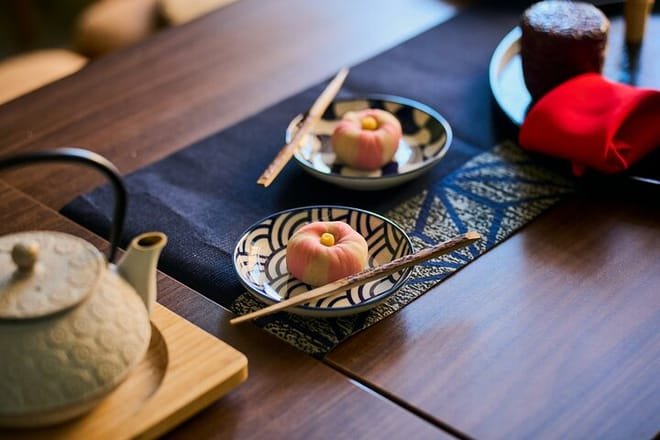
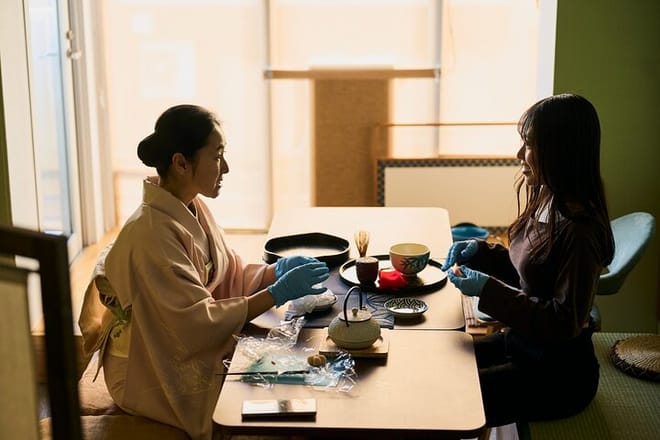
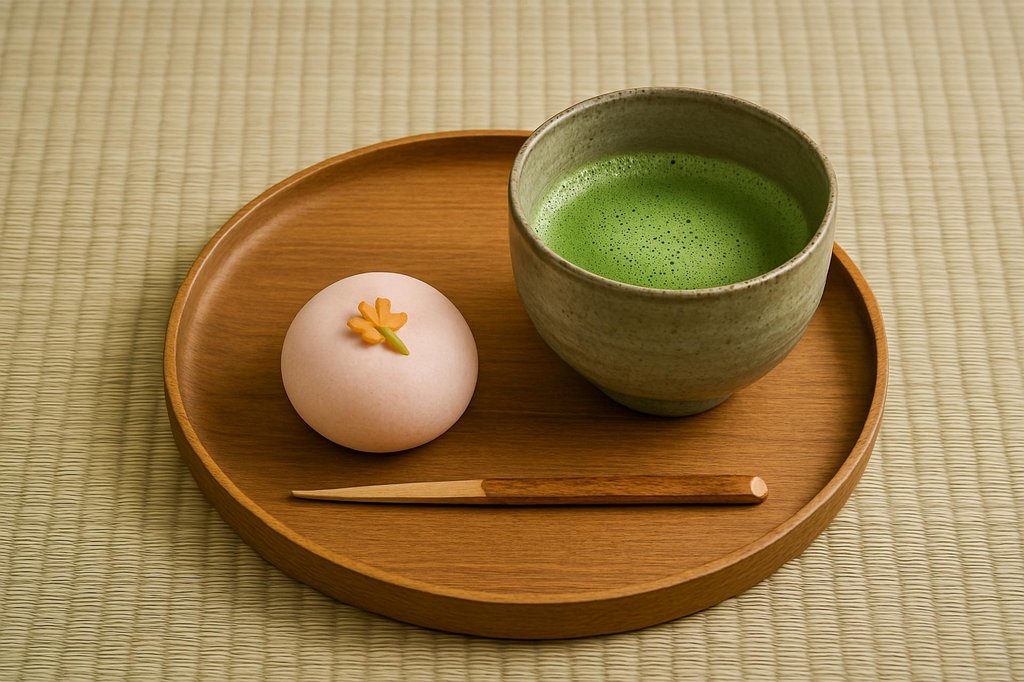
In this workshop, participants shape wagashi (traditional Japanese confections often made with sweet bean paste) by hand while following the instructor’s example. The classic choice is nerikiri: white bean paste is colored and molded into flowers or other seasonal motifs. No knives or heat are involved, and most of the work is done seated with your hands, which makes it approachable even for participants with little cooking experience.
Even when everyone follows the same model, differences in pressure and color blending give each piece its own character. One flower may have rounder petals, another softer hues, and no two turn out exactly alike. Showing off the finished sweets and tasting them on the spot also creates natural opportunities for conversation.
Unlike the other craft workshops, Japanese sweets making involves food. Let the provider know about any allergies to beans, glutinous rice, or other ingredients when booking. Many wagashi contain no animal products, but if you need halal or vegetarian options, confirming the ingredients in advance is the safest approach.
Japan Guide Star offers Japanese sweets-making workshops in Tokyo.
Details
| Experience | Area | Max. Participants per Session | Duration | Private Booking |
|---|---|---|---|---|
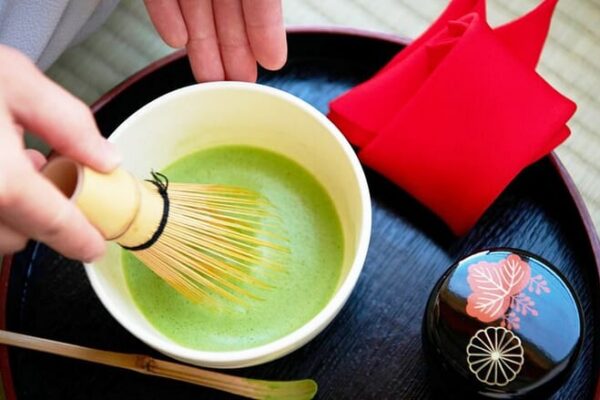
| Tokyo: Tea Ceremony & Japanese Sweets Making | Bunkyo | 10 people | 60 minutes | Available on request |
Tokyo: Tea Ceremony & Japanese Sweets Making
Experience the harmony, respect, and tranquility of tea
Food Tours: Eat Your Way Through the City with an English-Speaking Guide
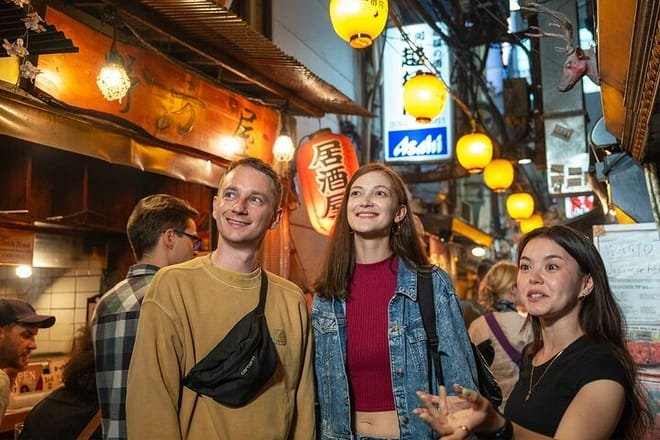
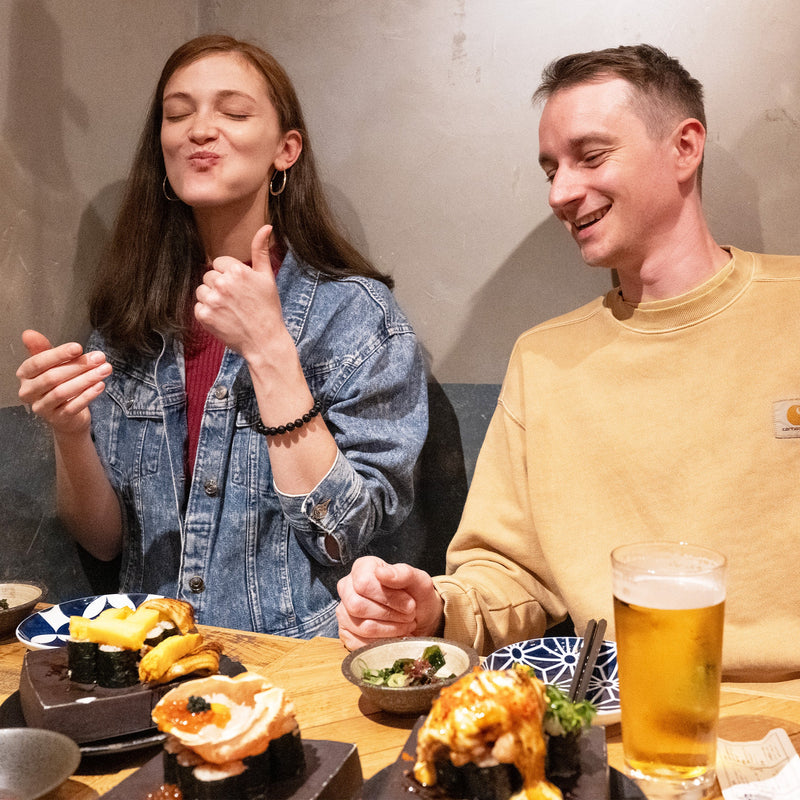
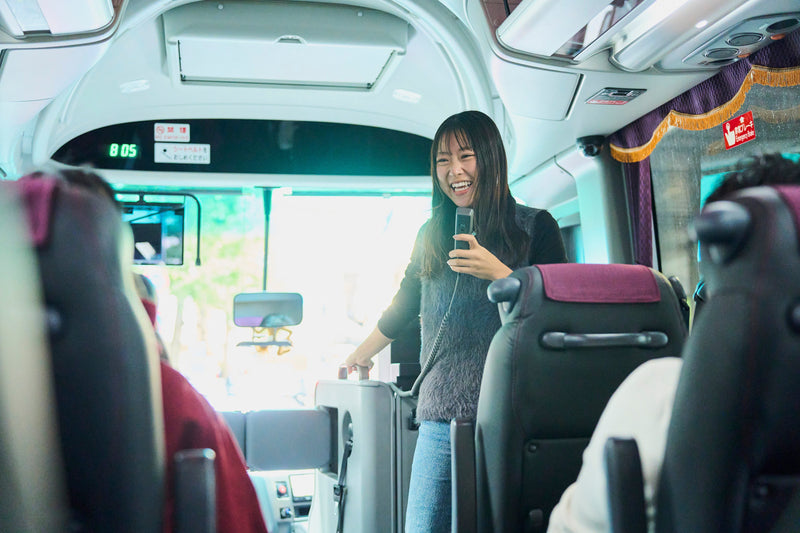
On a food tour, an English-speaking guide leads the group to local eateries, with food and drinks included in the price. The guide chooses the restaurants and handles the ordering, so participants can focus on the food and conversation even if no one can read the menu.
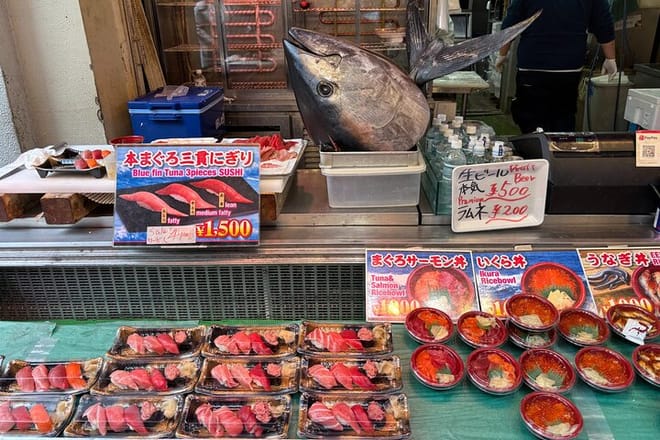
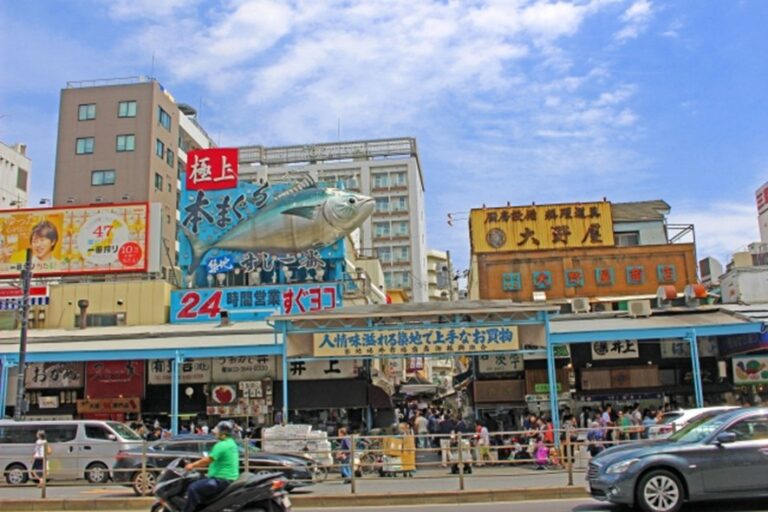
Small groups share the same dishes before walking to the next stop. Away from the meeting room, people often find it easier to chat with colleagues they rarely talk to. In Tsukiji, for instance, participants might hold freshly cooked tamagoyaki (a lightly sweetened Japanese rolled omelette) and debate whether it tastes sweet or savory.
Because the tour takes place on foot and outdoors, rain or midsummer heat can take a toll on participants. And since food is involved, you need to share any allergies or halal requirements in advance. Providers typically split large groups among multiple guides, so compiling a list of everyone’s dietary restrictions and sharing it beforehand helps the day run smoothly.
Japan Guide Star runs food tours in Tokyo, with the main details summarized in the table below.
Details
| Experience | Area | Max. Participants per Session | Duration | Private Booking |
|---|---|---|---|---|
| Tsukiji Fish Market Food & Walking Tour with 7 Gourmet Bites | Tsukiji | 30 people | 1 hour 30 minutes | Available on request |
| Tokyo: Asakusa Guided Food Tour with 12 Dishes & 3 Drinks | Asakusa | 20 people | 2 hours 30 minutes | Available on request |
| Tokyo: Shibuya Food Tour with 15 Dishes at 4 Eateries | Shibuya | 30 people | 3 hours | Available on request |
| Shinjuku: Food Tour – 15 Dishes at 4 Eateries | Shinjuku | 30 people | 3 hours | Available on request |
See all food tours run by Japan Guide Star.
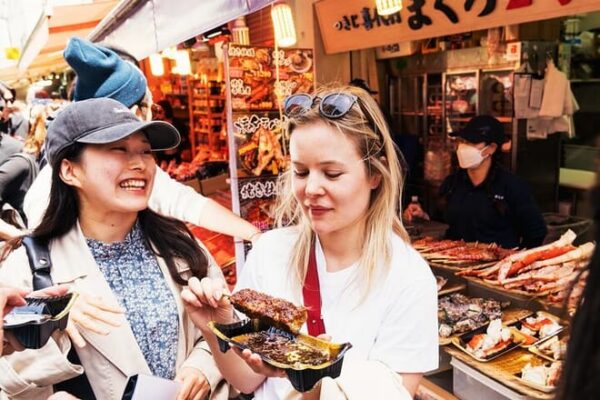
Tsukiji Fish Market Food & Walking Tour with 7 Gourmet Bites
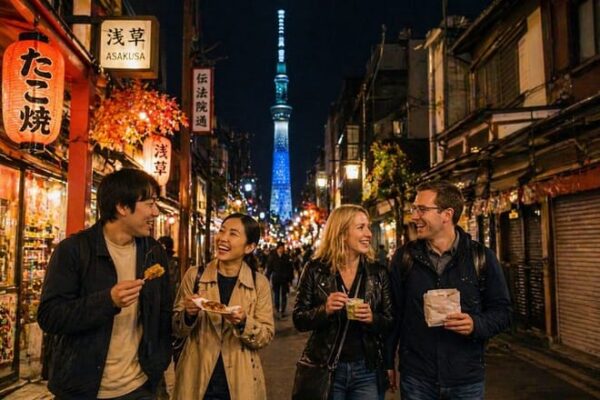
Tokyo: Asakusa Guided Food Tour with 12 Dishes & 3 Drinks
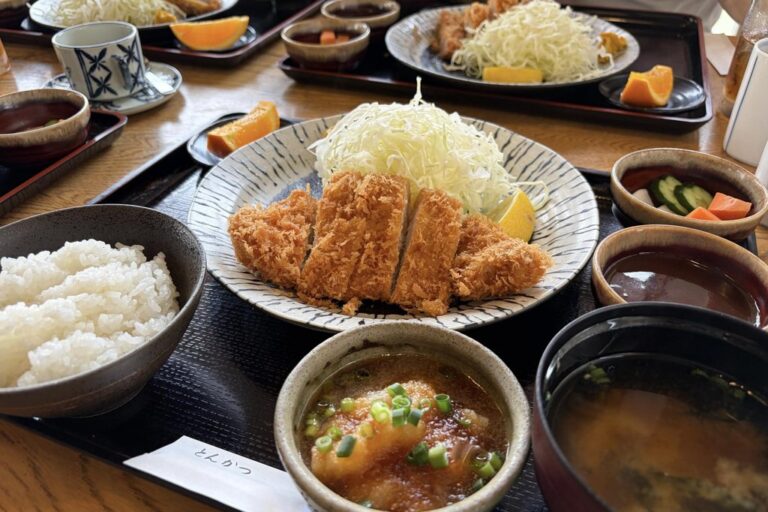
Guided Walking Tours: Explore History and Culture with English Commentary
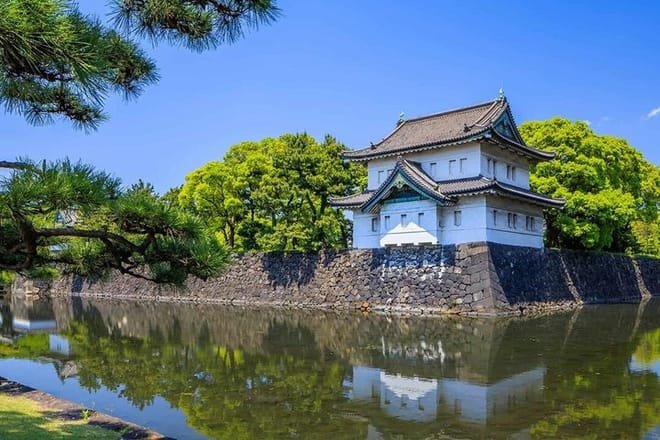
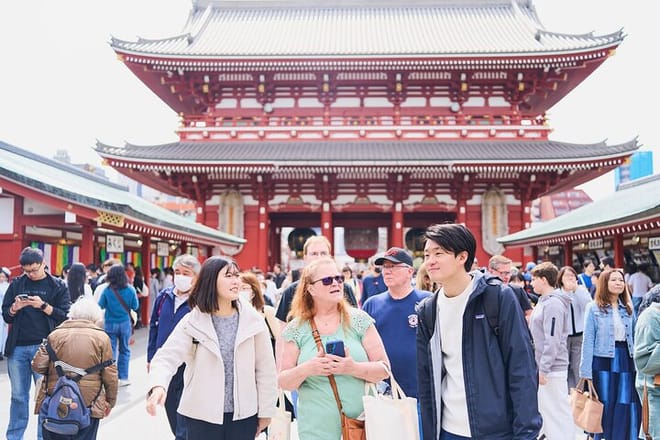
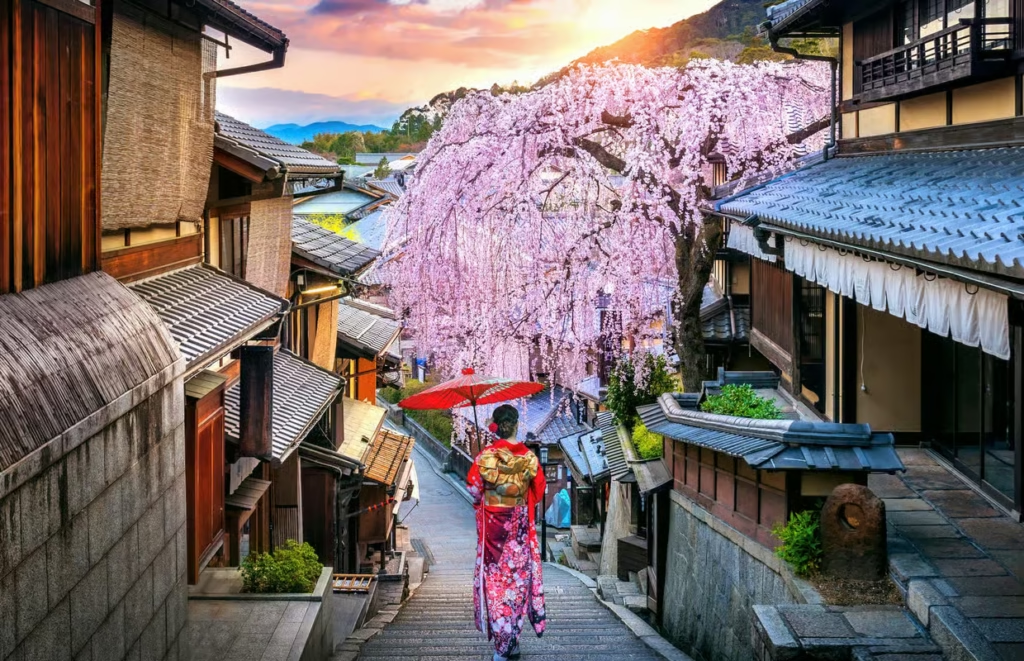
On a guided walking tour, participants explore Tokyo’s historic districts, temples, and shrines on foot while an English-speaking guide explains what they are seeing. The sights vary by area. Around Senso-ji Temple, you can take in the bustle of Nakamise (the shopping street lining the temple’s approach). Meiji Jingu is a shrine surrounded by dense forest in central Tokyo, while Yanaka retains old-fashioned alleys and the streetscape of a traditional working-class neighborhood. In each area, the guide brings the local history to life.
Walking side by side and sharing the same scenery and topics makes conversation easier than sitting face-to-face. This makes walking tours a good way to bring together members from different departments or offices. With no food involved, there are no dietary restrictions to coordinate. A short 1–2-hour route can also fit easily before or after meetings and company events. Providers split large groups among multiple guides, and because the tour takes place outdoors, weather can affect the experience.
Japan Guide Star runs walking tours in Tokyo, with the main details summarized in the table below.
Details
| Experience | Area | Max. Participants per Session | Duration | Private Booking |
|---|---|---|---|---|
| (1) Tokyo Castle & Imperial Palace – Shogun Walking Tour (2) Private Tokyo Castle and Imperial Palace Shogun Walking Tour | Imperial Palace Outer Garden | (1) 30 people (2) 10 people | 2 hours | Available on request |
| Tokyo: Asakusa & Sensoji – Oldest Temple Walking Tour (2hrs) | Senso-ji Temple | 30 people | 2 hours | Available on request |
| Tokyo: Meiji Shrine Walking Tour — Shintoism & Imperial System | Meiji Jingu | 30 people | 1 hour 30 minutes | Available on request |
| Tokyo: Shibuya Highlights Walking Tour & Secret View Spot | Shibuya | 30 people | 1 hour 30 minutes | Available on request |
| Tokyo: Shinjuku Historical Walking Tour & Secret Backstreets | Shinjuku | 30 people | 1 hour 30 minutes | Available on request |
| Tokyo: Yanaka District History Walking Tour | Yanaka | 15 people | 3 hours | Available on request |
See all walking tours run by Japan Guide Star.
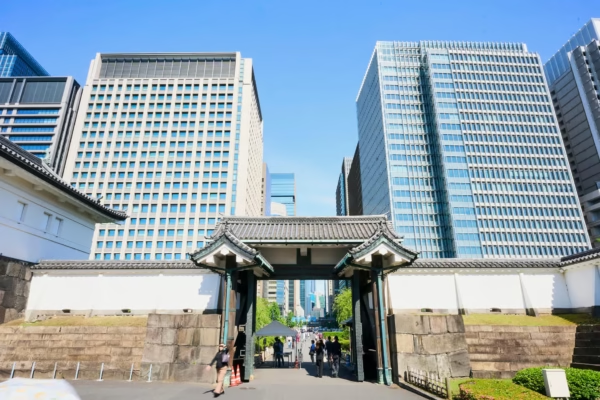
Private Tokyo Castle and Imperial Palace Shogun Walking Tour
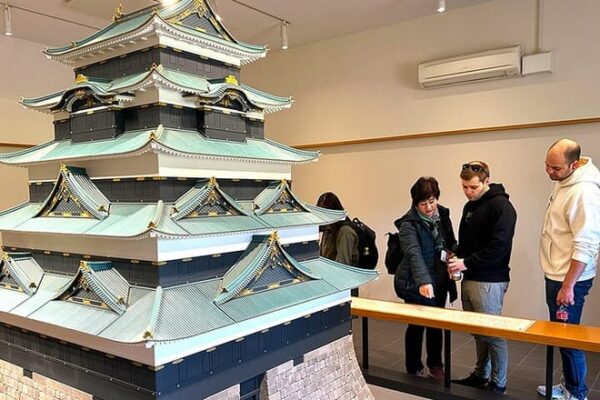
Tokyo Castle & Imperial PalaceーShogun Walking Tour
Sumo Show: Watch Retired Rikishi Up Close and Step onto the Dohyo
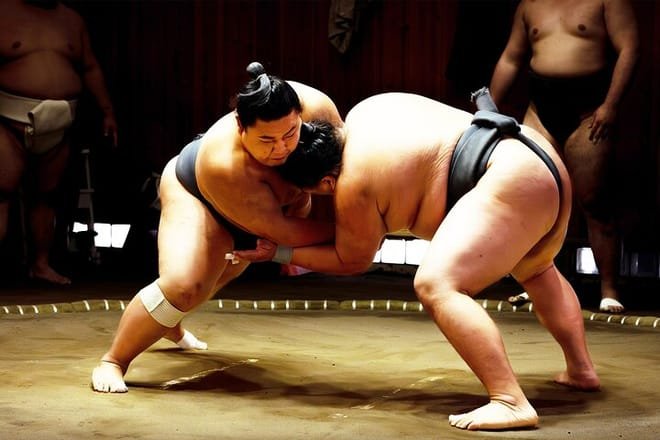
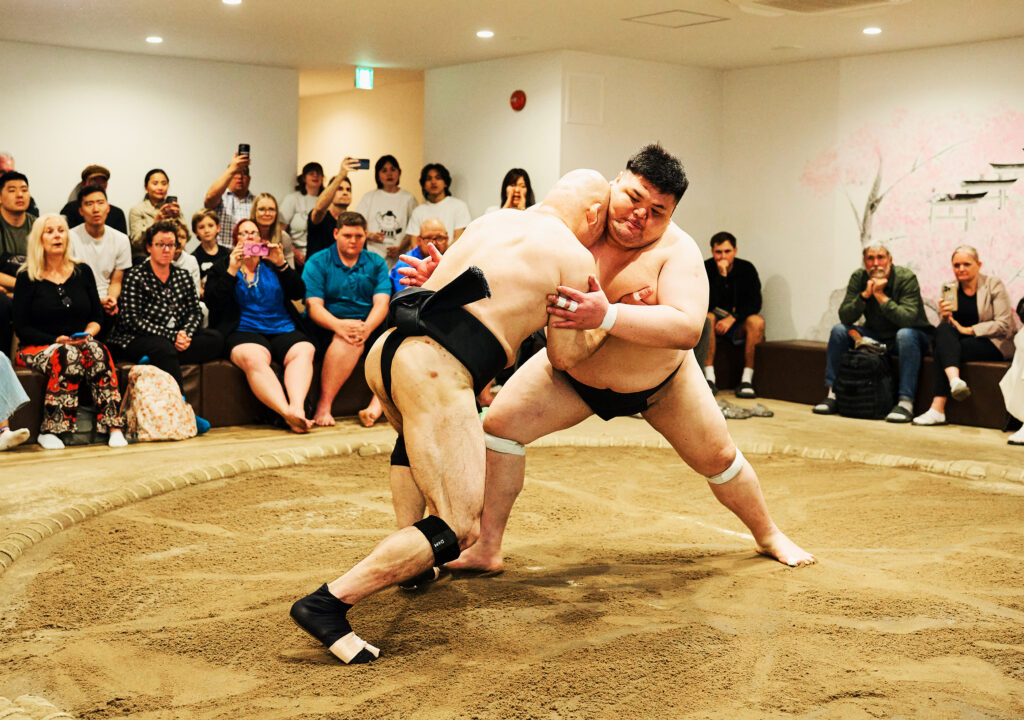
A sumo show is a performance-style experience featuring retired rikishi (sumo wrestlers), lasting about 90 minutes. You can watch bouts and demonstrations of kimarite (the techniques that decide a bout) right in front of you. Throughout the show, the hosts explain the history of sumo and its ties to Shinto in English.
They also explain the meaning behind the salt ritual (tossing purifying salt to cleanse the clay ring) and shiko (raising each leg high and stamping to drive away evil spirits), so even participants with no knowledge of sumo can follow along. At venues with small audiences, everyone can watch from just a few meters (a few yards) away from the dohyo (the sacred clay ring where bouts take place). At that distance, you can hear the thud of the rikishi colliding and feel the force of their footwork against the sand.
In the second half, audience members can step onto the dohyo to challenge a rikishi. The whole group cheers as their representatives take on a rikishi, helping build a sense of team unity even in a short time. However, only a limited number of people can participate in the challenge. Participants who have been drinking may also be barred from taking part for safety reasons, so it is best to schedule the show before a group dinner.
Watching a Grand Tournament (the official professional sumo competitions held six times a year) or a stable’s morning practice depends on tournament dates and early-morning time slots. A sumo show, by contrast, has fewer scheduling constraints and takes place indoors, so you can fit it in before or after meetings or dinners. If your group will also be staying in Osaka, Sumo Studio Osaka, run by the same operator, offers the same chance to watch retired rikishi compete up close and step onto the dohyo.
https://japanguidestar.com/tour/osaka-sumo-experience-with-live-show-and-audience-challenge/
4 Things to Check Before Planning Team Building in Tokyo
Once you choose an activity and move on to requesting quotes and planning the day, unexpected problems can surface. The venue may not be able to accommodate your whole group at once, for example, or food and drinks may turn out not to be included in the price. The four points below are worth confirming before requesting a quote.
1. Maximum Number of Participants per Session
Each facility has a fixed limit on how many people it can host at once, and exceeding that limit means splitting the group into multiple sessions. At Tokyo’s cultural experience studios, the typical capacity is around 30–60 people per session. For a department of 80 or 100 people, you will need to decide whether to run two sessions at the same venue or split the group across several venues.
The smaller the groups, the easier it is to ask the instructor questions and the more hands-on time each person gets. If you’d rather prioritize having everyone share the same experience at the same time, however, you’ll need a venue that can accommodate the whole group in a single session. For 80 people, one option is to run two sessions of 40 and pair the waiting group with a walking tour of the surrounding area, making use of the waiting time.
Firming up your expected headcount before you inquire makes it easier for the venue to propose a workable plan.
2. What the Per-Person Price Includes
What the published per-person price covers varies by provider. It is often unclear how much of the venue fee, materials, and instructor fee is included.
The total cost also changes depending on whether food and drinks are included, how tax and service charges are handled, and the minimum guaranteed headcount for private bookings. As a result, the full cost can be difficult to pin down until you receive a quote. When requesting a quote, check whether the price includes the following:
- Venue fee, including overtime charges and equipment rental
- Instructor fee and any additional charge for interpreters
- Materials and food and drink costs, including alcohol
- Consumption tax and service charges (hotels and similar venues may add a service charge)
- Minimum guaranteed headcount and billing rules if the actual number falls below it
- Deadline for changing the headcount and when cancellation fees start to apply
When comparing several providers, make a table with these items as columns and enter each company’s answers in a corresponding column. The reasons for price differences become clear at a glance. Standardizing on the “maximum per-person cost including tax and service charges” also makes it easier to use the table directly in internal budget approval documents.
3. The Scope of English Support
“English support” can mean different things at different venues. At some, the instructor leads the session directly in English; at others, an interpreter accompanies a session conducted in Japanese. In the latter case, interpreting may cost extra, so confirm this when requesting a quote.
One point that is easy to overlook is whether email exchanges before the event and emergency contact on the day can be handled in English. Language support during the program and the provider’s communication setup are separate issues. If some participants are native speakers of languages other than English, such as Chinese or French, also check whether interpreters for those languages can be arranged.
4. Backup Plans for Rain or Extreme Heat
Outdoor programs may be canceled or shortened depending on the weather. Tokyo sees substantial rainfall in June and July, with average monthly totals of about 168 mm (about 6.6 inches) in June and 156 mm (about 6.1 inches) in July (1991–2020 averages).
From July to September, daytime temperatures can stay above 30°C (86°F) for days at a time. If you schedule an outdoor activity during this period, you need to factor in the possibility of cancellation or shortening. Before signing a contract, confirm at least these three points in writing:
- The criteria for canceling and by what time on the day you will be notified
- Whether the provider or the organizer is responsible for arranging an alternative venue in case of rain
- The refund and rescheduling rules for weather-related cancellations
If these details are not settled in advance, no one may be in a position to make the decision on the morning of the event, creating difficulty in notifying participants. Choosing a program that takes place entirely indoors removes the need for this kind of coordination altogether.

Source: Japan Meteorological Agency, “Search Past Weather Data”
Booking Directly with a Venue vs. Using a Planning Company
Once you have shortlisted your activities, the next step is deciding how to book. There are two options: booking directly with the venue or handing the arrangements to a planning company. Which approach suits you depends on your headcount, how many activities you are combining, and whether you also need accommodation and transportation arranged.
| Criteria | Booking Directly with the Venue | Using a Planning Company |
|---|---|---|
| Best-suited group size | About 20–30 people (fits in one venue) | Exceeds a venue’s capacity and needs multiple venues or sessions |
| Number of programs | One | Two or more combined |
| Accommodation and transportation | Arranged separately by your team | Can be arranged together |
| Point of contact for quotes | Each venue contacted individually | Consolidated with one company |
| Day-of operations | Handled on-site by your event organizer | Handled by the planning company’s staff |
For a single activity with about 20–30 people, booking directly with the venue is usually faster, with no need for a planning company. If a department of 20 simply wants one chopstick-making session, for example, you can check availability and book directly.
A planning company that gives you a single point of contact is the better fit in these cases:
- You are combining multiple activities
- You also need accommodation and transportation
- Your group exceeds a venue’s capacity and needs to be split into multiple sessions
- You need languages other than English
If you are likely to deal with more than three separate contacts, consolidating arrangements through a planning company can reduce the work involved in requesting quotes and coordinating the day of the event.
What Japan Guide Star Offers for Team Building in Tokyo
Japan Guide Star, operated by Contents Like LLC, can handle a range of arrangements for team building in Tokyo. Its services address the four planning checkpoints covered earlier.
Four Company-Run Studios in Tokyo, Hosting up to 60 People at Once
Japan Guide Star operates its own experience studios in Shinjuku, Shibuya, Asakusa, and Ginza. The largest, in Shinjuku, can host up to 60 people at once; capacities for each location are listed in the Details table for each activity.
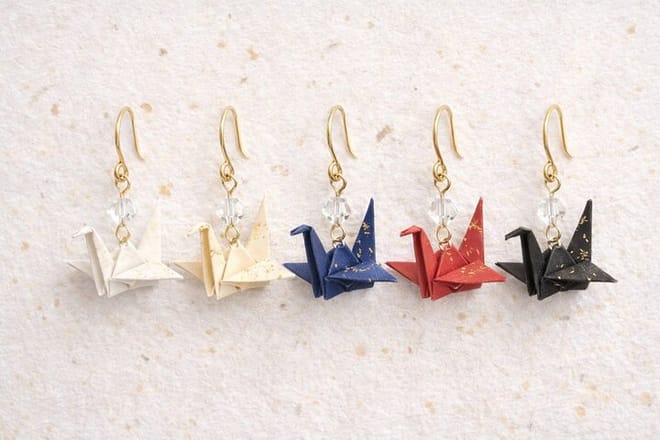
In addition to chopstick making, the Shinjuku studio offers kintsugi, calligraphy, and origami jewelry making in the same building. Different groups can therefore do different activities in parallel, or you can combine several Japanese cultural experiences in one day.
All activities take place entirely indoors, so weather-related cancellations are unlikely, and you won’t need to find an alternative venue because of rain or extreme heat. However, if getting to the venue becomes difficult, such as when a typhoon triggers planned suspensions of public transportation, the event will need to be rescheduled.
https://japanguidestar.com/tour/tokyo-shinjuku-chopstick-making-workshop/
https://japanguidestar.com/tour/tokyo-japanese-gold-repair-kintsugi-workshop-in-shinjuku/
Activity Proposals Based on Data from Its Own Studios
Because Japan Guide Star operates its four studios directly, it can draw on its own operating experience to identify which activities participants respond well to and which steps tend to require extra guidance. From the initial planning consultation, it can use past participation trends to suggest programs that match your headcount, goals, and available time.
The right activities and program flow depend on your team’s goals. What works for helping new team members get to know each other, for example, may differ from what works for hosting a team visiting from overseas. After confirming your goals, headcount, and preferred dates, Japan Guide Star can narrow down candidates that meet your conditions and present them in a format that makes duration and difficulty easy to compare. You can then use the comparison directly when presenting the plan internally.
One-Stop Service from Venue Booking to Accommodation, Transportation, and Day-of Operations
Japan Guide Star handles not only venue arrangements but also accommodation, transportation, and on-site operations on the day. It is a registered travel agency (Tokyo Governor-Registered Travel Agency No. 2-8877) and a member of JATA (Japan Association of Travel Agents), so hotels, chartered buses, and other arrangements can all be coordinated through a single point of contact.
With offices in Tokyo, Osaka, and Kyoto, the company has handled groups ranging from small executive teams to events with more than 200 participants. It can also help combine Tokyo activities with itineraries in Osaka or Kyoto. Each quote clearly lists what is included in the per-person price and what may incur additional costs, making the total easier to understand when the budget goes through internal approval.
English Support from the Quote Through Day-of Emergency Contact
All activities can be conducted in English. Japan Guide Star handles everything in English, from correspondence during the quote process to emergency contact on the day. Instructors and guides who speak French, Spanish, German, Chinese, and other languages can also be arranged on request.
Japan Guide Star welcomes inquiries even if your headcount, preferred dates, or type of program has not yet been decided. Get in touch through the corporate and group services page.
Extensive Experience Hosting Overseas Groups
Japan Guide Star works with travel agencies, companies, and tour operators in Europe, North America, Australia, and Asia, and has extensive experience hosting groups of different sizes and nationalities.
Its own Chopsticks Studio Shinjuku welcomed a cumulative 2,000 participants within about two months of opening. It earned a 4.9 rating in OTA (online travel agency) reviews and 5.0 on Google, according to the August 2026 press release.
Because Japan Guide Star hosts multinational participants every day, it understands where first-time visitors to Japanese culture are most likely to get confused. It applies that experience to its on-site guidance, including how to explain unfamiliar concepts clearly in English.
Common Questions About Team Building in Tokyo
This section briefly answers common questions about planning team building in Tokyo.
What Is the Minimum Group Size?
About 10 people or more is a general guideline, but Japan Guide Star also accepts inquiries for groups of fewer than 10, including small executive-only groups. The minimum headcount varies by program.
How Far in Advance Should We Inquire?
Three to six months in advance is a good guideline. During cherry blossom or autumn foliage season, or for events with more than 100 participants, inquire even earlier to secure venues and accommodation. If your dates are coming up soon, inquiries are still welcome, subject to availability.
How Long Do the Activities Take?
As a guide, craft workshops take about an hour, guided walking tours 1–3 hours, and sumo shows about 90 minutes. If you are fitting an activity in before or after a meeting or dinner, programs that stay within about two hours, including travel time, are the easiest to schedule.
What Payment Methods Are Accepted?
Bank transfer is accepted, with international remittances possible in USD, EUR, and JPY. Invoice payment with set payment terms is available for agencies with an ongoing business relationship. Deposit terms vary by group size and season.
When Do Cancellation Fees Start to Apply?
This varies by program, venue, and season. For many activities, the details need to be finalized 30–60 days before the event. Cancellation terms are provided with the quote, and when hotels or special venues are involved, the facilities’ own cancellation policies apply.
Three Steps to Planning Team Building in Tokyo
Following these three steps makes it easier to narrow down your options for team building in Tokyo.
- Narrow down the type of activity based on headcount and available time
- Before requesting quotes, check capacity limits, the price breakdown, the scope of English support, and backup plans for rain or extreme heat
- If you are combining multiple activities or need accommodation and transportation, consolidate everything through a planning company
Setting aside even 5–10 minutes for reflection after the activity makes it easier to carry the conversations and insights from the session into everyday teamwork. Capacities and services at Japan Guide Star’s own Tokyo studios are listed on the corporate and group services page, which can be a useful resource when gathering information before proposing a plan internally.