Many travelers look for classes where they can try Japanese calligraphy, known as shodo, in English. Choosing a class without knowing anything about its history or script styles, however, can leave you with only a surface-level experience.
Understanding how shodo developed, how to choose an English-friendly class, and how a typical lesson unfolds makes it much easier to find the experience that suits you. A deeper appreciation of the art’s essence and history is sure to make your time with the brush more rewarding.
What Is Japanese Calligraphy (Shodo)?
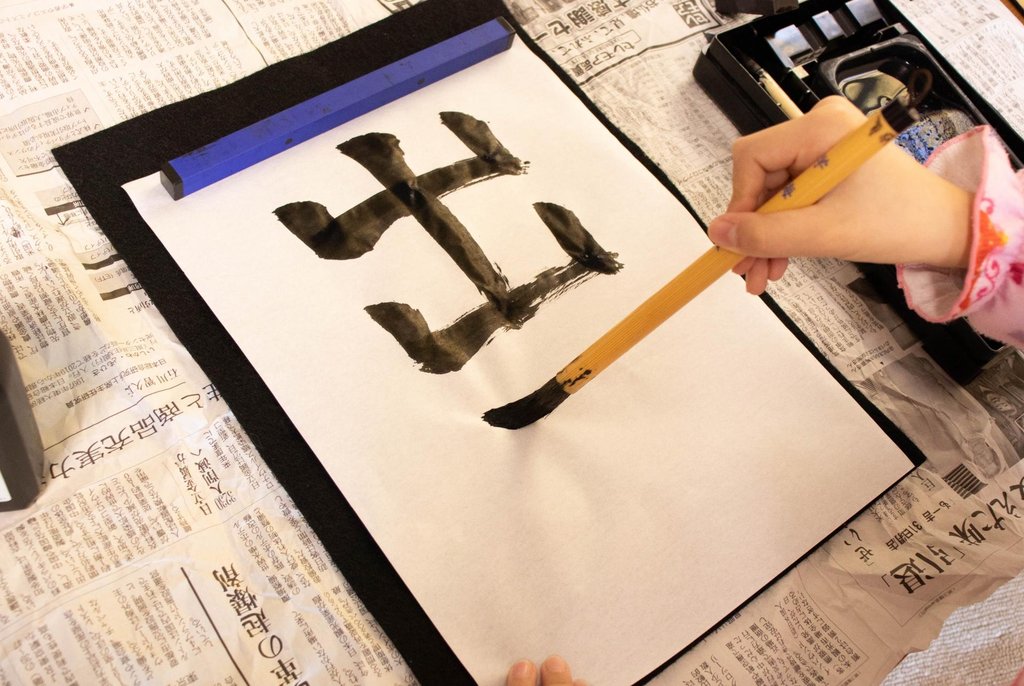
The essence of shodo can be understood from three angles: as a traditional art of writing characters with brush and ink, as a meditative practice, and as a form of personal expression. A little background knowledge makes the actual experience far more moving.
The Japanese Art of Writing with Brush and Ink
Shodo literally means “the way of writing.” It’s a traditional art in which characters are carefully written using a brush, ink, and Japanese paper, and it’s about more than just shaping letters well. What sets shodo apart from Western calligraphy, which focuses on decorative letter design, is the spiritual value placed on the act of pouring one’s heart into every single stroke. As the saying, “the writing reveals the person” suggests, written characters have long been thought to reflect a person’s mind.
The spirit of shodo remains a part of everyday life in Japan. Here are a few common examples of how:
- Adding a handwritten touch to New Year’s cards with a brush or brush pen
- Writing on the front of decorative gift envelopes, called noshi, for ceremonial occasions
- Using a brush pen for everyday letters and notes to add warmth
For noshi envelopes, writing with a brush is considered proper etiquette, and the beauty of the characters expresses respect for the recipient. Shodo offers many facets for the artist to enjoy, so feel free to give it a try.
Focusing on the Strokes Becomes Meditation
A line drawn in ink cannot be erased. From the moment the brush touches the paper, you have only one chance to trace that line. This tension elevates shodo into an experience on a different level from simple handwriting practice. Steadying your breath and moving your arm with intention closely resembles the concentration of Zen meditation.
Research has reported that brush-writing practice can lower stress hormones and improve cognitive function. These mind-and-body benefits have drawn real scientific attention as well: outside Japan, shodo is sometimes called “moving meditation.” If you’d like a moment of calm among your busy sightseeing schedule, a calligraphy workshop might be just the thing to give you that.
The Same Character Changes with the Writer
In shodo, if ten people write the exact same kanji, ten distinct characters will undoubtedly be produced. Brush pressure, speed, and the rhythm of your breathing all shape the quality of each stroke, so the same kanji can never be recreated. Even for beginners, the dry brush textures and slight wavers in the lines are a characteristic unique to that person, imprinted on the work. Its artistic value as self-expression cannot be measured by skill alone.
The art you create at a workshop goes home with you as a one-of-a-kind keepsake, and shodo written on Japanese paper looks striking and stands out when shared on social media. Shodo also makes for a great gift to family and friends, so if you want a tangible memento of your trip, consider shodo.
Three Differences Between Shodo and Western Calligraphy
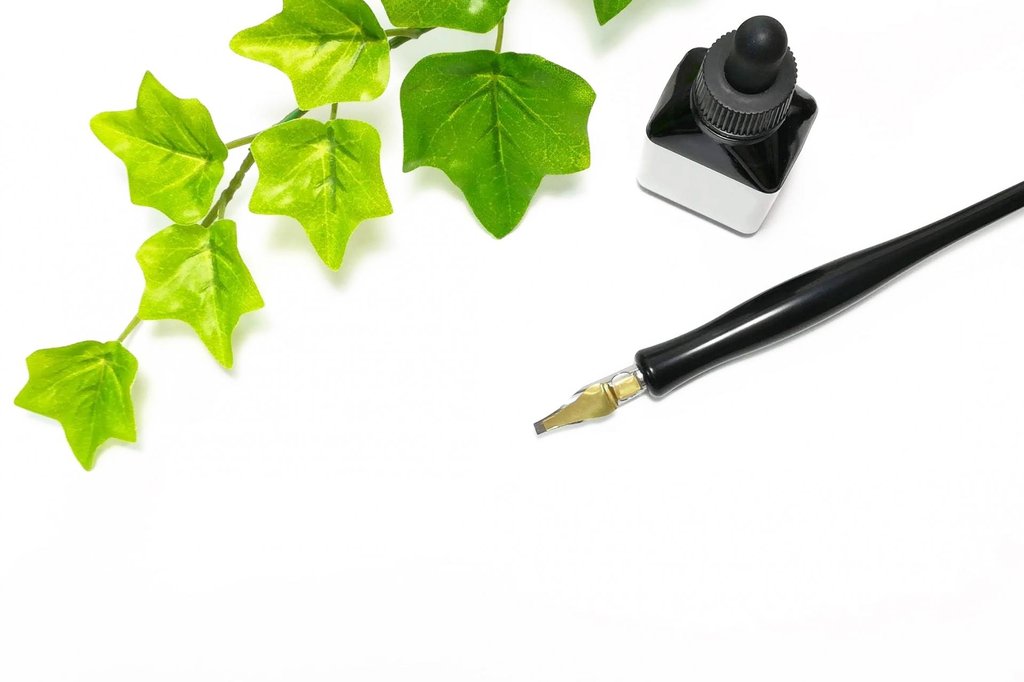
Shodo and Western calligraphy are both concerned with writing beautiful letters, but they diverge greatly in their tools and aesthetics. The key contrasts lie in the implements used and the way empty space is treated. Understanding these distinctions makes it clear that shodo is an art that grew out of Japanese culture, with its own spirituality and aesthetics.
1. Written with Brush and Ink, Not a Pen
The broad-edged pen used in Western calligraphy is held at a fixed angle suited to each script. Because the orientation of the flat nib determines line width, it produces regular, well-ordered letters. A shodo brush, by contrast, creates a wide variety of lines with its supple bundle of hairs. Press down and the tip spreads into a thick line; ease off and it thins. The amount of ink loaded on the brush and the speed of each stroke also produces different textures: shaded, bleeding, dry, and scratchy, for example.
Continuous changes in thickness, darkness, and texture within a single stroke are a defining feature of shodo. Pressure from the writer’s hand and brush movement transfer directly into the line, producing expressions so rich that the lines seem to come alive.
2. Empty Space Is as Important as the Characters
In Western calligraphy, letter placement and line spacing are calculated to design balanced layouts. Empty space serves as a background that sets off the writing, and the letters themselves are always the stars. Shodo takes a very different view. As the principle “keihaku tokoku”—”plan the white as carefully as the black”—suggests, the black lines and the untouched white space carry equal value.
This view of empty space rests on the expressive lines of brush and ink: variations in pressure and speed create dry brush textures that let the white of the paper show through. Movements such as stops and upward flicks shape the surrounding space in different ways, forming compositions in which the characters and the space become one.
When viewing art at a museum, pay attention to the space around the subjects as well. The more asymmetrical the empty space, the more movement and tension you are likely to notice in the work. Similarly, in shodo, viewing the entire paper as a single picture brings the depths of shodo within closer reach.
3. Every Stroke Is Final
In shodo, a line of ink laid on paper can’t be erased or painted over; the paper absorbs the ink instantly, so each stroke remains exactly as written in the final work. Western calligraphy also values precision in the final piece, but unlike shodo, you can sketch drafts and adjust the layout in advance. If you make a mistake, you simply start over on a fresh sheet, so multiple attempts are part of the process.
Shodo allows no such room for correction. Adding to or fixing a stroke on the same sheet is considered an act that spoils the aesthetics of the work itself, and the moment you take up the brush brings a distinctive tension, demanding the artist’s total concentration on a single point. This constraint may feel like pressure for beginners, yet this seriousness often sharpens your focus, and the finished work captures your spirit exactly as it was in that moment. But don’t worry: at shodo classes, you can practice on as many sheets of paper as you like, so relax and let your brush arm move freely.
The History of Japanese Calligraphy
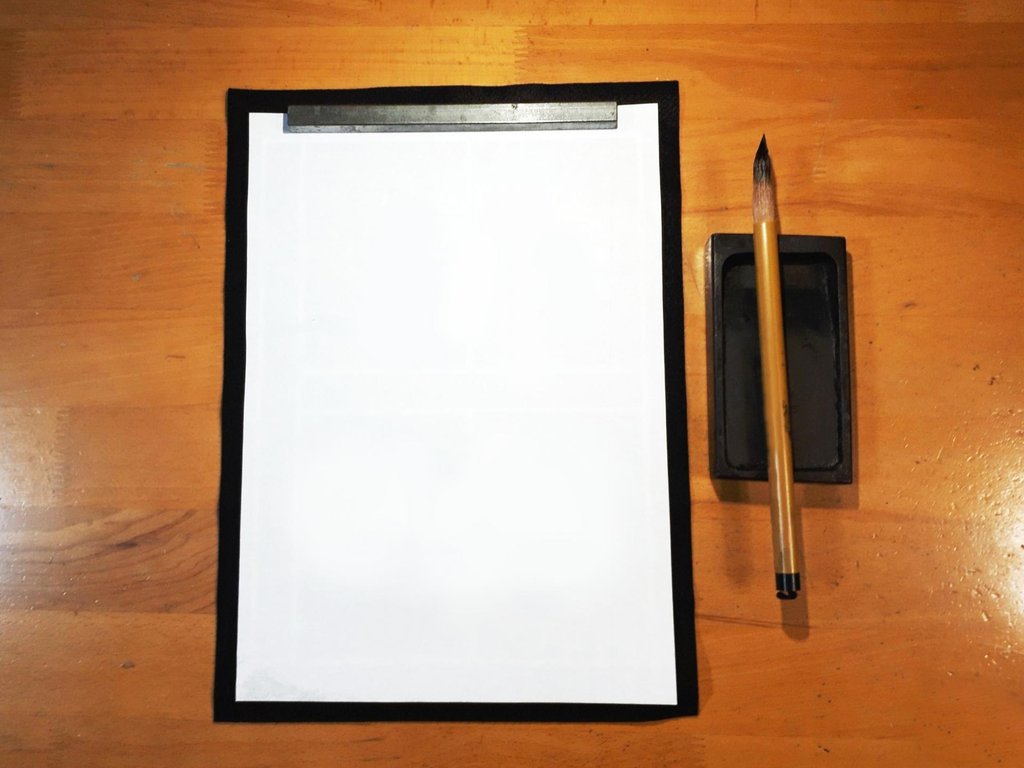
Knowing the historical background before trying shodo for yourself can change how much you take away from the activity. And with a UNESCO Intangible Cultural Heritage review scheduled for 2026, shodo is very much a living culture.
Originally from China, Shodo Developed into a Uniquely Japanese Art
Shodo originated in China. It began with the copying of scriptures that accompanied the arrival of Buddhism in the 6th century and spread throughout Japan. The writing of that era, called karayo, followed Chinese models and was marked by powerful, formal expressions.
A major turning point came during the Heian period (794-1185). After Japan discontinued its envoys to Tang China, a distinctly Japanese culture blossomed, and hiragana emerged from phonetic Chinese characters. The birth of this script established the Japanese style of calligraphy, characterized by flowing curves. Thus an expression not found in Chinese calligraphy took root as shodo.
Shodo spread to the common people in the Edo period (1603-1868). At temple schools across the country, children learned brush handling as handwriting practice. Merchants’ sons studied business documents while girls learned the etiquette of letter writing, receiving a practical education in the written word. These accumulated centuries turned shodo into a culture woven into everyday Japanese life.
Five Script Styles, Centered on Kaisho, Gyosho, and Sosho
Japanese shodo has five script styles. In order of historical development, they are: tensho (seal script), reisho (clerical script), sosho (cursive script), gyosho (semi-cursive script), and kaisho (regular script).
Kaisho, considered the standard today, was actually the last of the five to reach completion. Sosho, the most abbreviated style, arose from the need to write reisho quickly and has a far longer history than kaisho. The three styles you are most likely to write at an experience class compare as follows:
| Script Style | Characteristics | Best Suited For |
|---|---|---|
| Kaisho (regular script) | Each stroke is distinct and easy to read | Beginner practice; everyday handwriting |
| Gyosho (semi-cursive script) | Strokes flow smoothly into one another | Letters and practical, faster writing |
| Sosho (cursive script) | Boldly abbreviated and stylized | Artistic works; advanced expression |
Most workshops teach kaisho because its distinct strokes make stroke order and character structure easy to learn accurately. The standard learning path today is to build a foundation in kaisho before moving on to gyosho and sosho. If you are unsure of which style to choose at a class, kaisho is a safe place to start.
Still Rooted in School Education and Daily Life
Shodo remains woven into everyday life in Japan today. In Japanese schools, brush writing is a required subject from the third grade through to the end of junior high. In 2020, stroke practice using special water-writing brushes was introduced for first- and second-graders as well. In other words, nearly everyone who grew up in Japan has held a calligraphy brush.
Shodo is also essential to school events. For example, January brings kakizome, the first calligraphy writing of the year. Children’s works cover the classroom walls, and it’s a seasonal tradition of the Japanese winter.
The personal connection to shodo often continues after formal schooling, as well. Japan has over ten thousand calligraphy schools nationwide, and it’s an art enjoyed by everyone from children taking lessons to seniors pursuing a hobby. Trying shodo during your visit to Japan is a valuable chance to experience a culture embedded in Japanese daily life.
UNESCO Intangible Cultural Heritage Review
Shodo now stands at a major turning point that’s drawing attention worldwide. A review for its inscription into UNESCO’s Intangible Cultural Heritage list is underway, with the Intergovernmental Committee expected to deliberate in November 2026.
Here’s the timeline regarding this exciting event:
- March 2024: The Japanese government submitted its first nomination to the UNESCO Secretariat
- March 2025: The government resubmitted the nomination for procedural reasons
- October-November 2026: UNESCO’s Evaluation Body is expected to issue its preliminary recommendation
- Around November-December 2026: The Intergovernmental Committee is expected to make its final decision
If inscribed, shodo’s cultural value would reach a far wider global audience. With deliberations approaching, picking up a brush now is a rare chance to witness a new chapter in this long-standing tradition.
Three Places to Learn Shodo in English
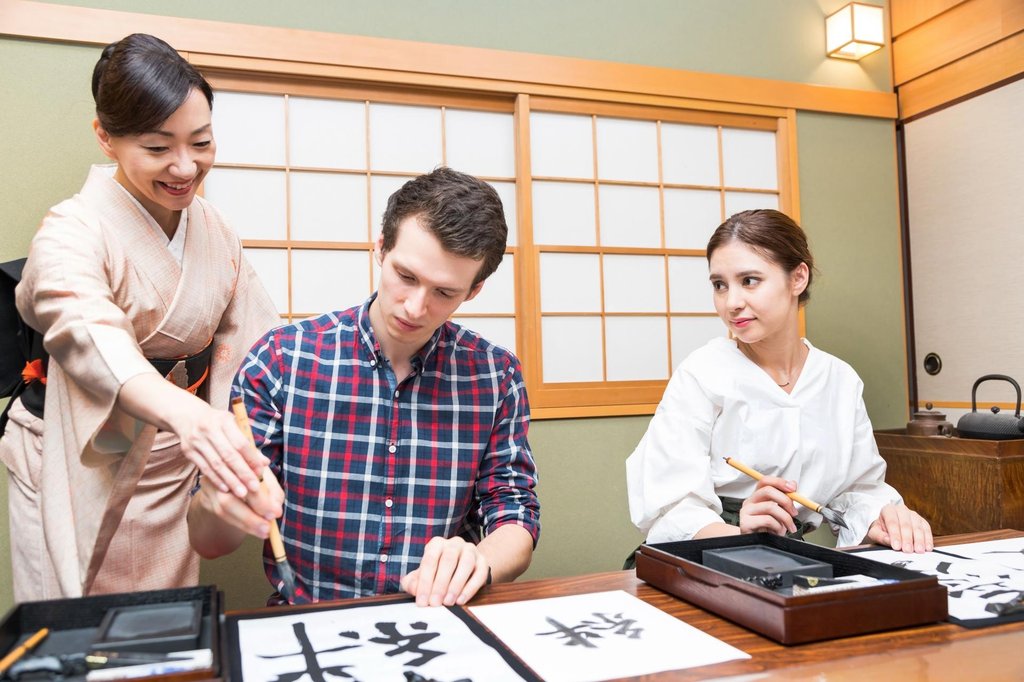
Finding a calligraphy class taught in English can be a challenge, but you can learn shodo in Japan in three main ways: hands-on workshops, schools offering ongoing instruction, and online lessons. Match each offering against your length of stay and calligraphy goals to choose the method that fits you best.
Hands-On Workshops | Take Home Your Work in One to Two Hours
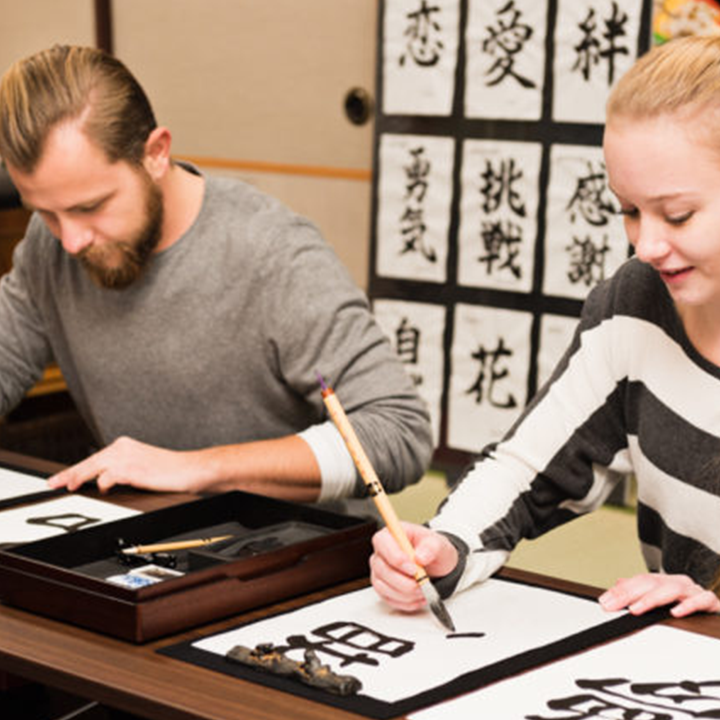
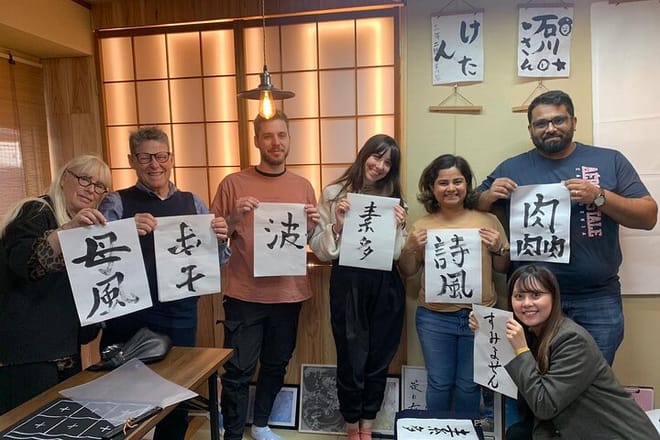
The appeal of a workshop is that you can join during your free time and take home a work of your own. Sessions usually last one to two hours, and since all the tools are provided you can show up empty-handed. Lessons begin with how to hold the brush. Next you’ll practice a kanji of your choice while following the instructor’s model, then write a final version on shikishi (a square art board) or hanshi (thin calligraphy paper). Once it dries the finished piece goes home with you, a memento filled with travel memories.
The table below compares some recommended workshops in Tokyo:
| Class Name | Area & Duration | Price (Includes Tax) |
|---|---|---|
| Iida Hoku Workshop | Tokyo; approx. 90 min. | Inquire for details |
| Wa-PEN Asakusa | Asakusa; approx. 60 min. | From ¥5,400 |
| Wayo Calligraphy Experience | Tokyo; 60 min. | ¥5,000 |
| MAIKOYA Shinjuku | Shinjuku; 60 min. | From ¥2,500 |
| Kirakira Calligraphy | Ginza; 60-120 min. | From ¥11,000 |
Most classes accept online reservations. Some places welcome children as young as four years of age, making them a great activity for the whole family. When booking, we recommend confirming the following two points: the availability of English support and whether taking your work home is included in the price.
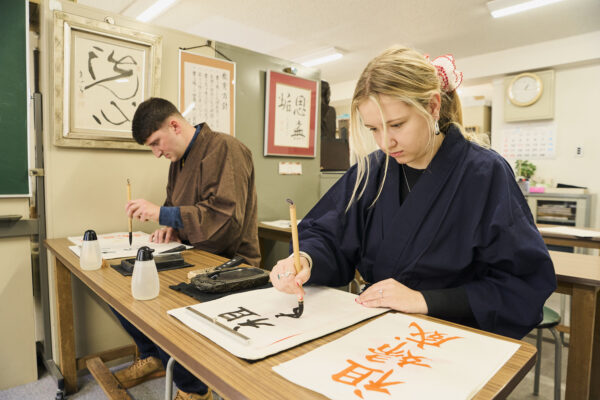
Tokyo: Calligraphy Workshop & Original T-Shirt Creation
You’ll begin by exploring the fascinating history of kanji and its evolution
Calligraphy Schools | Serious Instruction from Professional Calligraphers
If you want to study shodo seriously, a calligraphy school with a professional calligrapher is an excellent option. While a workshop offers participants a taste of shodo, a school is a place of disciplined training: instructors demonstrate technique and correct your posture, brush movement, and line thickness.
Japanese Calligraphy Class, led by award-winning calligrapher Atsushi Miyazaki, is one of the few schools that teaches with English texts. The cost of three lessons a month is ¥11,220 for adults and ¥7,700 for participants twenty-five and under. If you’re interested, we recommend attending a trial lesson to get a feel for the atmosphere of the class before committing.
Details
| Shibuya Studio | Shinjuku Studio | |
|---|---|---|
| Address | 2F MISEKI92 Bldg., 18-1 Uguisudani-cho, Shibuya-ku, Tokyo | #106 Yoyogi Green Heim, 2-24-7 Yoyogi, Shibuya-ku, Tokyo |
| Hours | Tuesday 1:00 pm-3:30 pm Sunday 3:00 pm-7:15 pm | Tues. 7:00 pm-9:45 pm; Wed. & Thurs. 10:30 am-8:45 pm; Fri. 6:30 pm-7:45 pm; Sat. 10:30 am-8:30 pm |
| Closed | Mon., Wed., Thurs., Fri., Sat. | Monday & Sunday |
| Official Site | https://www.calligraphy-lesson.com/ | https://www.calligraphy-lesson.com/shinjuku/ |
| Best For | Residents and serious learners | Those who prefer easy access around Shinjuku |
Online Lessons | Learn from Overseas at Your Convenience
For those who want to continue shodo after returning home, online lessons are a convenient option. You can participate from anywhere in the world, and booking sites help you find instructors who match your schedule and time zone. Character structure and stroke order can be learned online, but the scent of the ink and the feel of the paper can’t. A screen also limits how accurately an instructor can correct your brushwork and posture.
Matching platforms that let you compare multiple lessons are handy when searching for an instructor. Here are some typical costs and formats:
| Lesson fee (50 min.) | Approximately ¥1,600-¥3,300 |
| Trial lesson | From ¥163 (25-50 min.) |
| Discounts | Applied to bundle purchases of 5 or more lessons |
Booking is as simple as checking profiles and reviews and choosing a time that works for you. A good approach is to get a feel for the brush at an in-person workshop while in Japan, then polish your technique through online lessons after returning home. With in-person basics as your foundation, you can expect real progress even through on-screen instruction.
What to Expect at a Shodo Lesson
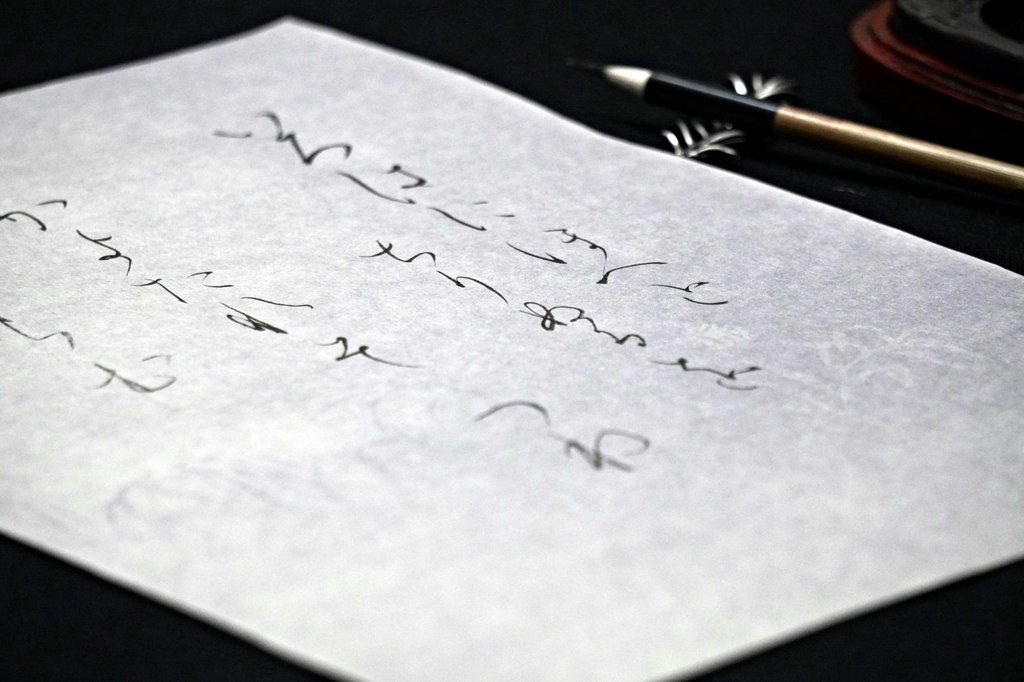
Once you’ve booked a class, you may wonder what will actually happen on the day. A traditional shodo lesson generally follows these four steps: preparing the ink, learning to hold the brush, practicing basic strokes, and completing your final work. Knowing the overall flow in advance can help first-timers relax and enjoy the experience.
Step 1. Grind the Ink
Some shodo experiences include ink grinding: dissolving a solid ink stick with water on an inkstone to turn it into liquid ink. This practice offers a quiet moment unique to calligraphy.
The steps are simple: first, drip a small amount of water onto the flat surface of the inkstone, then hold the ink stick vertically and move it slowly back and forth. The trick is to grind gently, without applying too much force. When the ink starts to thicken, add a few drops of water and adjust the ink to the shade you prefer.
Many workshops use ready-made bottled ink, but a short ink-grinding session is often included, so you can enjoy the scent and the feel of the ink. Ink is extremely hard to remove from clothing, though, so it pays to dress accordingly:
- Choose dark colors like black or navy so that stains will be less visible
- Always wear an apron or smock, if provided
- Avoid wide, loose sleeves that might accidentally dangle in the inkstone
With your clothes and belongings protected, you can settle your mind and focus on the experience ahead.
Step 2. Learn How to Hold the Brush
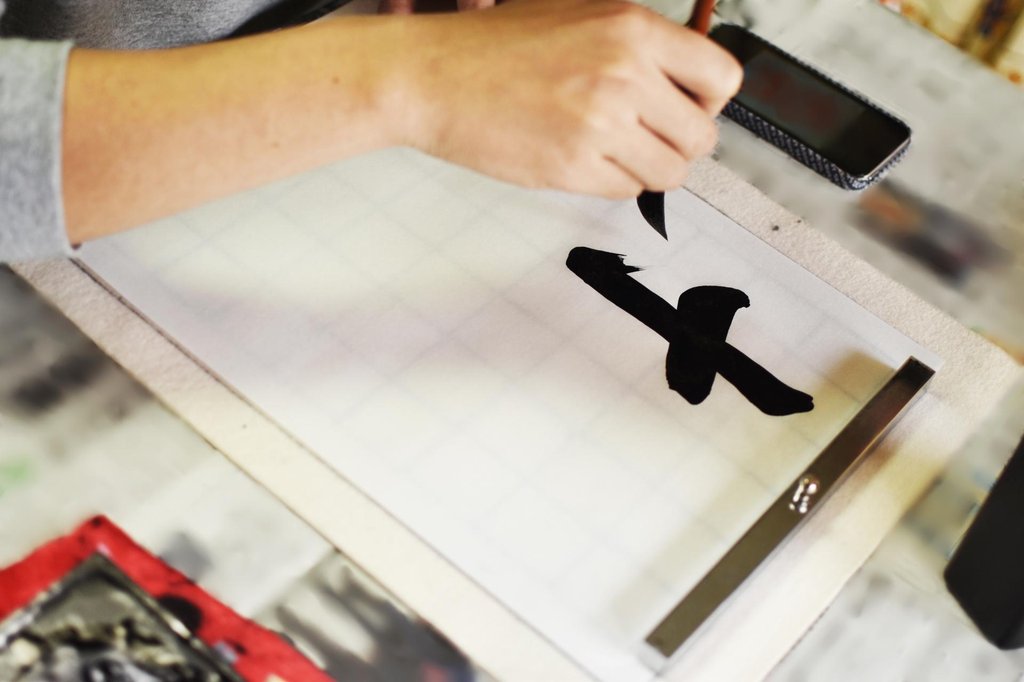
If you are used to writing with a pencil or pen held at a slant, the brush grip may feel awkward at first. The basic posture of shodo involves holding the brush shaft nearly perpendicular to the paper, and you write while finely adjusting the direction of the tip and the pressure you apply.
A fundamental technique is soko-ho (the double-hook method). Holding the brush in your right hand, place your fingers as follows:
- Thumb: supports the left side of the brush from the inside
- Index and middle fingers: hook over the right side from the front
- Ring finger: rests lightly against the lower right from behind
- Little finger: rests naturally against the ring finger
Keep enough space in your palm to hold an egg: this space makes it easier to rotate the brush and stabilizes any flicking and sweeping movements. Gripping too tightly stiffens your lines, so use as little force as possible.
Arm positions vary too. Beginners often feel most grounded when resting their elbow on the desk and lifting only their wrist. But once you’re comfortable, moving with the whole arm raised will allow you to write larger characters. At a workshop, the instructor can correct your hand angle and pressure, so don’t hesitate to ask them to check.
Step 3. Practice Basic Vertical and Horizontal Strokes
Once the grip feels familiar, you’ll move on to drawing lines. The three fundamental techniques are: tome (the stop), harai (the sweep), and hane (the upward flick). For tome, lift the brush slowly over to create a stable stroke ending. Harai involves gradually raising the belly of the brush, tapering the ink line to a fine point. Hane is a three-stage movement: press the brush into the paper, then flick it lightly upward.
Writing simple kanji step-by-step is an effective way to feel these techniques:
- 一 (one) — a single horizontal stroke for practicing tome
- 川 (river) — three vertical strokes to help you learn harai
- 大 (big) — combines tome with sweeps to the left and right in one character
Beginners tend to press the brush into the paper too hard. Rather than stopping your movement abruptly, aim to let the force settle gently. Gradually easing the pressure on the brush while keeping the tip aligned to the very end is the key to improvement. Once you get the feel for it, your brushwork will be steadier when you draw your chosen kanji.
Step 4. Choose a Character and Complete Your Work
This final step brings together everything you’ve practiced to complete a single character on a shikishi board. Being able to choose a kanji that matches your feelings or travel memories is part of what makes a shodo workshop special. Here are some popular choices and their meanings:
- 愛 (ai) — love and affection for someone dear
- 夢 (yume) — dreams, goals, and hopes for the future
- 幸 (sachi) — a single character wishing happiness and good fortune
- 和 (wa) — harmony and the Japanese spirit
Writing your name in kanji is another option. The instructor selects characters that match the sounds in your name and teaches them to you, resulting in a personal keepsake you won’t find anywhere else.
Before the final writing, the instructor will provide you with a demonstration. Observe the brush movements closely and focus on reproducing them faithfully; following the instructor closely will produce a more polished result. When you’ve finished, your calligraphy is yours to take home and enjoy as a lasting memory of your trip.
Common Questions About Shodo

Small questions often come up before a calligraphy lesson, and clearing these up in advance can help you enjoy the day with peace of mind.
How Do I Write My Name in Kanji?
You can write a non-Japanese name in kanji by sound and by meaning. The phonetic approach assigns kanji that approximate the pronunciation of your name, while the semantic approach expresses the origin or meaning of your name.
When choosing a kanji, consider stroke count, meaning, and visual elegance. At a workshop, the instructor will talk it through with you and offer several candidates. Usually, you can just pick the combination you like and move on to writing your name with the brush. It’s also a good idea to take a photo of the kanji and their meanings.
Can Children Participate?
Most lessons and workshops accept children as young as six years old, and some even accommodate kids as young as three or four if they can sit on their own and follow instructions. When booking, we recommend confirming the minimum age for participation, whether parental accompaniment is required, and the availability of discounts for children. Keep in mind that availability changes quickly, so inquiring one to two weeks before your trip is a good idea. Age limits and accompaniment conditions vary by program, so check directly before you make your reservation.
Can I Participate Without a Reservation?
Most shodo classes require booking in advance, and popular ones often fill up weeks ahead of time. To guarantee a spot on your desired date, book as soon as your itinerary is set. That being said, some places do welcome walk-ins. For example, Hotel Tou in Kyoto holds a workshop every Thursday; no reservation is required and participation is on a first-come, first-served basis.
Details
| Schedule | Every Thursday, 5:00 pm-7:00 pm (about 20 min per group); confirm in advance |
| Fee | Free (taking your work home is also free) |
| Official Site | https://www.hotel-tou.com/ |
| Open To | Hotel guests and visitors |
Can I Buy Calligraphy Tools Overseas?
If you search “japanese calligraphy set” on Amazon or other online retailers, you’ll often find beginner sets for about $20-40 US. When choosing a calligraphy set, check that the essentials are included: a brush, a solid ink stick, an inkstone, a felt mat, and paper.
Kuretake, a Japanese manufacturer, offers sets for overseas markets and has a solid reputation for quality. Once your tools arrive at your home, you can start practicing while recalling the basic brushwork you learned in Japan. In this way, continuing shodo after your trip can turn travel memories into a new hobby.
What Other Cultural Experiences Are There?
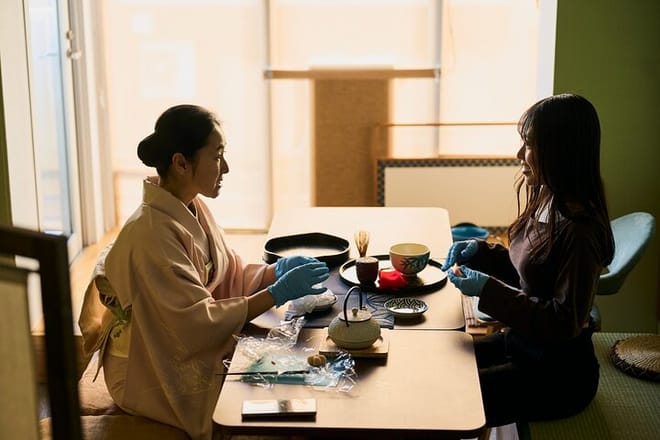
A lesson in tea ceremony or a Japanese sweets-making workshop pair especially well with shodo. These activities share an aesthetic rooted in Zen, letting you bring the spirit and stillness of calligraphy into these experiences, too.
A well-known tour company, Japan Guide Star, offers the following programs:
- Tea Ceremony & Wagashi Making: make matcha and craft seasonal Japanese sweets in a single session
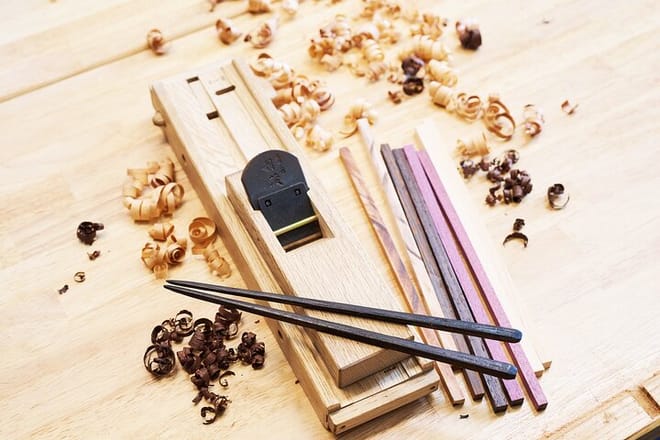
- Ginza Chopstick-Making Workshop: carve your own chopsticks and take them home as a souvenir
Try centering yourself with a morning shodo session, then head to tea ceremony in the afternoon. Experiencing multiple crafts in one day can help deepen your understanding of Japanese culture considerably. If you are interested, check the webpages below for more information.
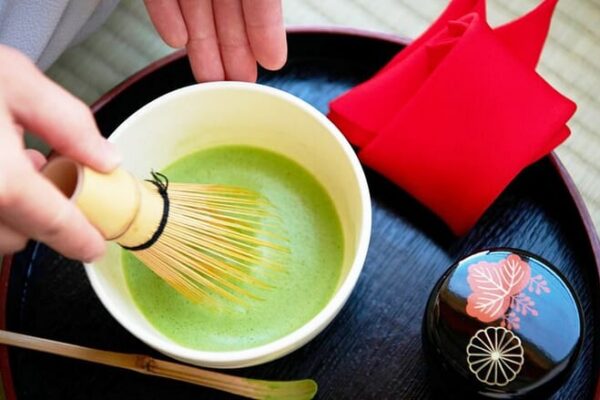
Tokyo: Tea Ceremony & Japanese Sweets Making
Experience the harmony, respect, and tranquility of tea
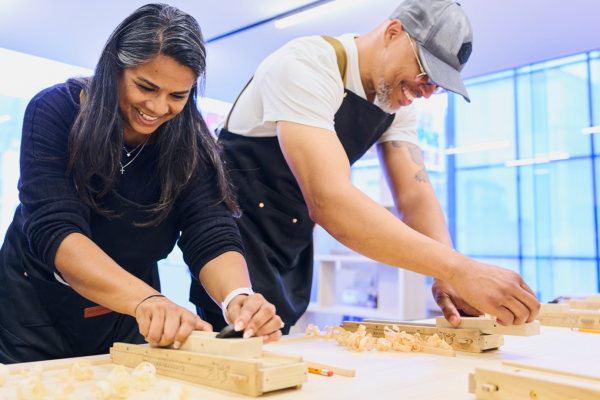
Tokyo Chopstick Making Workshop in Ginza
Pick Up a Brush and Experience Japanese Calligraphy
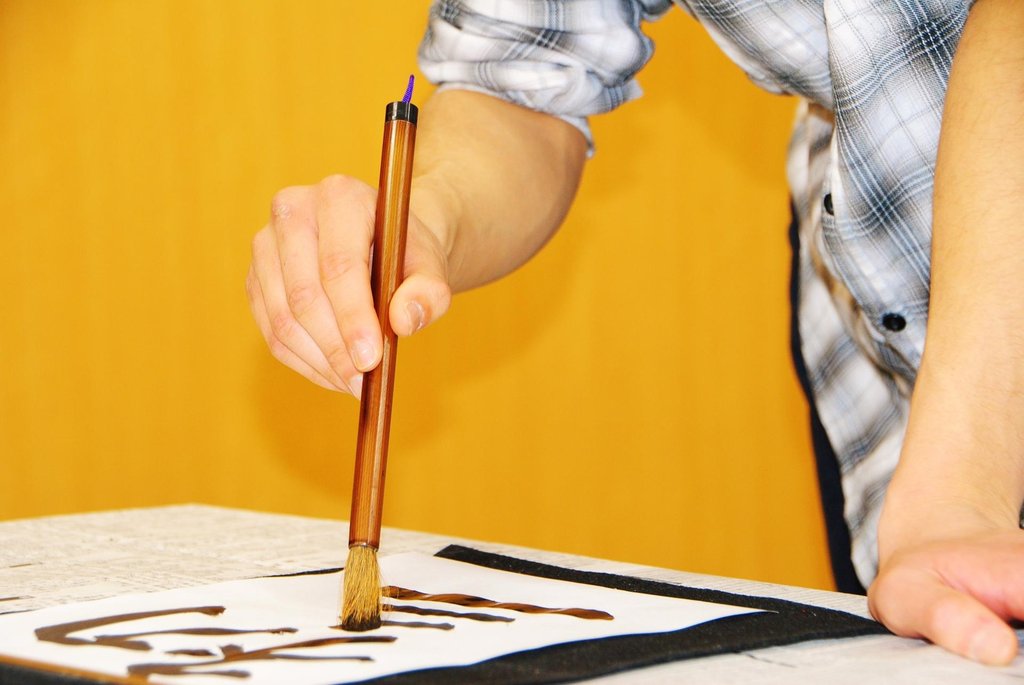
Japanese calligraphy is a traditional art that involves expressing yourself with a brush and ink. With a basic understanding of its history and script styles, along with English-friendly classes or online lessons, even beginners can create a work of art that’s entirely their own. As a travel activity or as a new hobby, shodo is well worth taking up the brush for.