Not sure which Tsukiji food tour to book? The Tsukiji Outer Market offers a wide range of tours, each varying in price and what’s included. Choosing one without a clear way to compare them can feel overwhelming.
This guide compares five popular tours by price and tasting content. It also covers signature dishes such as tuna sushi and tamagoyaki (Japanese rolled omelette), along with practical details like meeting points and the days when shops are closed.
From choosing a tour to making the most of your visit, this guide covers everything you need for a satisfying experience in Tsukiji.
What Makes Tsukiji Food Tours Special
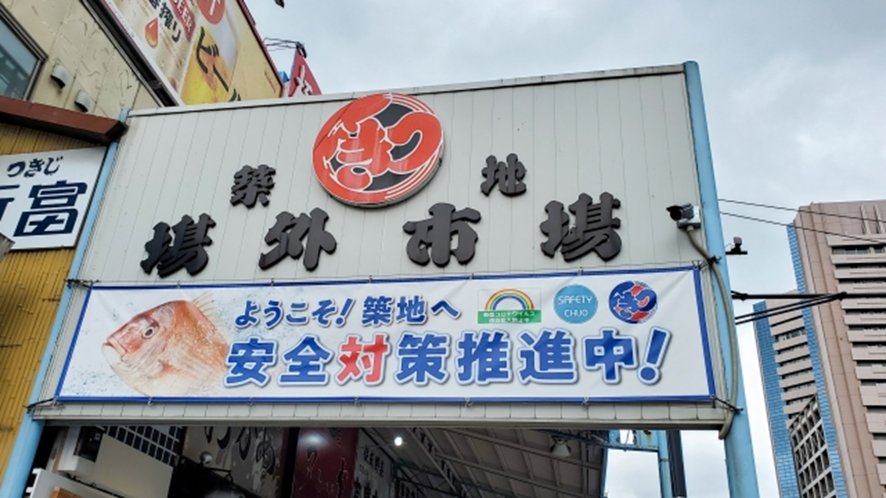
With so many tour options available at Tsukiji, it can be hard to know where to start. The key characteristics below will help you narrow down your choices. You’ll get a sense of the Outer Market’s scale and layout, the wide range of pricing, and how tasting menus shift with the season. Understanding these features will help you choose a tour that fits your budget and itinerary.
Tsukiji Fish Market: Street Food & Culture Walking Tour
Over 400 Specialty Shops in the Outer Market
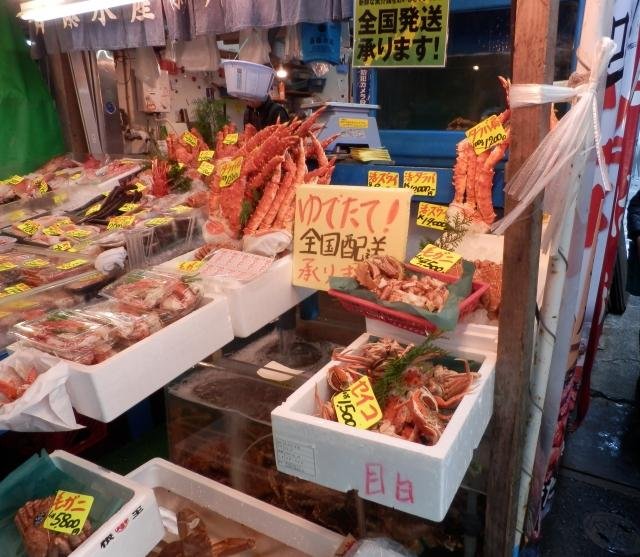
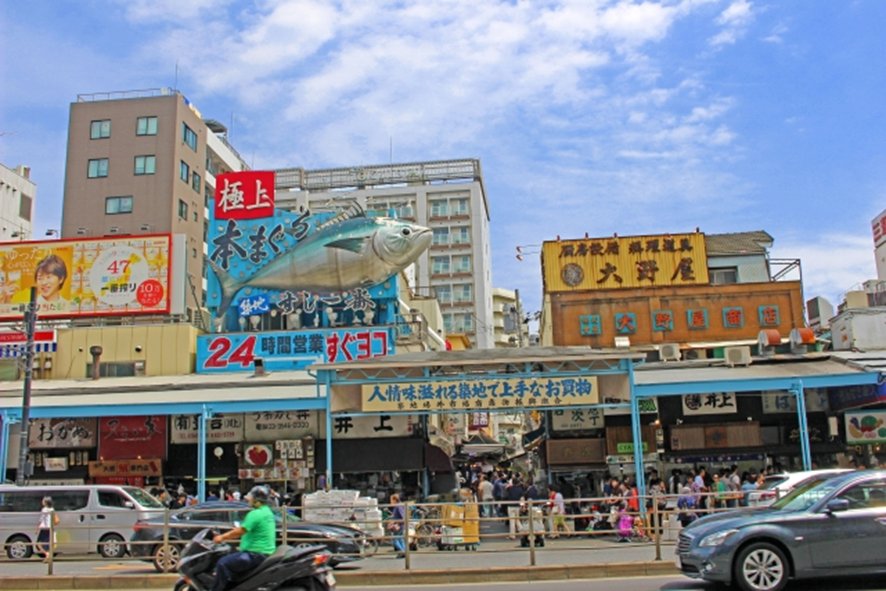
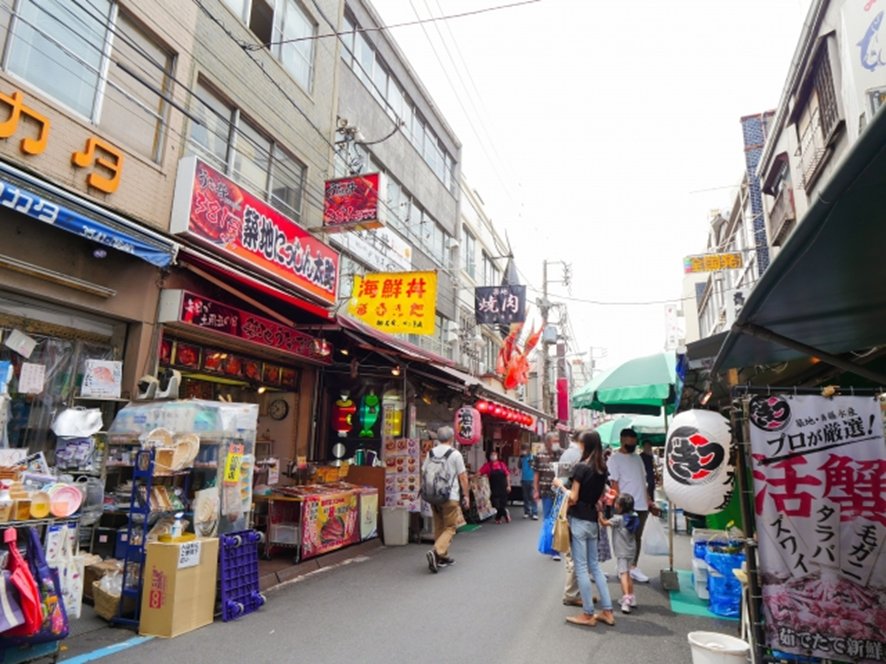
When Tokyo’s famous fish market moved to Toyosu in 2018, the Outer Market was not included in the relocation. Today, more than four-hundred specialty shops continue to operate there.
The Outer Market’s charm lies in its dense network of shops packed into narrow alleyways. It has become a specialist destination for everything food-related. The chance to sample the same high-quality ingredients that professional chefs rely on, all while simply strolling through the lanes, is a distinctly Tsukiji experience.
The two markets compare as follows:
- Tsukiji Outer Market: Walk the alleyways and sample seafood and street food directly from vendors.
- Toyosu Market: Visits are centered around observation decks, with dining and shopping available in the designated visitor areas alongside the walkways.
The information center sees a steady stream of visitors every day. Food tours take place right in the middle of this lively Outer Market.
Tsukiji Fish Market: Street Food & Culture Walking Tour
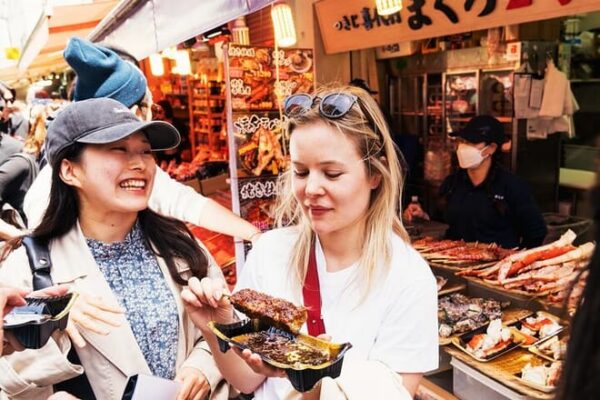
Tsukiji Fish Market Food & Walking Tour with 7 Gourmet Bites
Prices Range from ¥2,800 to Over ¥20,000
Group tours typically fall between ¥2,800 and ¥15,000, while private and more comprehensive plans tend to range from ¥8,000 to ¥15,000. Certain premium tours offering special experiences or extended duration can exceed ¥20,000.
Tours in the ¥5,000–¥15,000 range typically last two to three hours and include five to ten tastings. Lower-priced options often cover little more than the guide fee, with fewer tastings and participants purchasing food and drinks on their own along the way.
Some “food walk” style tours around ¥4,000–¥5,000 do include multiple tastings, so confirm the number and content of tastings individually before booking. Plans exceeding ¥20,000 reflect the higher quality that comes with small group sizes and included meals.
Before booking, always check:
- What tastings are included and what they consist of (fresh seafood versus light snacks)
- Whether drinks are provided
- The language(s) your guide speaks
- Whether transportation or pick-up is included
Verifying the tasting details along with the price helps you avoid any surprises on the day of your tour.
Tasting Menus Change with the Season
Shops in the Tsukiji Outer Market adjust their offerings based on what they source and what is in season. Tour tasting menus work the same way—guides see what’s fresh that day and choose which shops to visit accordingly.
Even on the same tour, the ingredients you taste will differ depending on the season. Below is an overview of what’s typically available throughout the year.
| Season | Highlights |
|---|---|
| Winter (December–February) | Bluefin tuna, oysters, yellowtail, cod milt |
| Spring (March–May) | Cherry shrimp, whitebait, firefly squid, bonito |
| Summer (June–August) | Sea urchin, rock oysters, conger eel, pike conger |
| Autumn (September–November) | Pacific saury, bonito, matsutake mushrooms, salmon |
The opportunity to taste flavors unique to that moment in the year is one of the great appeals of food tours in Tsukiji, which follow no fixed menu. If there is a specific ingredient you want to try, consider timing your booking around its peak season.
Tsukiji Fish Market: Street Food & Culture Walking Tour
Tsukiji Fish Market Food & Walking Tour with 7 Gourmet Bites
Top 5 Tsukiji Food Tours
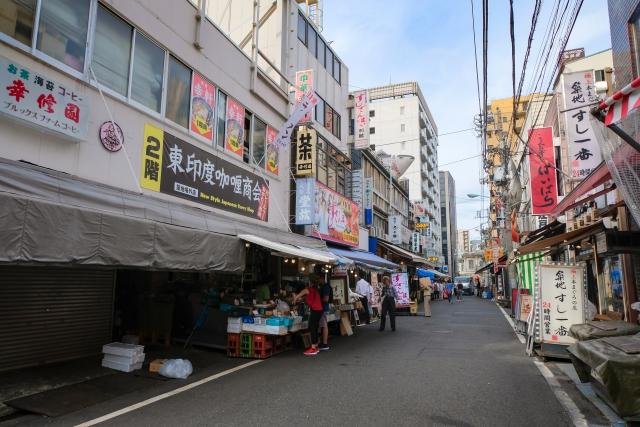
Finding the right tour from such a wide selection is no easy task.
You’ll find five carefully chosen tours below, each with its distinct strengths laid out in a consistent format to help you compare options based on your budget and schedule.
Japan Guide Star|Tsukiji Fish Market Food & Walking Tour with Seven Gourmet Bites
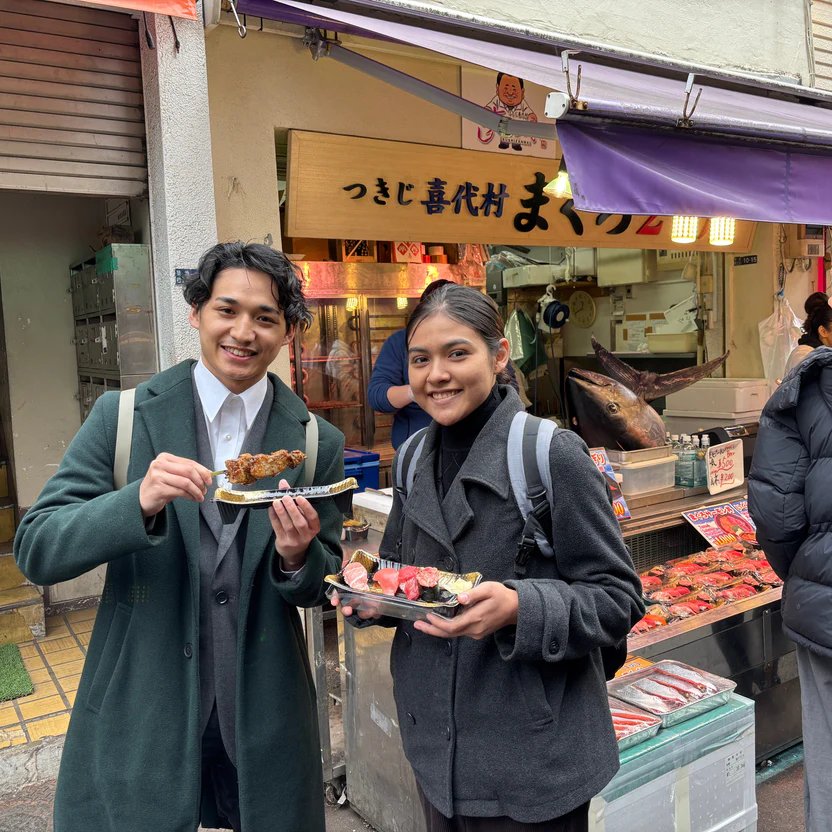
Tokyo: Tsukiji Fish Market Street Food Tour – Japan Guide Star
Japan Guide Star offers one of the best-value tours available.
The tour starts in front of the main gate of Tsukiji Honganji Temple and takes roughly two to three hours to explore the Outer Market. Guides introduce dishes and spots that are easy to miss when wandering on your own.
Despite the accessible price, the quality of the experience is solid. If you have dietary restrictions, contact the guide at the time of booking to arrange accordingly.
Tsukiji Fish Market Food & Walking Tour with 7 Gourmet Bites
Details
| Meeting Point | Main gate of Tsukiji Honganji Temple, 3-15-1 Tsukiji, Chuo City, Tokyo |
| Duration | Approx. 3 hours |
| Included in Price | Guide fee |
| Booking Information | https://japanguidestar.com/tour/tsukiji-fish-market-street-food-culture-walking-tour/ |
| Best For | Those who want to experience a wide variety of foods at excellent value |
Ninja Food Tours|Tsukiji Fish Market Tour
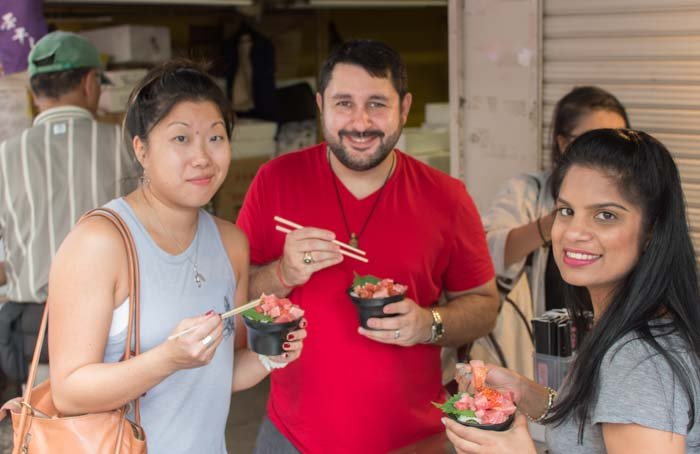
Tsukiji Fish Market Tour | Food Tour in Tokyo – Ninja Food Tours
Ninja Food Tours is a great choice for those who feel uncomfortable in large group settings.
The standout feature here is the maximum group size of six people. With your guide right there with you, you can ask questions about ingredients as you explore. With a duration of approximately 2.5 hours, the tour visits several eateries and offers ample opportunity to enjoy seafood and street food.
Ninja Food Tours doesn’t list specific dietary accommodations, so we suggest contacting them directly before booking.
Details
| Meeting Point | Outside of Lawson (convenience store) Tsukiji 4-chome, 4-8-1 Tsukiji, Chuo City, Tokyo |
| Duration | Approx. 2.5 hours |
| Included in Price | Tastings and guide fee |
| Booking Information | https://www.ninjafoodtours.com/tokyo-food-tours/tsukiji-fish-market/ |
| Best For | Those who prefer exploring with a small group and chatting with the guide |
MagicalTrip|Tsukiji Fish Market Food Walking Tour
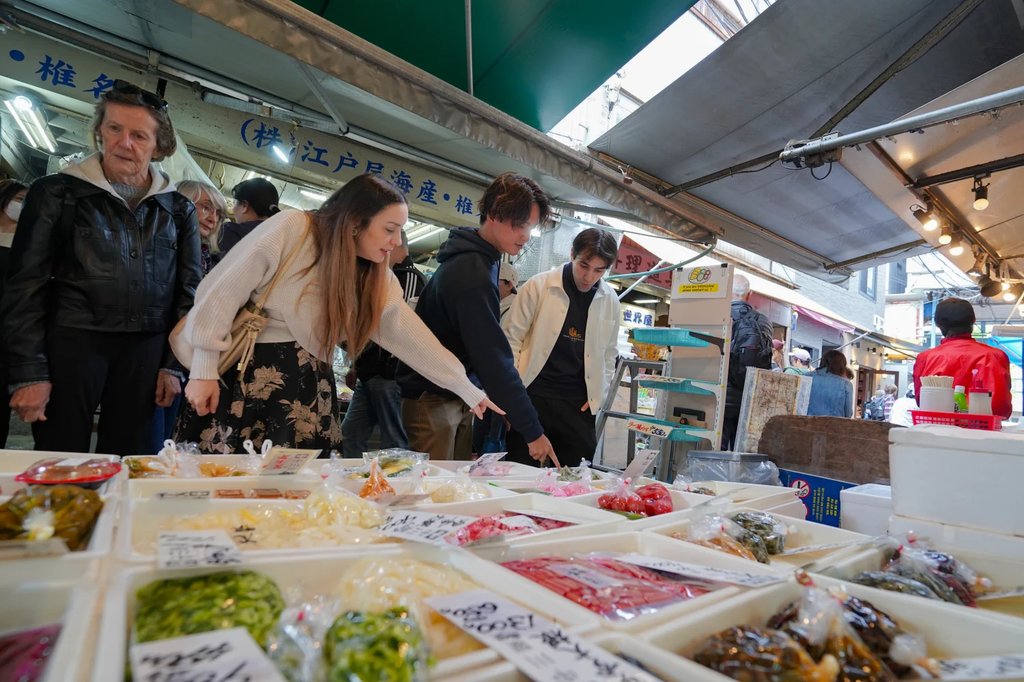
Tsukiji Fish Market Tour : Behind the Scenes & 10 Seafood Tastings
MagicalTrip is a great fit for those who want a satisfying meal as the tour winds down.
Tastings include tuna, sea urchin, and salmon roe from the Outer Market. A behind-the-scenes look at a 60-year-old seafood shop—along with Japanese street food such as tamagoyaki and grilled eel skewers—packs a wide range of experiences into the tour. The tour concludes with a visit to a local shrine, connecting the faith and food culture of the Tsukiji area.
If you have dietary restrictions, contact MagicalTrip in advance so adjustments can be made where possible. Note, however, that this tour does not offer a fully vegan or vegetarian menu, and is not officially designated as a vegan or vegetarian tour.
Details
| Meeting Point | Main gate of Tsukiji Honganji Temple, 3-15-1 Tsukiji, Chuo City, Tokyo |
| Duration | Approx. 2.5 hours |
| Included in Price | Tastings and guide fee |
| Booking Information | https://www.magical-trip.com/product/ec6f853d-0797-4ebe-b398-8bf928bfb3ec |
| Best For | Those who want a behind-the-scenes experience and premium seafood tastings |
Tsukiji Fish Market: Street Food & Culture Walking Tour
Tsukiji Fish Market Food & Walking Tour with 7 Gourmet Bites
Japan Wonder Travel|Tokyo Tsukiji Fish Market Food Walking Tour with Five Tastings
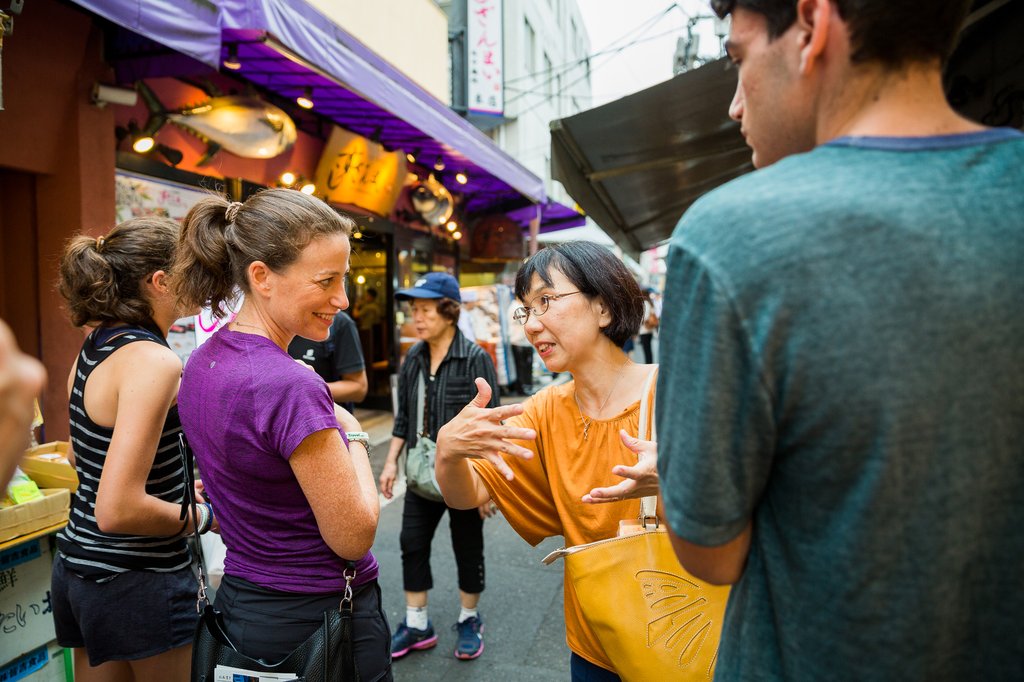
Tsukiji Fish Market Tours | Japan Wonder Travel
We recommend Japan Wonder Travel for those who want to experience both food and culture.
Departing from the main gate of Tsukiji Honganji Temple, the tour covers the Outer Market over approximately three hours. The five-item tasting lineup—which includes sushi and wagyu beef skewers—hits a satisfying sweet spot in variety and quantity. Guides provide detailed explanations of ingredients and food culture, making for an experience that is as educational as it is delicious.
Dietary restrictions including allergies can be accommodated where possible with advance notice.
Details
| Meeting Point | Main gate of Tsukiji Honganji Temple, 3-15-1 Tsukiji, Chuo City, Tokyo |
| Duration | Approx. 3 hours |
| Included in Price | Five tastings and guide fee |
| Booking Information | https://www.japanwondertravel.com/posts/tokyo-food-tour-tsukiji |
| Best For | Those who want to learn about Tsukiji’s culture and history while eating their way through the market |
Arigato Travel|Classic Tsukiji Breakfast Tour – Daytime
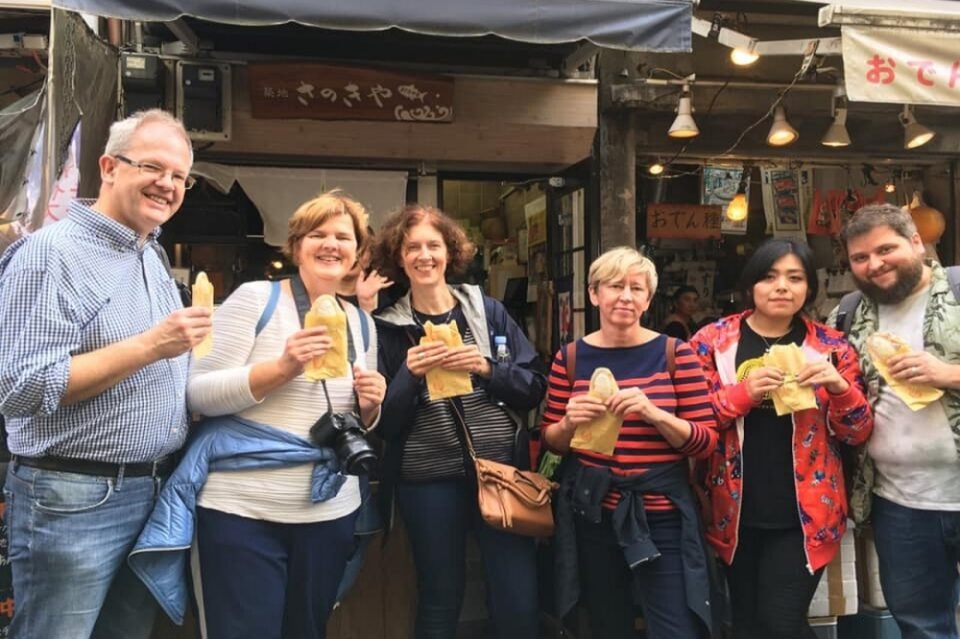
Classic Tsukiji Breakfast Tour – Daytime | Arigato Travel
Arigato Travel is the tour to choose if you want to fully soak up the atmosphere of Tsukiji in the morning.
Departing at 8:30 am, this tour puts you right in the middle of the morning market energy, with the bustle of suppliers and the lively atmosphere that only the early hours can offer. A traditional Japanese breakfast centered on miso soup and rice forms the heart of the experience. Multiple tastings at the Tsukiji Outer Market round out a comprehensive exploration of Japanese food culture.
The price is on the higher end, but the quality of the meal and the insights shared by market insiders make it well worth it. The meeting point is about a 1-minute walk from Exit 2 of Tsukiji Station, making it easy to reach.
Details
| Meeting Point | In front of Turret COFFEE Tsukiji, 2-12-6 Tsukiji, Chuo City, Tokyo |
| Duration | Approx. 3 hours |
| Included in Price | Traditional Japanese breakfast, tastings, and guide fee |
| Booking Information | https://tours.arigatojapan.co.jp/tour/tsukiji-breakfast-tour |
| Best For | Those who want to experience the morning energy of the market alongside a full traditional Japanese breakfast |
Must-Try Dishes on a Tsukiji Food Tour
The signature dishes typically offered on Tsukiji food tours each have their own appeal and best way to enjoy them.
The standout dishes covered below include tuna sashimi, seafood rice bowls, beef skewers, tamagoyaki, and grilled scallops. Getting to know each dish beforehand makes the tasting experience even more rewarding.
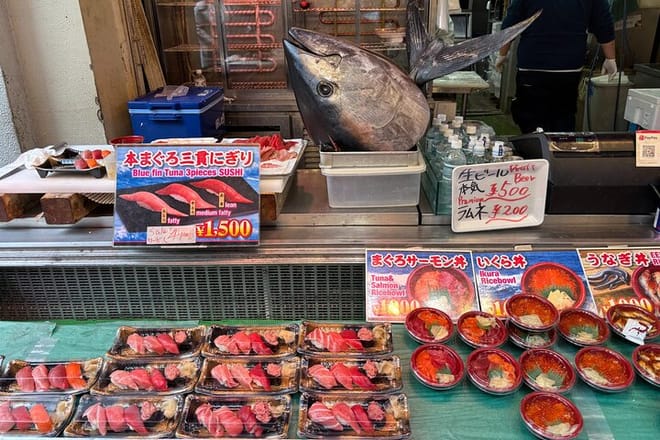
Tuna Sashimi and Sushi | Flavor Varies by Cut, from Lean to Fatty
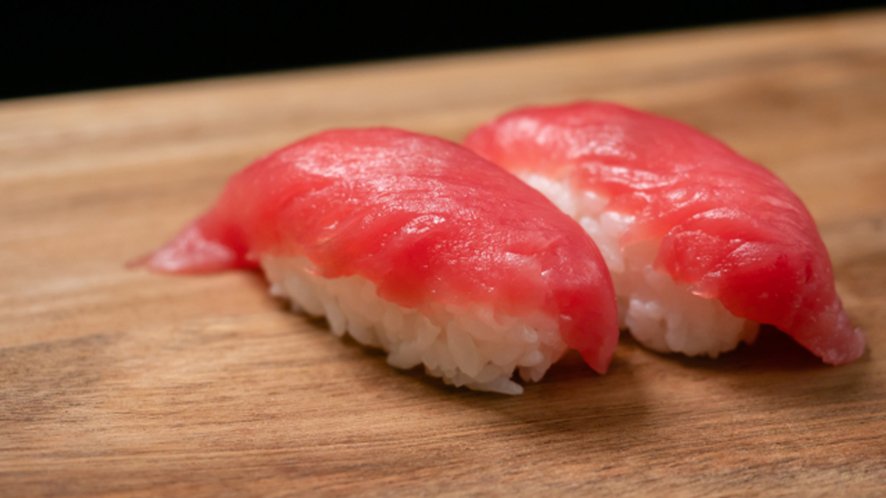
The flavor of tuna varies considerably depending on the cut. Watching a skilled chef slice it right in front of you before tasting it on the spot is one of the true pleasures of Tsukiji.
Akami (lean tuna) has a firm texture that delivers the pure, clean flavor of the tuna itself. Chutoro (medium fatty tuna) balances richness and umami in equal measure, while otoro (fatty tuna) melts on the tongue with a lush sweetness. Starting with the leaner akami and working your way up is the best way to appreciate the differences in cuts.
If the tuna is served as sushi, keep these tips in mind:
- Apply soy sauce to the fish side only, and use just a small amount—soaking the rice causes it to fall apart.
- Eating with your hands or chopsticks is equally acceptable. Follow the chef’s lead.
- Eat each piece in one bite to enjoy the balance the chef has crafted.
Freshly sourced tuna has an aroma and texture unlike anything you can easily find elsewhere. Be sure to compare the cuts while you have the chance.
Tsukiji Fish Market: Street Food & Culture Walking Tour
Seafood Rice Bowl | A Market Classic for Tasting Multiple Fish at Once
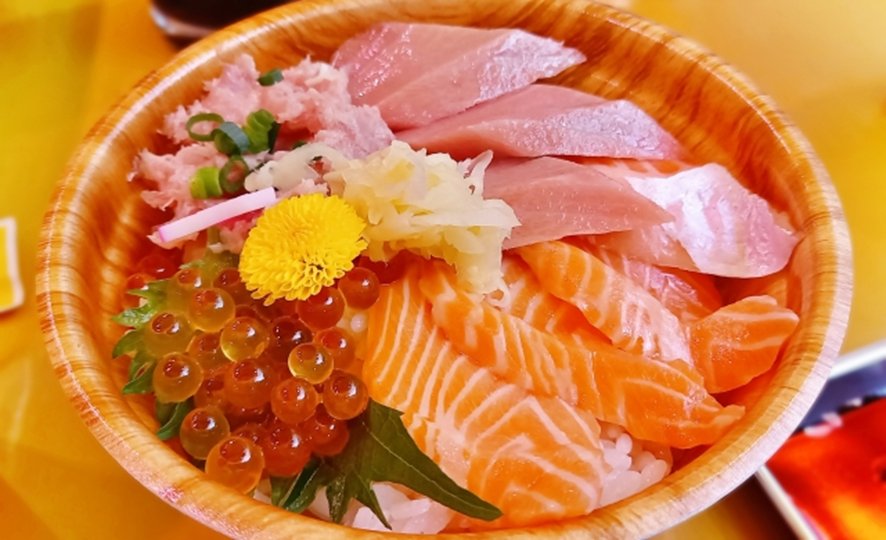
Kaisendon (seafood rice bowl) layers multiple sashimi cuts over seasoned rice, making it a market staple. Because it allows you to compare a variety of seafood in a single dish, it is particularly well suited for first-time visitors to Tsukiji.
Many shops are open from the early morning hours, so the seafood you eat is often just hours off the boat, a luxury unique to market settings. Prices range from around ¥600 to ¥3,000. Since seasonal toppings change throughout the year, ask your guide what is recommended that day.
| Season | Recommended Toppings |
|---|---|
| Spring (Mar–May) | Bonito, halfbeak, firefly squid |
| Summer (Jun–Aug) | Sea urchin, horse mackerel, sea bass |
| Autumn (Sep–Nov) | Pacific saury, bonito, salmon roe, salmon |
| Winter (Dec–Feb) | Winter yellowtail, tuna, oysters |
Whether kaisendon is included as a meal depends on the tour plan. Either way, your guide will lead you to a carefully chosen shop, so ordering is far less daunting than going it alone.
Wagyu Skewers | Premium Beef, Seared Right in Front of You
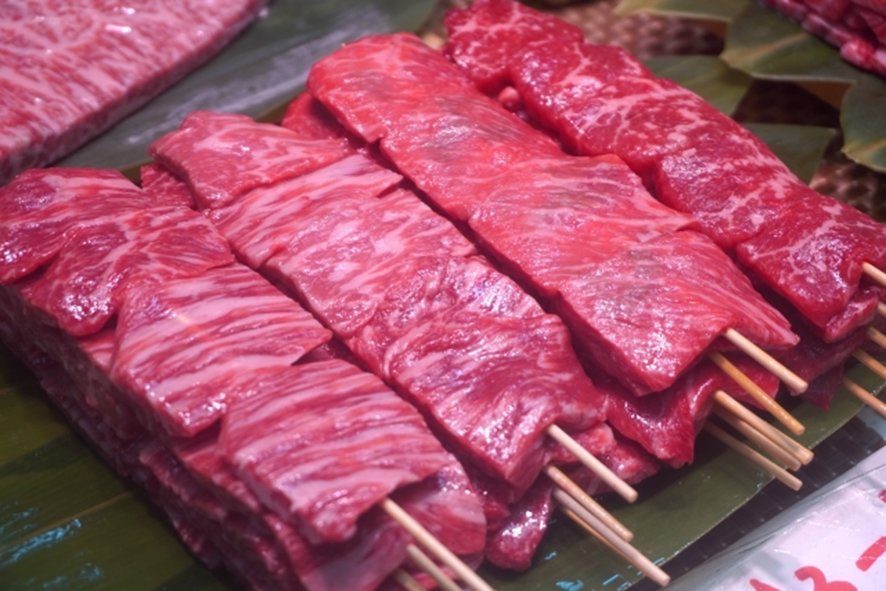
A wagyu beef skewer after a run of seafood brings a welcome shift. Heavily marbled, premium beef has a low fat melting point, and the rich flavor spreads across your tongue the moment it enters your mouth.
Watching the beef seared right in front of you adds another layer to the experience, and the fragrant smoke rising from the grill is appetite-whetting in itself. The presence of wagyu in a market renowned for seafood is no coincidence: the contrast between delicate sushi and the bold, richness of the meat heightens the overall satisfaction of the tour.
You’ll also find authorized A5-grade wagyu retailers at the market—an added assurance of quality.
Tamagoyaki | Tsukiji’s Iconic Dashi-Infused Rolled Omelette
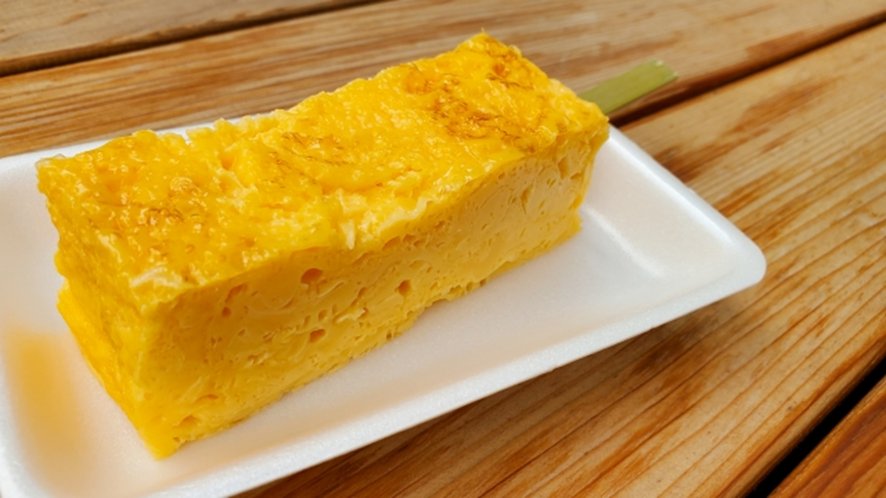
Tamagoyaki at Tsukiji developed within the unique food culture of the market itself, born from demand for sushi-style omelettes in Edo-mae cuisine and as a prepared dish for market workers. Specialty shops dating back to the Taisho era still operate today, with craftspeople rolling the omelettes every morning.
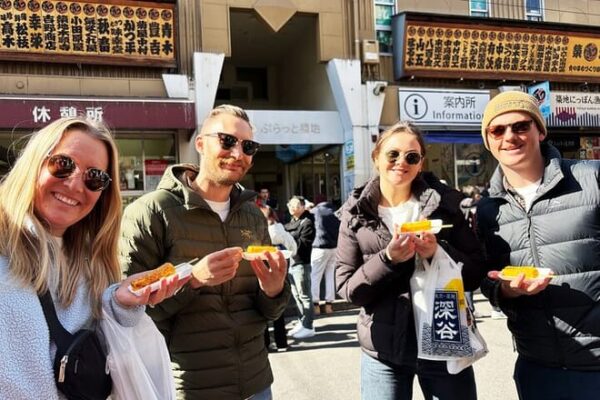
The classic version is sweet and infused with dashi (Japanese soup stock), though some shops offer a less sweet style that brings the natural flavor of the egg to the foreground. One interesting aspect of tamagoyaki here is how the bamboo skewer format—easy to eat while standing—helped bring this dish to a wider audience. The moist texture holds even after it cools.
Affordable and widely featured on food tours, tamagoyaki also serves as a natural palate cleanser after seafood, with its soft texture and gentle sweetness.
Grilled Scallops and Raw Oysters | Fresh Fish Served in the Shell
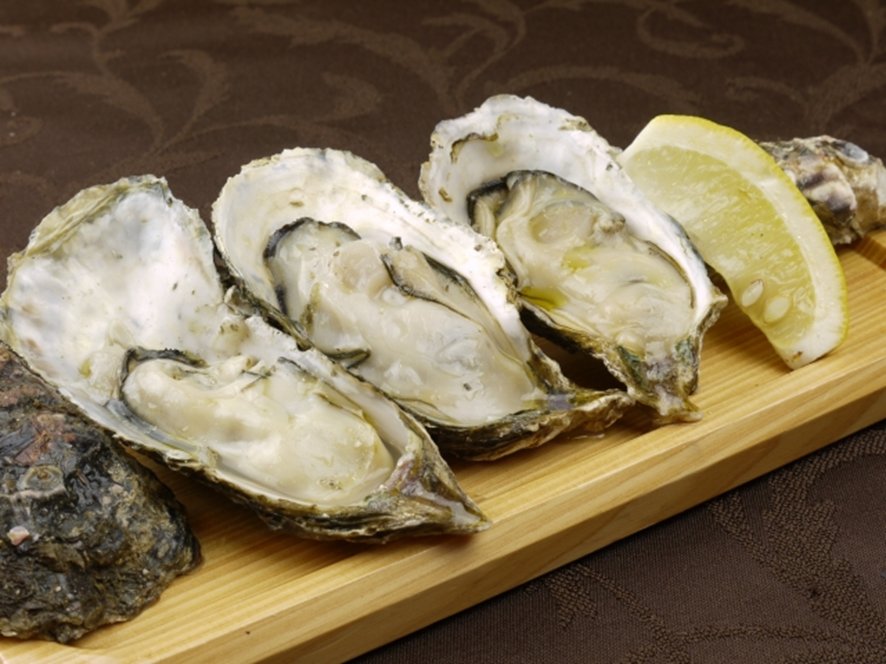
Tasting freshly prepared scallops and oysters still in the shell is one of the genuine luxuries of visiting a market like Tsukiji.
Grilled scallops are cooked over charcoal and seasoned with soy sauce or butter for a satisfying savory aroma. Raw oysters are shucked on the spot and finished with a squeeze of lemon, delivering a rich, concentrated flavor. In winter, both shellfish reach their peak, as the flesh grows plump and the sweetness intensifies noticeably.
If you dislike raw oysters or have a shellfish allergy, be sure to declare this when booking; arrangements such as substituting an alternative dish may be possible.
Tsukiji Fish Market Food & Walking Tour with 7 Gourmet Bites
What to Know Before Joining a Tsukiji Food Tour
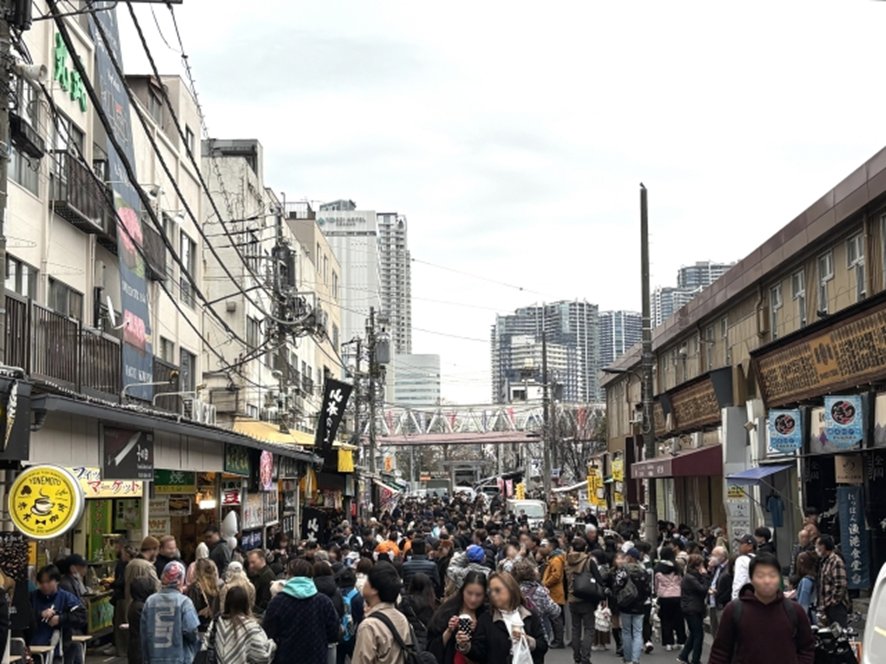
For first-time visitors, reviewing a few practical matters in advance makes for a much more relaxed experience. Below, you’ll find the ideal departure times, etiquette around eating, and how much cash to bring. Having this practical information sorted in advance means you can focus on enjoying the tour rather than worrying about logistics.
Aim to Depart at Around 9 am
Most Outer Market shops focus on wholesale trade from 6 am to 9 am, then shift to general retail between 9 am and 2 pm. Shops begin closing from around 1 pm to 2 pm onward, which is why many tours are scheduled to catch the peak hours between 8 am and 10 am.
Only in the morning can you feel the energy of vendors calling out to one another. Since multiple tastings are on the agenda, we suggest eating a light breakfast (or skipping it entirely) on the day of your tour.
With more shops closing in the afternoon, securing a morning slot, ideally around 9 am, is the way to go.
Eating While Walking Is Not Good Manners
Strolling through the market while eating (tabearuki, the practice of eating while walking) is prohibited in the Tsukiji Outer Market. Doing so in the narrow passageways obstructs other visitors and risks contaminating goods on display.
After purchasing food, stop in a spot that does not block foot traffic—such as near the shop—to eat. Dispose of rubbish in the bins provided at shops or designated waste stations within the market; do not litter.
Other etiquette points to keep in mind:
- Don’t touch the products: Keep your hands off fresh fish and perishables.
- Don’t haggle: Price negotiation is not customary here; pay the listed price.
- Ask before photographing: Some shops prohibit photos, so check with staff first.
- Leave large bags behind: Use a coin locker at the train station to avoid blocking the narrow aisles.
On a guided tour, your guide will point out etiquette as situations arise, so there is little to worry about.
Bring ¥3,000 to ¥5,000 in Cash
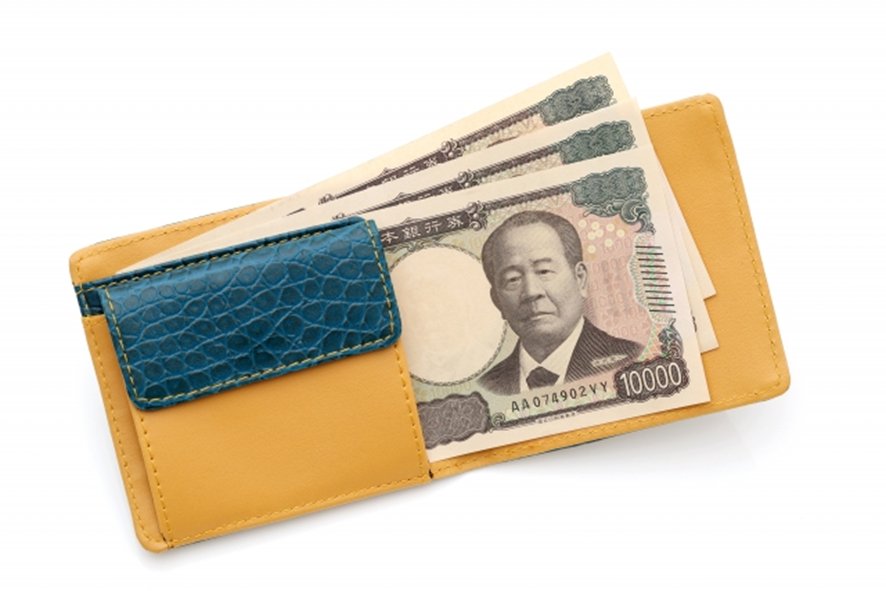
Tasting costs are often included in the tour fee and paid in advance, but you’ll want to have a little extra cash on hand to buy food or souvenirs after the tour ends.
Many shops are independently run and do not accept credit or IC cards. Since payment options vary by shop, carrying ¥3,000 to ¥5,000 in cash provides peace of mind.
Here are some cost estimates for popular items found in the market:
- Seafood skewers or street snacks: approximately ¥300–¥800 each
- Dried goods or confections: approximately ¥500–¥2,000
- Light refreshments after the tour
Having ¥1,000 notes and coins on hand will make transactions much smoother.
Three Nearby Stations Serve the Market
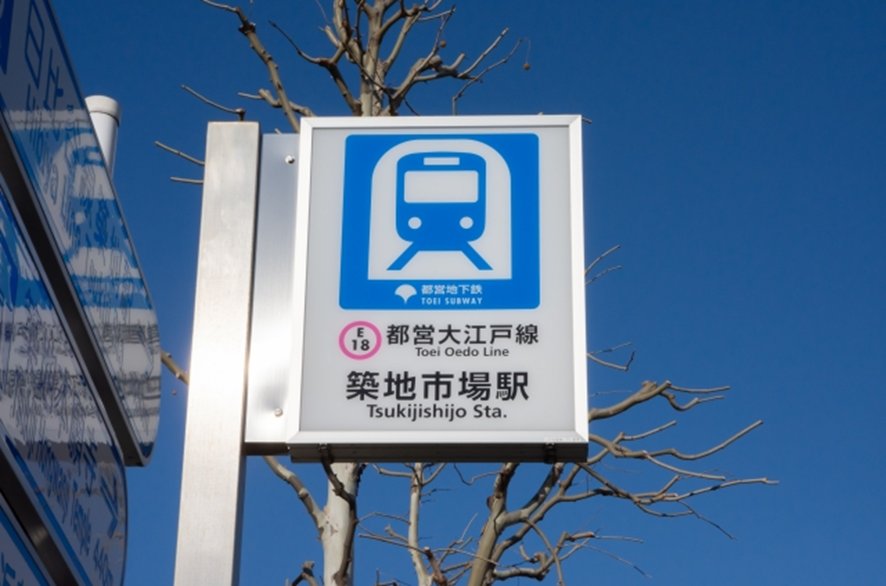
Three stations provide convenient access to the Tsukiji Outer Market. Choose the one that best connects with the rail line near your accommodation.
| Station (Line) | Exit | Walking Time |
|---|---|---|
| Tsukijishijo Station (Toei Oedo Line) | Exit A1 | Approx. 1 min |
| Tsukiji Station (Tokyo Metro Hibiya Line) | Exits 1 & 2 | Approx. 1 min |
| Higashi-Ginza Station (Toei Asakusa Line / Tokyo Metro Hibiya Line) | Exits 5 & 6 | Approx. 5 min |
Note that Tsukijishijo Station and Tsukiji Station are on different lines—do not confuse the two. From Tokyo Station, the smoothest route is to take the Marunouchi Line to Ginza Station, then transfer to the Hibiya Line.
Many tours meet near Tsukiji Honganji Temple, so confirm your meeting point in advance. The area can be busy in the morning, so plan to arrive with a few minutes to spare.
Many Shops Close on Wednesdays, Sundays, and Public Holidays
Most Outer Market shops close in line with the Toyosu Market holiday schedule. Expect many shops to be shut on Sundays, public holidays, and some Wednesdays. The overall atmosphere is noticeably quieter on these days, so we suggest checking the calendar before you book.
Check the official Tsukiji Outer Market website calendar to confirm business days. The New Year period brings both heavy crowds and widespread closures, so confirming the schedule with your tour operator is essential.
As long as you select from the available dates shown on the tour’s booking page, you can generally expect the market to be open and active.
Common Questions About Food Tours in Tsukiji

Below we’ve included some answers to frequently asked questions about dietary needs, booking, and bringing children along. Clearing up any concerns in advance means you can enjoy your tour without distraction.
What if I Have Dietary Restrictions?
Since seafood makes up the bulk of what’s on offer, options are somewhat limited. That being said, letting the operator know your restrictions in advance usually allows for reasonable adjustments.
The degree of flexibility varies by tour operator:
- Vegan and similar restrictions: Accommodation is limited and alternatives may not always be available.
- Allergies: Some tours can partially accommodate with advance notice.
- Private tours: Individual customization is easier, with more room for flexibility.
Menu changes on the day are difficult to arrange, so contacting the tour operator directly before booking is the most reliable approach.
Do I Need a Reservation?
Most tours run with small groups and have limited capacity. Popular time slots, weekends, and peak travel seasons fill up quickly, making same-day participation difficult.
Since most tours allow free cancellation up to 24 hours in advance, booking early (even if your plans are not yet finalized) is a sensible approach.
Can I Bring Children?

Children are welcome on most tours, and some plans offer reduced pricing for younger participants. The narrow alleyways make strollers impractical, however. Since tours involve two to three hours of walking, we recommend a baby carrier for young children. Let the operator know your child’s age when booking so the pace can be adjusted accordingly.
Tsukiji Fish Market Food & Walking Tour with 7 Gourmet Bites
What Are Some Nearby Places I Should Visit Before or After the Tour?
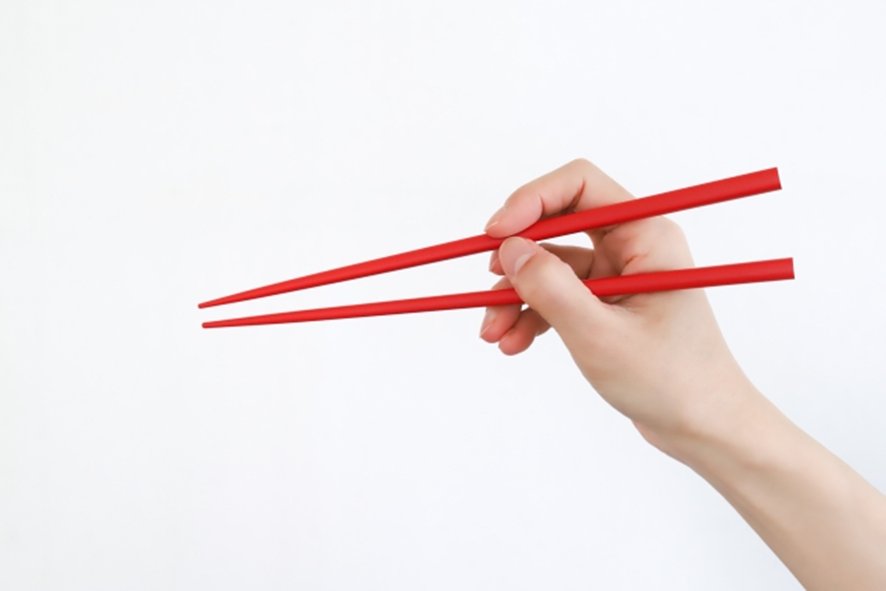
Most tours wrap up around midday, leaving the afternoon free for further sightseeing. Hamarikyu Gardens and the Ginza district are both within walking distance and well worth exploring. A cultural experience workshop in the afternoon, followed by another food tour in the evening, are also possibilities. Making use of the sights nearby is a great way to plan a full and satisfying day.
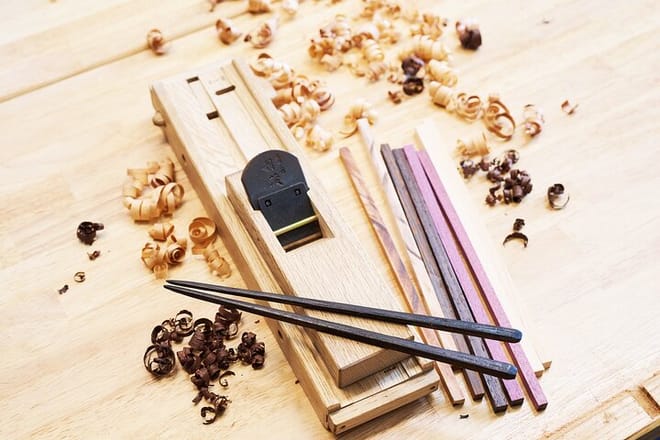
Japan Guide Star offers a range of Tokyo experiences beyond Tsukiji, including chopstick-making workshops, Imperial Palace walking tours, and Shinjuku food tours. Since Tsukiji tours generally end by midday, combining one with a different tour in the afternoon is an efficient way to make the most of your day in Tokyo.

Tokyo Chopstick Making Workshop in Ginza
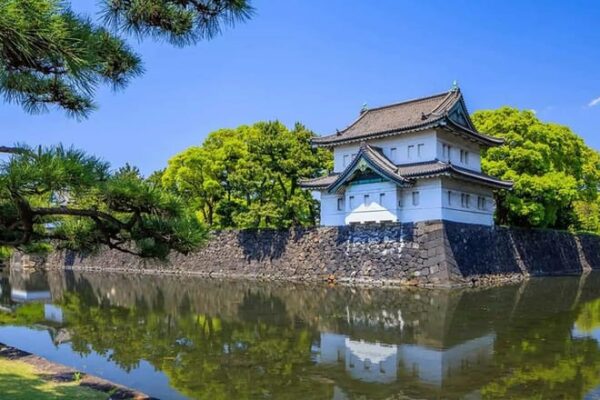
Tokyo Station and Imperial Palace 1 Hour Guided Tour

Shinjuku: Food Tour – 15 Dishes at 4 Eateries
Make the Most of Your Tsukiji Food Tour
The quality of your food tour depends significantly on its price and what tastings are included.
Avoid Wednesdays, Sundays, and public holidays when scheduling your visit, and book as early as you can. With etiquette, cash, and access sorted, you can enjoy the tour without any concerns.
Choose the tour that suits you best and make the most of the food experiences that only Tsukiji can offer.