Want to visit the Imperial Palace but are unsure whether to choose a free tour or a paid one? The Imperial Household Agency offers free tours, but applications are subject to specific rules, and the tours are unavailable on certain days. Opportunities to ask questions in English during the visit may also be limited, so it is worth checking the participation requirements and tour format in advance.
In this article, we compare three ways to visit: the Imperial Household Agency’s free tour, a self-guided visit to the East Gardens of the Imperial Palace, and an English-guided tour. We cover what you can see, how to book, the English-language guidance available, and how much time to allow. We also explain how to apply, what to expect on the day, and which remnants of Edo Castle you can still see at the Imperial Palace.
Choose from Three Ways to Visit the Imperial Palace Based on Your Goals
There are three main ways to visit the Imperial Palace, each offering access to different areas and varying levels of English-language guidance. Below is an overview of English-guided tours, the Imperial Household Agency’s free tour, and self-guided visits to the East Gardens of the Imperial Palace.
English-Guided Tours: Learn About Edo Castle in English
On a paid English-guided tour, you can explore the remains of Edo Castle in the East Gardens of the Imperial Palace and the Imperial Palace Outer Garden with a guide. Along the way, you will learn about the history of the stone walls and gates. You can also ask questions as they arise, such as where the stones used in the walls came from.
Tours last one to two hours, and you can choose the duration and format that best fit your itinerary and travel group. If you would like to learn about Edo Castle’s history and what life was like at the time while exploring the grounds, an English-guided tour is one option to consider.
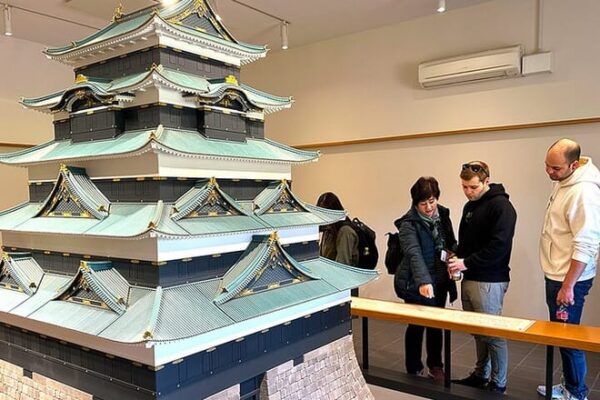
Tokyo Castle & Imperial PalaceーShogun Walking Tour
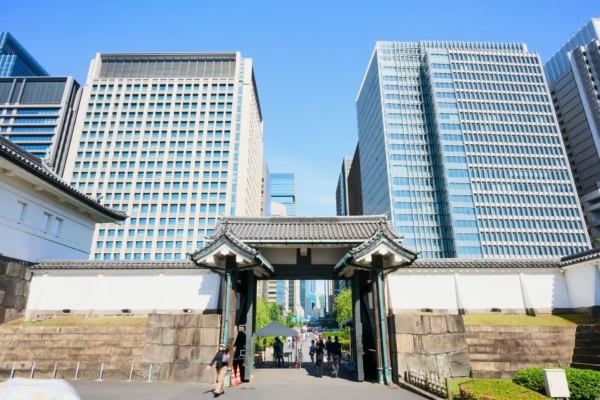
Private Tokyo Castle and Imperial Palace Shogun Walking Tour
Imperial Household Agency’s Free Tour: Walk in Front of the Palace Building and Across Nijubashi Bridge
On the Imperial Household Agency’s free public tour of the Imperial Palace, you can enter the normally restricted palace grounds through Kikyo-mon Gate. The tour offers views of the exterior of the palace building and allows you to cross the Main Gate Iron Bridge (Nijubashi). Foreign nationals are also welcome to participate.
Along the route, you can see Fujimi-yagura, an Edo Castle turret once used for observation and defense, as well as the Imperial Household Agency Building. Crossing the bridge is a distinctive feature of the tour, as visitors to the Imperial Palace Outer Garden usually view it from outside.
East Gardens of the Imperial Palace: Explore the Edo Castle Ruins Freely Without a Reservation
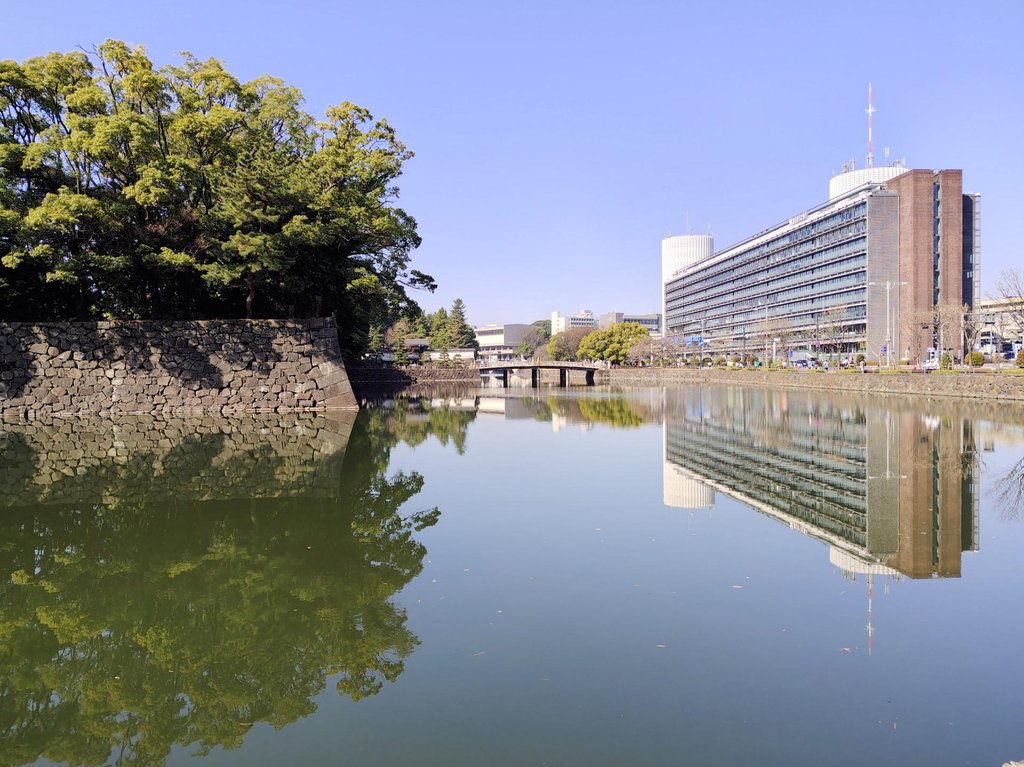
The East Gardens of the Imperial Palace occupy parts of the former main, second, and third enclosures of Edo Castle. No reservation or admission fee is required. The gardens feature a spacious lawn on the site of the former main enclosure and the Ninomaru Garden, with its pond and seasonal flowers. Enter through Ote-mon Gate, Hirakawa-mon Gate, or Kitahanebashi-mon Gate to explore Edo Castle remains, including the base of the castle keep and the Hyakunin Bansho guardhouse, at your own pace during opening hours.
However, the East Gardens are separate from the area in front of the palace building covered by the Imperial Household Agency’s public tour. You cannot walk directly from the East Gardens to the front of the palace building. If you would like to visit that area, you must apply separately for the Agency’s free tour.
Four Common Pitfalls on Free Visits to the Imperial Palace

Free visits are appealing, but without some advance preparation, you may encounter unexpected difficulties on the day. Here are four common things to know before joining the Imperial Household Agency’s free tour or visiting the East Gardens.
1. What You Can See: You Can’t Go Inside the Palace Building
On the Imperial Household Agency’s public tour, you can view the exteriors of the palace building and the Imperial Household Agency Building, but you cannot enter either building. The Gosho, the Emperor’s residence, is also excluded from the route, so check which areas are accessible before applying.
Other opportunities to visit the grounds include the New Year Greeting and the Emperor’s Birthday Greeting, when members of the Imperial Family appear on the palace building’s veranda, and the public openings of Inui-dori Street held in spring and fall. Although these events do not allow access to the palace building’s interior, they offer a chance to walk through areas that are normally closed to the public.
2. Reservations and Closures: The Day-of-the-Week Rules Are Complicated
The Imperial Household Agency’s public tour requires either an advance application or a same-day numbered ticket. Tours are not held on Sundays, Mondays, or national holidays, except when a national holiday falls on a Saturday. They are also suspended from December 28 to January 4. From July 1 to September 30, no afternoon tours are held.
The East Gardens do not require reservations, but they are normally closed on Mondays and Fridays and from December 28 to January 3. They are open on national holidays, except the Emperor’s Birthday. When a national holiday falls on a Monday, the gardens may open that day and close on the following Tuesday instead. Both the public tour and the East Gardens may also be suspended or closed temporarily for Imperial events or other reasons. Check the official schedules before your visit to confirm that your chosen location will be open.
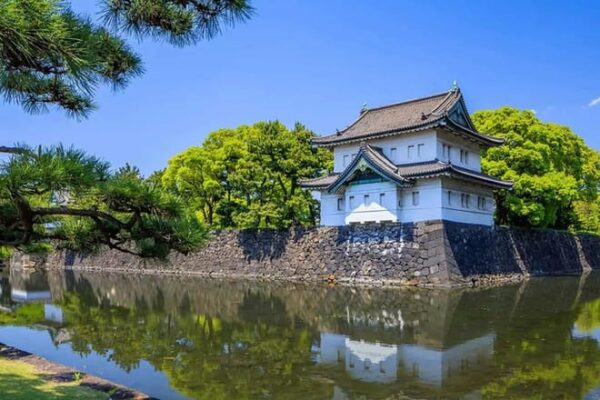
Tokyo Station and Imperial Palace 1 Hour Guided Tour
3. English Commentary: Few Chances to Ask Questions on the Spot
On the public tour and in the East Gardens, you can listen to commentary through the Imperial Household Agency’s audio guide app, which is available in Japanese, English, Chinese, Korean, French, and Spanish. However, the commentary is prerecorded, so you cannot ask questions about things that catch your interest.
In the East Gardens, the Kikuyo Culture Association, a public interest foundation, offers free volunteer-guided tours in English on Wednesdays and Saturdays at 11:00 am and 2:00 pm. Each tour accommodates about 20 people. No reservations are accepted, and tours may be canceled in stormy weather or when a heatstroke alert is issued. Check on the day to confirm whether the tour is running.
The East Gardens contain historical structures and remains from Edo Castle, including the base of the castle keep and guardhouses. A guide’s commentary can help you understand the purpose of the stone walls and buildings and what Edo Castle was like when it was in use. If you would like to learn more about the site’s history in English, consider using the audio guide or joining a volunteer-guided tour.
4. Time Required: Check-In and Numbered Tickets Add to the Tour Time
On the Imperial Household Agency’s public tour, you will walk about 2.2 km (about 1.4 miles), and the tour itself takes about 75 minutes. Before the tour, you must check in and undergo a baggage inspection. If you are joining on the day, you will also need to wait for numbered tickets to be distributed. As a result, the total time you spend on-site will be longer than the tour itself. You will be walking outdoors with little shade, so take precautions against the heat in summer.
If you have limited time for sightseeing or are visiting with older family members, plan your schedule with the time needed for check-in and getting around in mind.
Comparing English-Guided Tours, the Free Tour, and the East Gardens
Here is a comparison of the three ways to visit the Imperial Palace across five areas: price, sights, booking and closing days, English-language commentary, and time required.
| Way to Visit | Price | What You Can See | Booking Method and Closing Days | English Commentary | Time Required |
|---|---|---|---|---|---|
| English-guided tour (recommended if you’re unsure) | Paid | Edo Castle ruins and Imperial Palace Outer Garden (not the public tour route in front of the palace building) | Choose and confirm a date and time on the booking site’s calendar, free cancellation up to 24 hours before the start | You can ask the guide questions in English | About 1–2 hours |
| Imperial Household Agency’s free tour (public tour) | Free | Exteriors of the palace building and Imperial Household Agency Building, Fujimi-yagura, Main Gate Iron Bridge (Nijubashi) | Advance application or same-day numbered ticket, closed Sundays, Mondays, and national holidays | Audio guide app | About 1 hour 15 minutes (check-in opens 30 minutes before the start) |
| Self-guided visit to the East Gardens | Free | Edo Castle remains around the main enclosure, such as the base of the castle keep and guardhouses | No reservation required, closed Mondays and Fridays | Audio guide app, free English volunteer guides on Wednesdays and Saturdays | At your own pace |
To walk in front of the palace building, join the Imperial Household Agency’s public tour. If you want to learn more about the site’s history in English, the free volunteer-guided tours in the East Gardens are an alternative to paid English-guided tours.
With a paid English-guided tour, you can book a date and time in advance and ask the guide questions as you explore. These tours are worth considering if you are visiting the Imperial Palace for the first time or want to learn more about the history of Edo Castle.
If your schedule allows, you can also combine two options. For example, join the Imperial Household Agency’s public tour in the morning, then take a paid English-guided tour of the Edo Castle ruins later in the day. Alternatively, visit the East Gardens on a day when the free volunteer-guided tours are available. The public tour and the East Gardens are generally accessible on Tuesdays, Wednesdays, Thursdays, and Saturdays, making these days practical options for planning a visit that combines both.
Three Recommended English-Guided Tours of the Imperial Palace
The right English-guided tour for you depends on how much time you have and the type of experience you prefer. Here are three tours offered by Japan Guide Star, with a comparison of their duration and format.
Two-Hour Tour: Ideal If You Want to Hear About Edo Castle’s History in Detail
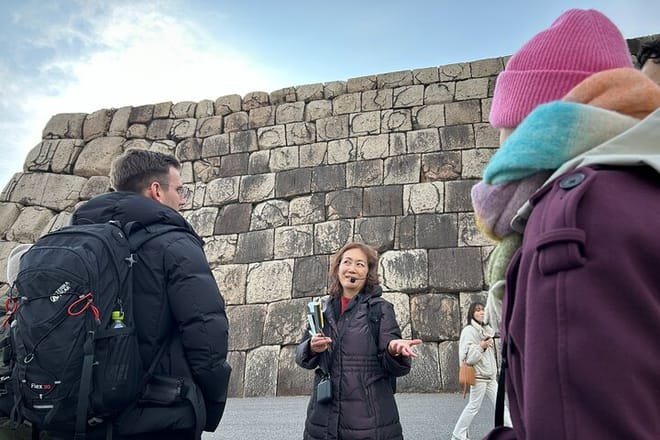
On the “Tokyo Castle & Imperial PalaceーShogun Walking Tour,” you can explore the remains of Edo Castle with an English-speaking guide for about two hours, without needing to join the Imperial Household Agency’s public tour. As you visit the stone walls and gates, you will learn about the history of the Edo shogunate and the Imperial Family. You can also ask the guide questions along the way.
Tours start at six different times: 9:00 am, 10:00 am, 10:30 am, noon, 1:30 pm, and 2:30 pm. Check availability on the booking site’s calendar and select your preferred date and time. The meeting point is Starbucks Coffee Kokyo Gaien Wadakura Funsui Koen, located in Wadakura Fountain Park in the Imperial Palace Outer Garden.
All visitors must undergo a baggage inspection when entering the Imperial Palace grounds, so do not bring knives or alcohol. The route includes slopes and other features that may affect accessibility. If you plan to join in a wheelchair, check in advance which areas are accessible and what assistance is available.
Free cancellation is available up to 24 hours before the tour starts.
Details
| Meeting point | Starbucks Coffee Kokyo Gaien Wadakura Funsui Koen |
| Duration | About 2 hours |
| Price includes | Guided tour in English |
| Booking site | https://japanguidestar.com/tour/tokyo-castle-imperial-palace%e3%83%bcshogun-walking-tour/ |
| Recommended for | Travelers who want to take their time hearing about the history of Edo Castle and the Imperial Family in English |
Tokyo Castle & Imperial PalaceーShogun Walking Tour
One-Hour Tour: Ideal If You Want to Meet at Tokyo Station and Explore in a Short Time
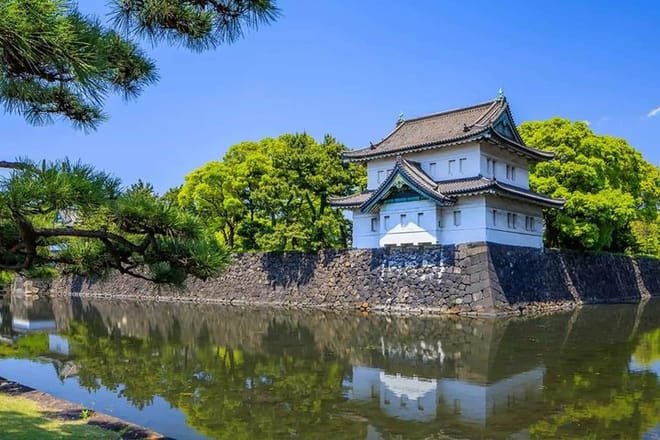
On the “Tokyo Station and Imperial Palace 1 Hour Guided Tour,” you will meet your English-speaking guide at the taxi stand at the Marunouchi South Exit of Tokyo Station. The tour lasts about an hour and explores the area around the Imperial Palace Outer Garden, including the red-brick Marunouchi Station Building and historic buildings nearby.
Tours start four times a day, at 10:00 am, noon, 2:00 pm, and 4:00 pm. This makes it easy to fit one into your schedule on arrival day or before or after traveling by train or to the airport. The route is relatively flat, making it a manageable walk for older participants and families with strollers.
At the end of the tour, you will receive a booklet to help you explore the Imperial Palace area independently. The tour also runs on Mondays and Fridays, when the East Gardens are closed, offering an alternative for visitors planning their sightseeing around the gardens’ closing days.
Free cancellation is available up to 24 hours before the tour starts. In participant reviews, visitors praise the guide’s use of maps and hand-drawn diagrams to explain the sights. Families with teenagers have also commented that their children remained engaged throughout the tour.
Details
| Meeting point | Taxi stand at the Marunouchi South Exit of Tokyo Station |
| Duration | About 1 hour |
| Price includes | Guided tour in English, booklet for exploring the Imperial Palace on your own |
| Booking site | https://japanguidestar.com/tour/tokyo-station-and-imperial-palace-1-hour-guided-tour/ |
| Recommended for | Travelers who want a short visit to the Imperial Palace during free time on their arrival day or on their way to or from the airport or station |
Tokyo Station and Imperial Palace 1 Hour Guided Tour
Private Tour: Ideal If You Want to Explore with Only Your Family or Group
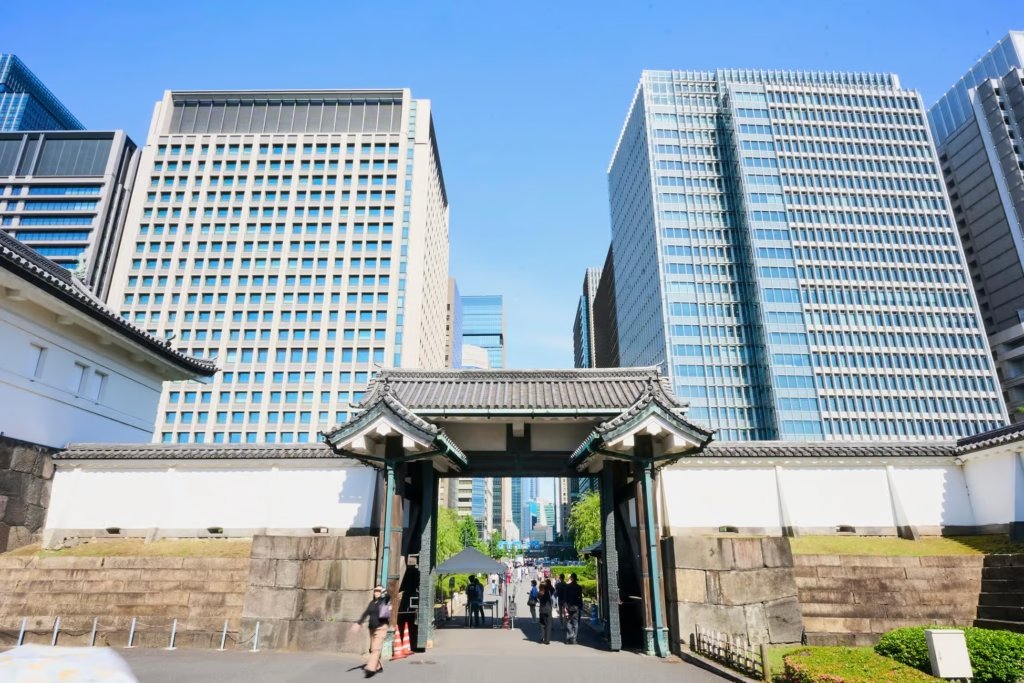
The “Private Tokyo Castle and Imperial Palace Shogun Walking Tour” is a private, two-hour tour of the Edo Castle ruins in the East Gardens and the area around the Imperial Palace Outer Garden, led by an English-speaking guide. Unlike the Imperial Household Agency’s public tour, it does not include the area in front of the palace building.
You can explore at your own pace, whether that means matching your children’s walking speed or taking extra time to photograph places that catch your interest.
Tours start at 9:00 am, 10:30 am, noon, 1:30 pm, and 2:30 pm. The meeting point is the Wadakura Rest House in Wadakura Fountain Park, within the Imperial Palace Outer Garden.
The route includes steep slopes and stairs, so wear comfortable walking shoes.
For groups of more than 10 people, contact the tour operator in advance to ask about booking arrangements. Free cancellation is available up to 24 hours before the tour starts.
Details
| Meeting point | Wadakura Rest House in Wadakura Fountain Park |
| Duration | About 2 hours |
| Price includes | Private guided tour in English |
| Booking site | https://japanguidestar.com/tour/private-tokyo-castle-and-imperial-palace-shogun-walking-tour/ |
| Recommended for | Families or friends who want to explore on their own, at their own pace |
You can find a list of the tours Japan Guide Star operates in Tokyo here.
Private Tokyo Castle and Imperial Palace Shogun Walking Tour

How to Apply for the Imperial Household Agency’s Free Tour and What to Expect on the Day
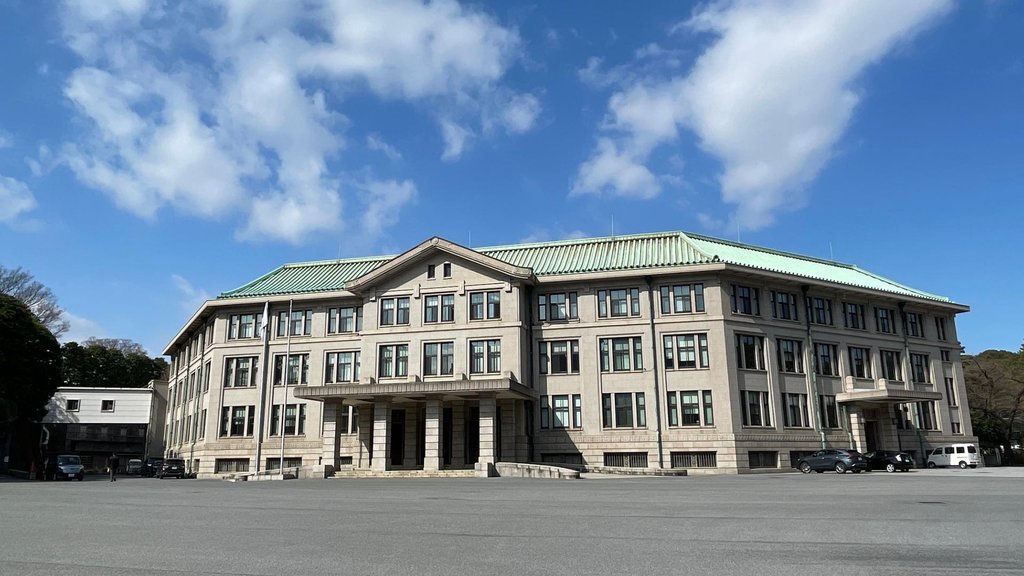
You can join the Imperial Household Agency’s public tour of the Imperial Palace by applying in advance online, by mail, or in person, or by obtaining a numbered ticket on the day. Here is how the process works, from applying to check-in and the baggage inspection.
Advance Application: Apply Online Starting on the 1st of the Month Before Your Visit
On the online application page of the Imperial Household Agency’s tour information website, which is also available in English, you can apply from 5 am Japan time on the 1st of the month before your intended visit until 11:59 pm four days before your tour date. Advance applications are limited to 200 people per tour, and you cannot apply once that capacity has been reached.
Online applications can include up to 50 people. The group representative must enter each participant’s nationality, name, age, and other required details. If you are applying for a group, check the website’s instructions for how to register additional participants and any applicable deadlines.
After submitting your application, you cannot change the date, time, or participants; you can only reduce the number of people. You will need the permit number provided in your confirmation email when you check in on the day, so print out the email or save a screenshot.
Same-Day Numbered Tickets: Pick One Up at Kikyo-mon Gate If You Couldn’t Apply in Advance
Even if advance applications are full, you may still be able to join the Imperial Household Agency’s public tour by obtaining a same-day numbered ticket. Tickets are distributed outside Kikyo-mon Gate on a first-come, first-served basis, starting at 9:00 am for the morning tour and 12:30 pm for the afternoon tour. Distribution ends once 300 tickets have been issued for each tour.
Because tickets are limited, you may not get one on busy days. If your travel plans are set, applying in advance is a more reliable option. Each participant must collect their own ticket, with one ticket issued per person, so everyone in your family or group should go to the distribution point together.
Check-In: Bring Your Original Passport to Kikyo-mon Gate
The meeting point is Kikyo-mon Gate at the Imperial Palace. It is about a 10-minute walk from Exit 6 of Nijubashimae Station on the Tokyo Metro Chiyoda Line or Exit D2 of Otemachi Station on the Toei Mita Line, and about a 15-minute walk from the Marunouchi Central Exit of JR Tokyo Station. Check-in begins at 9:30 am for the morning tour and 1:00 pm for the afternoon tour. After checking in, you will wait at the Somei-kan rest house. The tours start at around 10:00 am and 1:30 pm.
At check-in, you must present an original identification document, such as your passport. If you applied in advance, you will also need your permit number. Copies and images on your smartphone are not accepted, so remember to bring your passport if you have left it in your hotel safe.
Baggage Inspection: Store Large Luggage Before You Go
You will undergo a baggage inspection when entering Kikyo-mon Gate for the tour. Dangerous items, such as knives, and drones are prohibited. Small coin lockers for tour participants are available inside the gate, but they cannot accommodate large items such as suitcases. Leave large luggage at your accommodation or in station lockers, and bring only what you need for the tour.
Five Edo Castle Highlights at the Imperial Palace
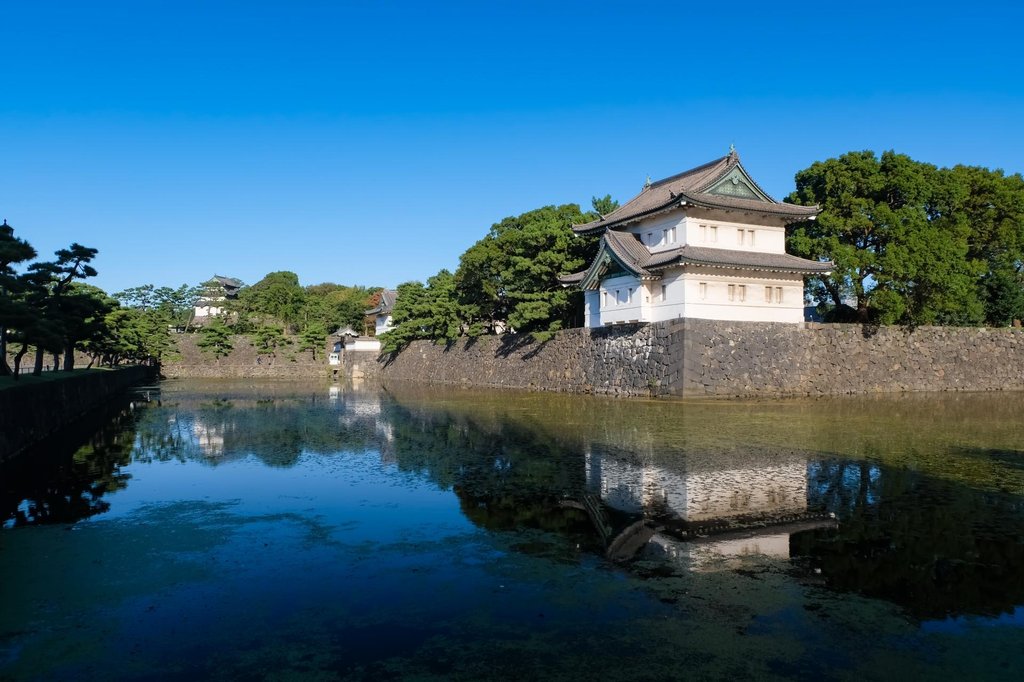
Buildings and remains from Edo Castle’s days as a fortress still stand on the Imperial Palace grounds. Here are five highlights from the Edo period that you can see on the Imperial Household Agency’s free tour and in the East Gardens.
Fujimi-yagura: The Only Surviving Three-Tiered Turret of Edo Castle (Imperial Household Agency’s Free Tour)
Fujimi-yagura, meaning “Fuji-viewing turret,” is about 16 meters (52 feet) tall and stands on the south side of Edo Castle’s main enclosure. You can see it along the route of the Imperial Household Agency’s public tour. It is the only surviving three-tiered turret at Edo Castle. After being destroyed in a major fire in 1657, it was rebuilt in 1659.
With its white walls and three-tiered roof, Fujimi-yagura stands out atop the high stone walls. According to historical accounts, the shogun could view Mount Fuji, the sea at Shinagawa, and fireworks over Ryogoku from the turret. Its name reflects the view of Mount Fuji once enjoyed from this spot.
Doshin Bansho: Roof Tiles Bearing the Crests of the Shogun’s Family and the Imperial Family (East Gardens)
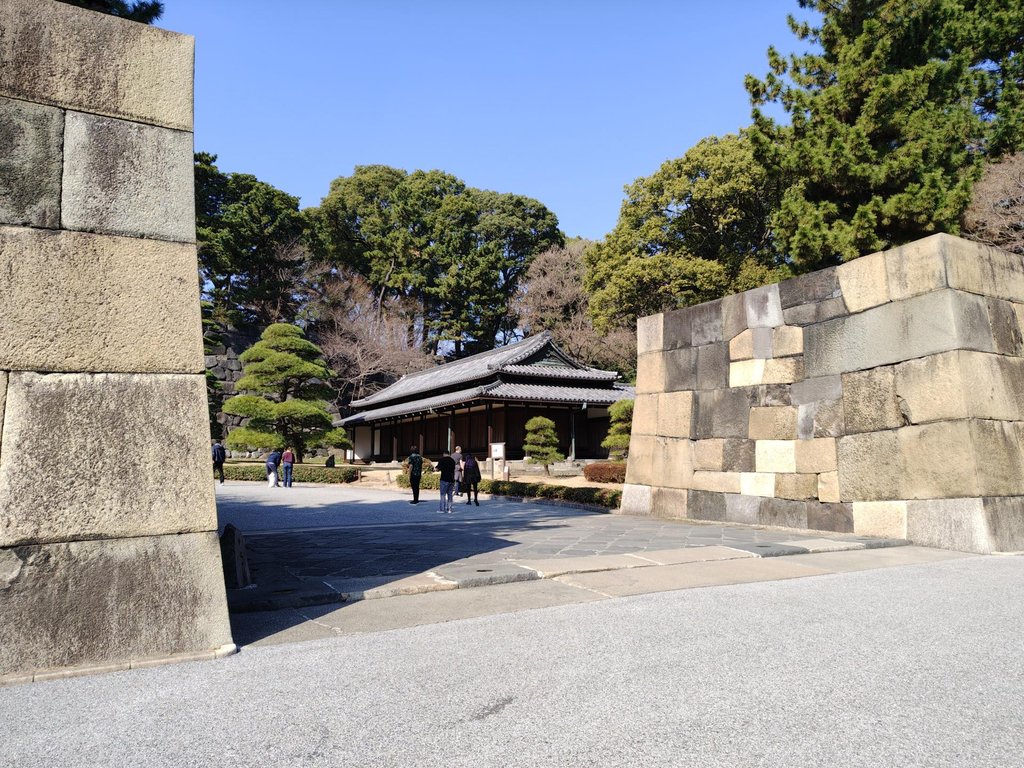
The Doshin Bansho is a guardhouse in the former third enclosure of Edo Castle, located shortly after you enter the East Gardens through Ote-mon Gate. During the Edo period, low-ranking samurai known as doshin stood guard here. The roof tiles bear both the hollyhock crest of the Tokugawa shogun family and the chrysanthemum crest of the Imperial Family, reflecting the site’s transition from Edo Castle to the Imperial Palace after the Meiji Restoration.
Hyakunin Bansho: A Checkpoint Guarded by Musketeers (East Gardens)
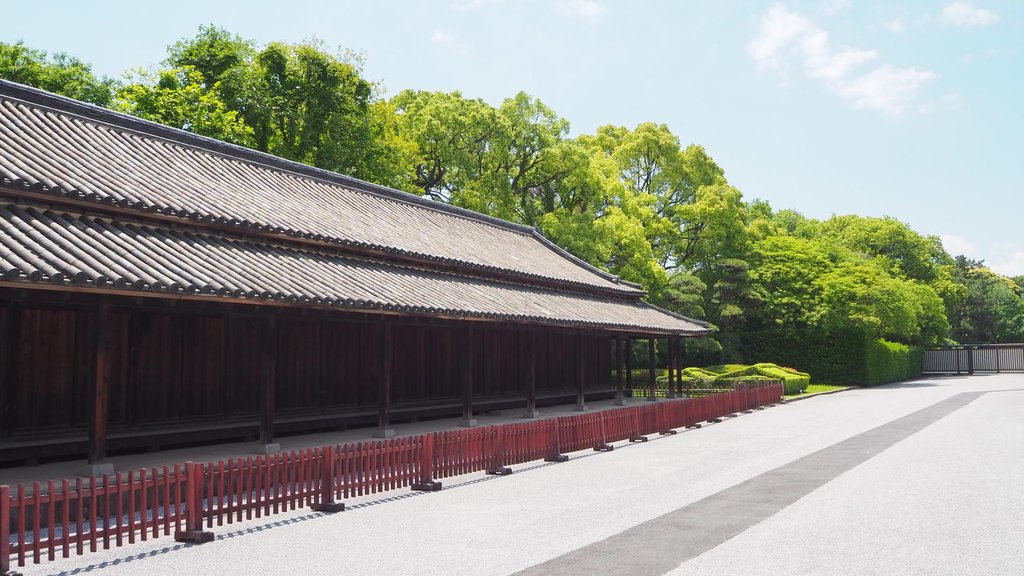
The Hyakunin Bansho is a guardhouse about 45 meters (148 feet) long, located in front of Naka-no-mon Gate, a key point on the route to Edo Castle’s main enclosure, now part of the East Gardens. In the Edo period, 100 musketeers divided into four groups—the Koga, Iga, Negoro, and Nijugoki—were stationed here in shifts around the clock. The Koga and Iga groups took their names from regions known for their association with ninja.
Site of the Great Pine Corridor: Where the Story of the 47 Ronin Began (East Gardens)
The Site of the Great Pine Corridor marks the location of a corridor that once stood in the palace within Edo Castle’s main enclosure. Its sliding doors and walls were decorated with paintings of pine trees. None of the palace buildings survive today, and the site is marked by a stone and an information board among the trees.
In 1701, Asano Takumi-no-Kami, lord of the Ako domain, was hosting imperial envoys sent by the Emperor. At this spot, he drew his sword and attacked Kira Kozuke-no-Suke, the official responsible for court ceremonies. Asano was ordered to commit seppuku that same day. The incident later inspired Chushingura, known in English as the story of the 47 Ronin, which recounts the raid carried out by 47 masterless samurai from Ako to avenge their lord.
Tenshudai: The Base of What Was Once Japan’s Tallest Castle Keep (East Gardens)
The Tenshudai is the surviving base of Edo Castle’s keep, located near Kitahanebashi-mon Gate in the East Gardens. From the top, you can look out over the lawn that occupies the former main enclosure and the buildings of Marunouchi. Completed in 1638 under Tokugawa Iemitsu, the third shogun, the keep was a magnificent five-tiered structure that stood about 60 meters (197 feet) tall, including its base. It burned down in the Great Fire of Meireki in 1657.
The following year, the base was rebuilt, but the keep itself was never reconstructed. This decision followed the view of Hoshina Masayuki, who believed that a castle keep was unnecessary in an era of peace. A restored model of the keep as it appeared during the Kan’ei era is on display at the nearby Honmaru Rest House. Comparing the model with the surviving base helps illustrate the scale of the original structure.
Frequently Asked Questions About Imperial Palace Tours

Finally, here are answers to some frequently asked questions about visiting the Imperial Palace.
Are There Days When You Can See the Emperor and the Imperial Family at the Imperial Palace?
Yes. The Imperial Palace holds two annual public greetings: the New Year Greeting on January 2 and the Emperor’s Birthday Greeting on February 23. No reservation is required. Visitors can enter the East Plaza through the Main Gate and see members of the Imperial Family appear on the veranda of Chowaden Hall to receive greetings from the public.
These events attract large crowds, so entry may take considerable time. Check the entry hours and baggage inspection requirements for the day, and allow plenty of time for your visit.
Can You Go in Front of the Palace Building on an English-Guided Tour?
The Imperial Household Agency does not accept applications from travel agencies or similar businesses for its public tour. If you want to visit the area in front of the palace building, apply directly to the Agency for the free tour. To learn more about Edo Castle’s history in English, consider combining the free tour with a guided tour of the East Gardens or the Imperial Palace Outer Garden.
Can Children Join the Imperial Household Agency’s Free Tour Without an Adult?
Generally, no. Visitors under 18 must be accompanied by an adult. However, junior high school students and older may participate without an adult if they apply through their school or a similar organization, in groups of nine or fewer.
Can You Join the Imperial Household Agency’s Free Tour and Visit the East Gardens on the Same Day?
Yes. As a rule, the Imperial Household Agency’s free tour runs and the East Gardens are open on Tuesdays, Wednesdays, Thursdays, and Saturdays, except on national holidays and certain other days.
You cannot walk directly from the East Gardens to Kikyo-mon Gate, the meeting point for the public tour. You must exit the gardens and walk to the gate separately.
The last entry time for the East Gardens varies by season: 3:30 pm from November to February, 4:00 pm in October, 4:30 pm from March to April 14 and in September, and 5:30 pm from April 15 to August.
Is There a Baggage Inspection When You Enter the East Gardens of the Imperial Palace?
Yes. Your bags will be inspected upon entry, and dangerous items are prohibited.
Trace the History of Edo Castle Through Its Stone Walls on an Imperial Palace Tour
There are three ways to visit the Imperial Palace: the Imperial Household Agency’s public tour, a self-guided visit to the East Gardens, and a paid English-guided tour. The public tour is ideal if you want to walk in front of the palace building, while the East Gardens offer a chance to explore the remains of Edo Castle at your own pace, without a reservation or admission fee. An English-guided tour is another option if you want to learn more about the site’s history.
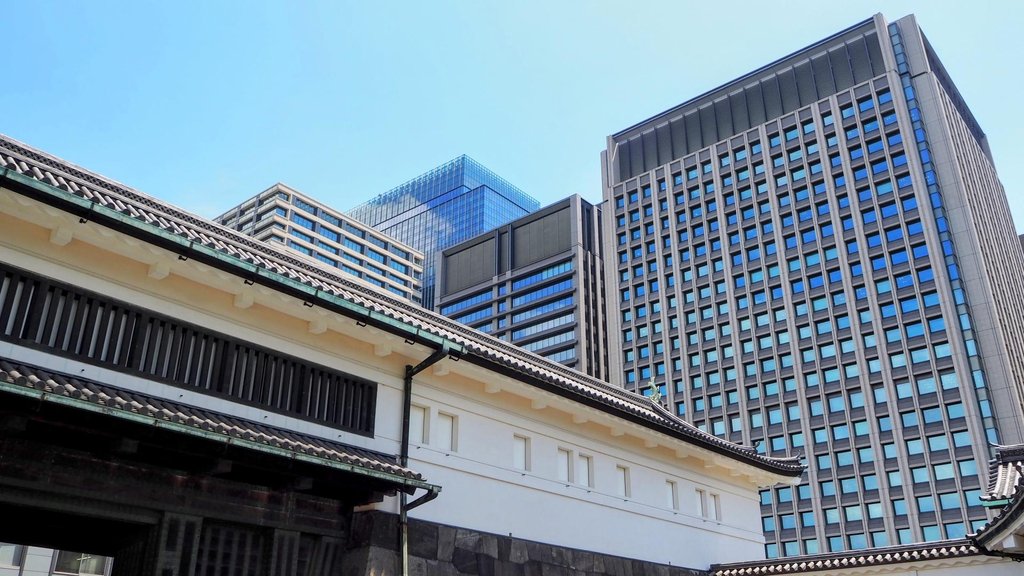
Historic structures from Edo Castle, including its stone walls and turrets, remain within walking distance of Tokyo Station.
If you want to join the Imperial Household Agency’s free public tour, applications open at 5 am Japan time on the first day of the month before your planned visit. As advance applications are limited, apply as early as possible once your travel dates are set. During your visit, take time to appreciate the stone walls and turrets that preserve the history of Edo Castle.
Tokyo Castle & Imperial PalaceーShogun Walking Tour