Asakusa’s nightlife follows a narrow window, with much of it beginning after the daytime shops close.
The shops along Nakamise-dori, the souvenir-lined approach from Kaminarimon Gate to Senso-ji Temple, close in the early evening, leading many travelers to assume there is little to do after dark. In practice, several spots are at their best at night: the view of Tokyo Skytree across the Sumida River, a drink at a bar that has been in business since the Meiji era (late 19th to early 20th century), and a panoramic view from a free observation terrace.
What to Do in Asakusa at Night: Three Places to Visit After Dark
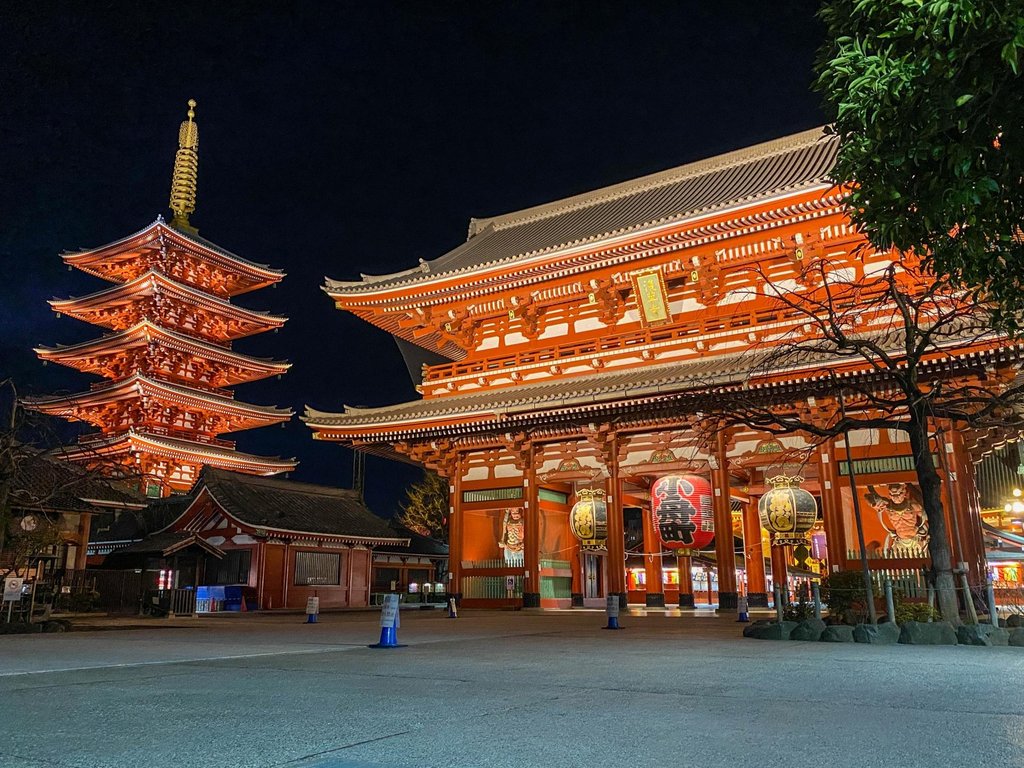
Most sightseeing facilities in Asakusa close early. The main hall of Senso-ji shuts at 5:00 pm, and the shops along Nakamise-dori pull down their shutters one after another during the 6:00 and 7:00 pm hours. Arriving in the early evening can therefore feel mistimed.
The riverside night-view spot, the long-running Meiji-era bar, and the free observation terrace all become more appealing after sunset. All three are within walking distance of Asakusa Station, require no reservation, and fit comfortably into a two- to three-hour evening.
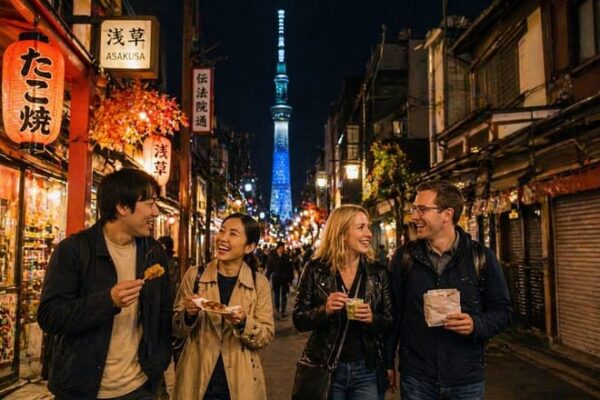
Asakusa: Guided Food Tour with 12 Dishes at 4 Local Eateries
Look Across the Sumida River to Tokyo Skytree from Azumabashi Bridge
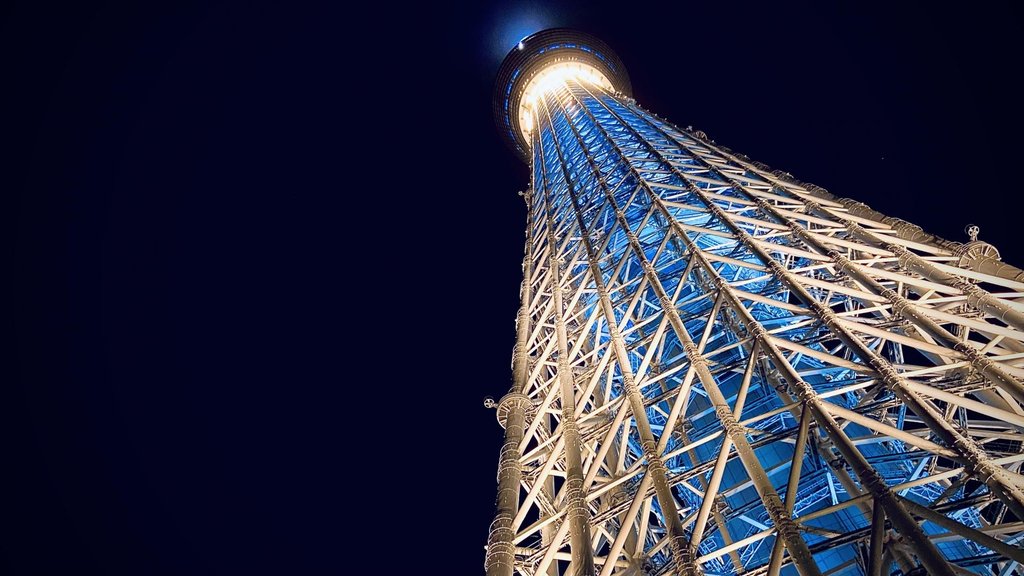
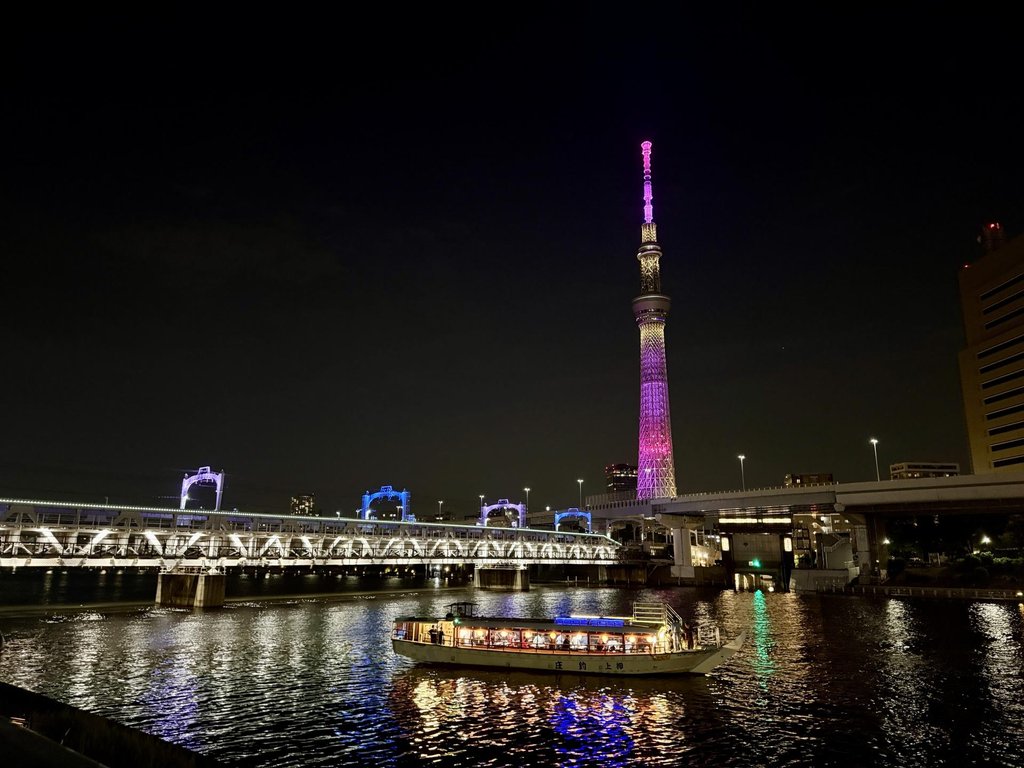
Azumabashi Bridge, a two-minute walk from Asakusa Station, is a free night-view spot with Tokyo Skytree directly across the Sumida River. No reservation is needed, and the bridge is open around the clock, so you can stop by before or after dinner.
From the bridge, you can frame the illuminated Tokyo Skytree, the Asahi Beer headquarters with its golden flame sculpture, and their reflections stretching across the water in a single photograph. Tokyo Skytree’s illumination begins after sunset and runs until around midnight, with the color changing from day to day. Three patterns appear: the pale blue Iki, the Edo-purple Miyabi, and the orange-tinted yellow Nobori.
Keep three things in mind when shooting:
- Skip the tripod: The walkway is narrow and busy, so step to the side when you stop
- Use night mode: A smartphone can capture the scene well enough, so heavy camera gear is unnecessary
- Bring an extra layer: Wind off the river can make it feel colder, especially in autumn and winter
Tokyo Skytree publishes the current month’s lighting schedule on its official website, so check there if you want to see a particular color.
Details
| Address | West bank: 2-chome Kaminarimon, Taito-ku, Tokyo East bank: 1-chome Azumabashi, Sumida-ku |
| Hours | Open 24 hours (Tokyo Skytree lighting runs from sunset until around midnight) |
| Closed | Open year-round |
| Official site | https://www.tokyo-skytree.jp/enjoy/lighting/ |
| Recommended for | Anyone who wants free night photography, or a short stop before or after a meal |
Drink a “Denki Bran” at Kamiya Bar
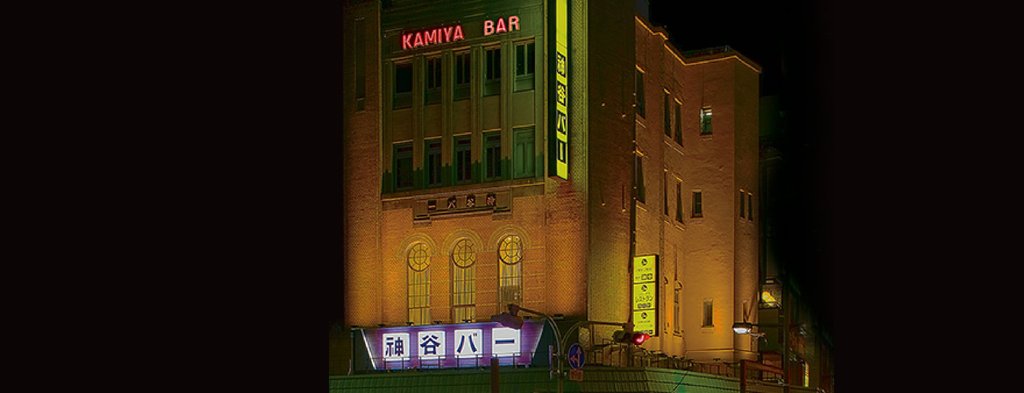
About a three-minute walk from Azumabashi Bridge stands Kamiya Bar, founded in 1880 (Meiji 13). It was the first establishment in Japan to call itself a bar, and its 1921 building is a Registered Tangible Cultural Property, a government designation that recognizes and protects historic structures. Kamiya Bar also appears in Osamu Dazai’s novel No Longer Human.
The signature drink, Denki Bran, is an amber-colored cocktail made with brandy and an in-house blend of gin, wine, and herbs. Kamiya Bar has passed the recipe down for more than 140 years since the Meiji era. At 30% alcohol, the drink is strong enough to warm your throat on the first sip, so regulars tend to drink it slowly.
The first-floor beer hall uses a prepaid ticket machine at the entrance. Simply press the button for your dish and pay in advance, making it possible to order without speaking Japanese. The buttons are labeled with the menu items, so pointing at what you want is enough. The hall accepts cash only, with no credit cards or electronic money, so bring enough cash with you.
Details
| Address | 1-1-1 Asakusa, Taito-ku, Tokyo |
| Hours | 11:00 am–8:00 pm (last order 7:30 pm). Times may change, so check the official site. |
| Closed | Tuesdays, plus two Mondays a month |
| Official site | http://www.kamiya-bar.com/ |
| Recommended for | Anyone interested in Asakusa’s history, or a drink in an old-fashioned setting |
Look Down on Asakusa at Night from the Asakusa Culture Tourist Information Center Terrace
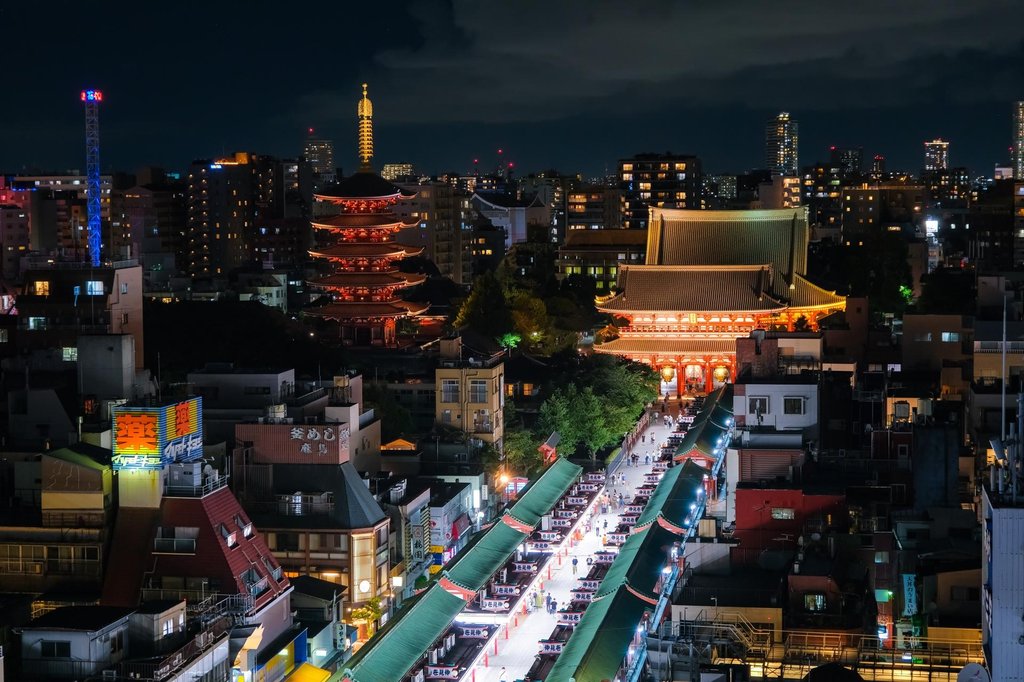
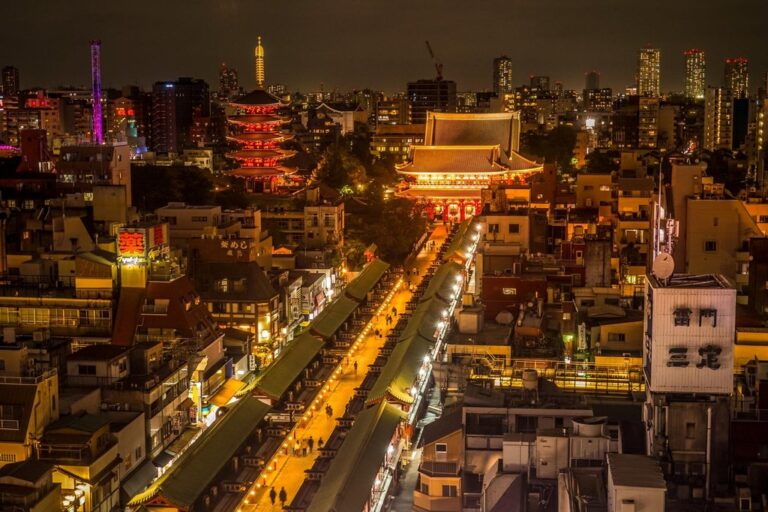
After leaving Kamiya Bar, head to the Asakusa Culture Tourist Information Center, which stands directly opposite Kaminarimon, the gate in front of Senso-ji with its large red lantern. The observation terrace on the eighth floor is free, requires no reservation, and stays open until 10:00 pm, making it easy to fit in after dinner.
Take the elevator up, and Nakamise-dori stretches directly below, with the illuminated main hall and five-story pagoda of Senso-ji lined up at the far end. Turn around, and Tokyo Skytree comes into view. Few other free viewpoints in Asakusa let you photograph the approach to Senso-ji and Tokyo Skytree in the same frame.
The eighth-floor terrace is an open-air deck, but part of it is covered, and an adjoining café lets you enjoy views of Senso-ji and Tokyo Skytree from indoors on rainy days.
Architect Kengo Kuma designed the building itself, and its exterior is layered in wooden lattice. Ten minutes is enough time here, which makes the Asakusa Culture Tourist Information Center a convenient place for one last photo before your train home.
All three places let you move at your own pace, but the restaurants and bars that make up an Asakusa evening differ in their opening hours, payment methods, and menu languages. If you want to experience the local drinking culture within a limited evening, an English-guided food tour can save you the time and effort of researching where to go.
Details
| Address | 2-18-9 Kaminarimon, Taito-ku, Tokyo |
| Hours | Observation terrace: 9:00 am–10:00 pm |
| Closed | Open year-round (except facility inspection days) |
| Official site | https://t-navi.city.taito.lg.jp/spot/1007 |
| Recommended for | Anyone after quick night photos, or a rainy-day alternative |
Why an English-Guided Food Tour Belongs in Your Asakusa Evening
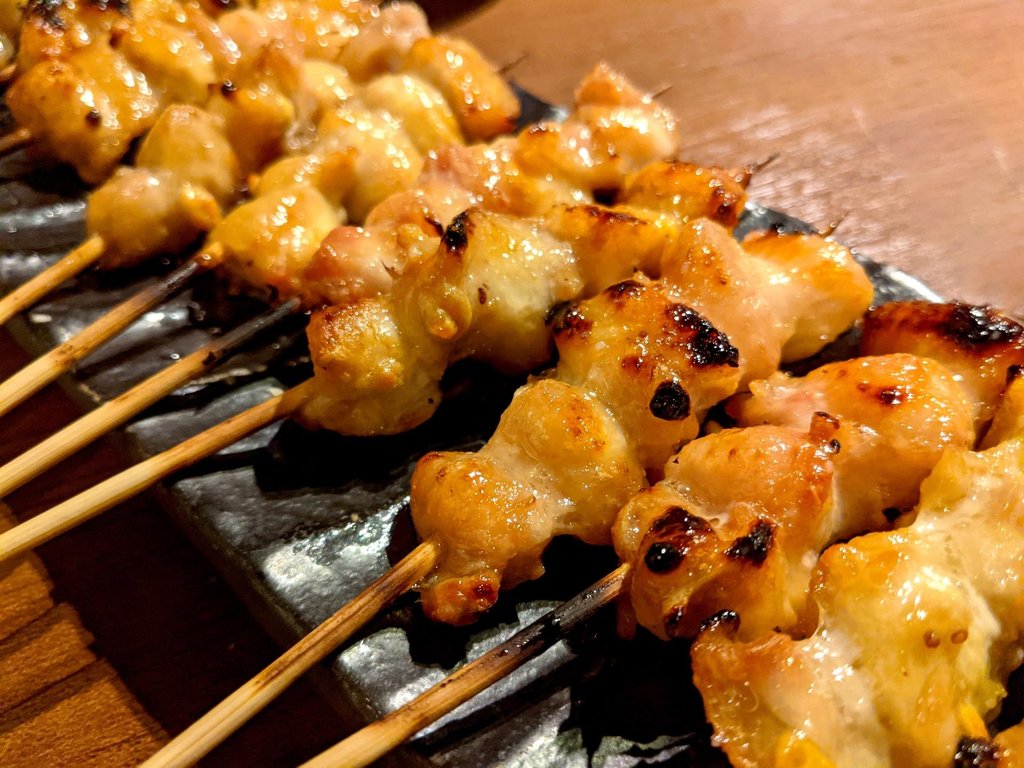
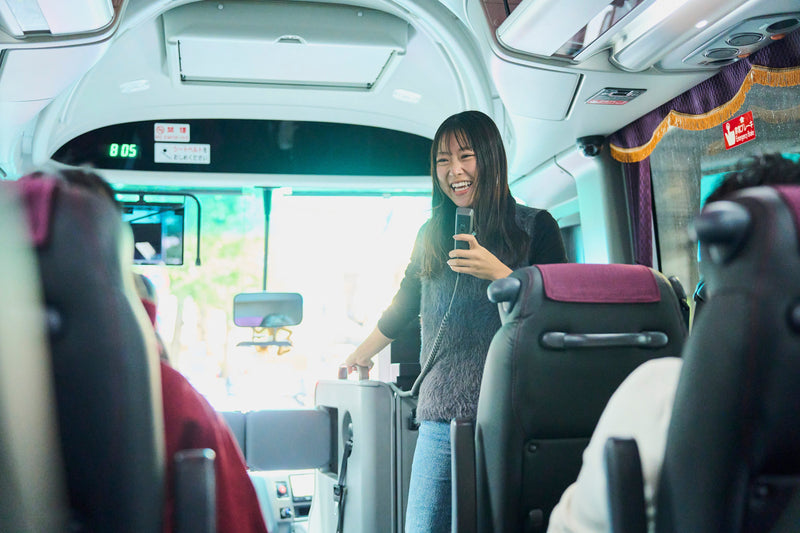
Eating your way through Asakusa at night comes down to two questions: whether English will be enough and which door to open. Asakusa has several after-dark options, from the illumination at Senso-ji to chopstick-making workshops, and a food tour can answer both questions at once. Dinner becomes part of the experience, and because the price includes food and drinks, you can move between several places without worrying about extra costs.
What a guide adds, and what tends to go wrong when you look for places yourself, are the two sides of the same evening.
Visit the Places Locals Drink at, with an English-Speaking Guide
The main appeal of an English-guided food tour is access to the places locals use day to day rather than those aimed at visitors. Asakusa’s back lanes are dotted with small izakaya (Japanese pub-style restaurants) whose signs are in Japanese only, along with yakitori (bite-sized chicken grilled on skewers) counters with just a few seats. They may look inviting, but a first-time traveler may hesitate to walk in alone.
With a guide alongside you, both conversations with the owner and ordering go smoothly. The places on these tours tend to share a few traits:
- Easy to understand: Even without an English menu, you learn on the spot what a dish is and how to eat it
- Local atmosphere: You drink at the counter among local regulars, experiencing izakaya culture as it actually works
- No payment surprises: At cash-only places, the guide tells you in advance, so nothing catches you out
Tours start at 6:30 pm, making them easy to join after an afternoon of sightseeing.
Asakusa: Guided Food Tour with 12 Dishes at 4 Local Eateries
Going Alone Means Time Spent Finding Places and Ordering
Covering Asakusa at night without a guide takes longer than you might expect. Many shops around Nakamise-dori have closed by early evening, while the restaurants that stay open later are scattered farther out, in the Kannon-ura district north of Senso-ji and along the back lanes.
Signs are often in Japanese only, and from the street it can be hard to tell whether a place is even open. Once you find a restaurant you want to enter, a Japanese-only menu means working through it one item at a time with a translation app. Ordering alone can easily take more than ten minutes, and translation rarely captures the finer nuances of a dish name, so what arrives is not always what you expected.
Most restaurants close between 9:00 pm and 11:00 pm, so if you hope to visit two or three in one night, a slow start at the first one can quickly eat into your evening. On a food tour, the guide takes you straight to places already confirmed to be open, leaving more of your limited time for eating and exploring rather than searching on a map app.
Start at 5 pm: A Model Course for an Asakusa Evening
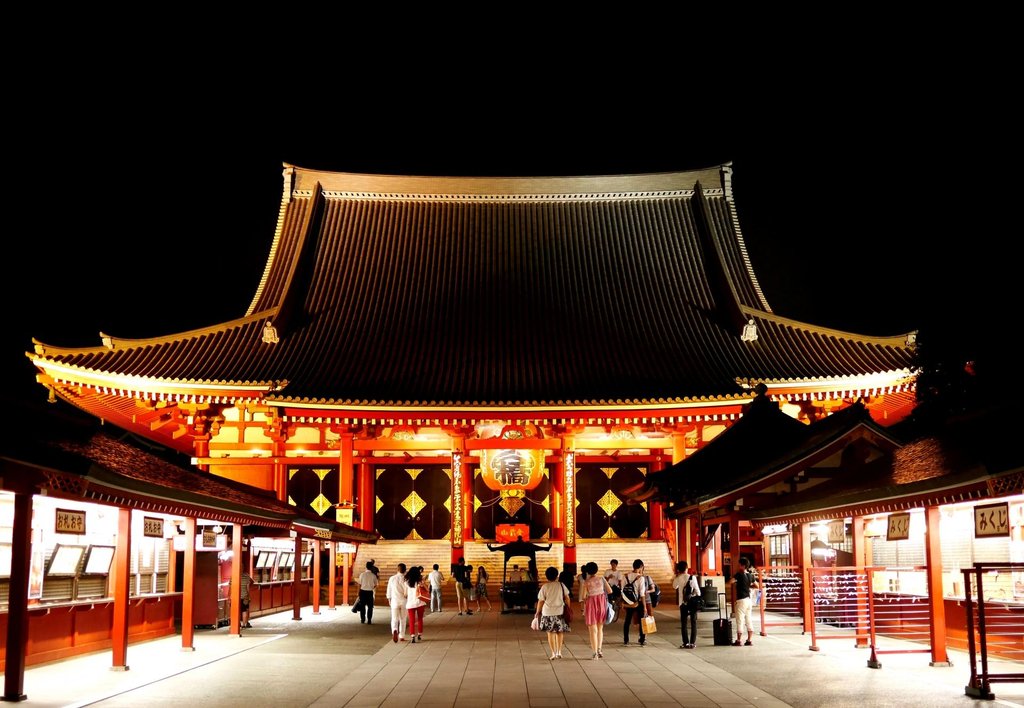
Knowing where to begin is the hard part of an evening in Asakusa. This four-hour route, running from 5:00 pm to just after 9:00 pm, balances a hands-on craft, a meal, and night views.
It starts with a craft workshop in the early evening, moves on to an English-guided crawl through the local drinking quarter, and finishes with a walk through the illuminated temple grounds. Each step includes the meeting point and estimated walking time, making the route easy to follow.
5:00 pm | Make Your Own Chopsticks at Chopsticks Studio Asakusa
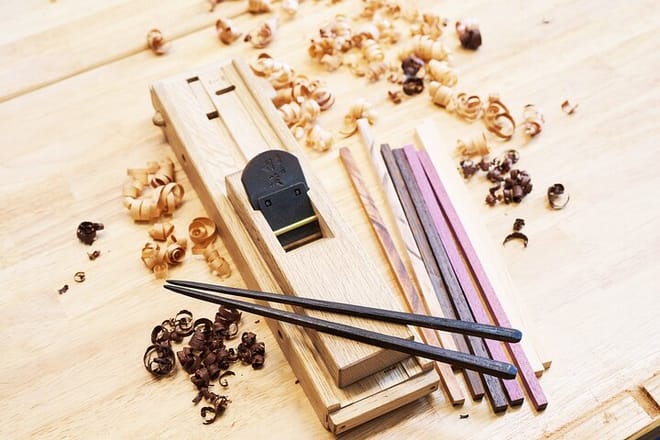
At Chopsticks Studio Asakusa, a three-minute walk from Kaminarimon, you can make your own pair of chopsticks in about an hour. Start by choosing the wood, then shape and polish it with dedicated tools before finishing with a laser engraving of your name or the date. The finished pair makes a practical keepsake from your trip.
Workshops run from 9:00 am to 6:30 pm in 30-minute increments. If you plan to join the 6:30 pm food tour afterward, the 5:00 pm slot is the safest choice. The workshop ends around 6:00 pm, and the meeting point at the Kaminarimon police box, the small police station beside the gate, is a three- to five-minute walk away, leaving roughly 25 minutes to spare.
Details
| Meeting point | TheRoom Asakusa 6F, 1-16-11 Asakusa, Taito-ku, Tokyo |
| Duration | About 1 hour |
| Included in the price | Wood, tools, laser engraving, and various upgrades |
| Booking site | https://japanguidestar.com/tour/asakusa-premium-japanese-chopstick-making-workshop/ |
| Recommended for | Anyone curious about Japanese handcraft, families with children (ages 6 and up), and travelers who want to make their own souvenir |
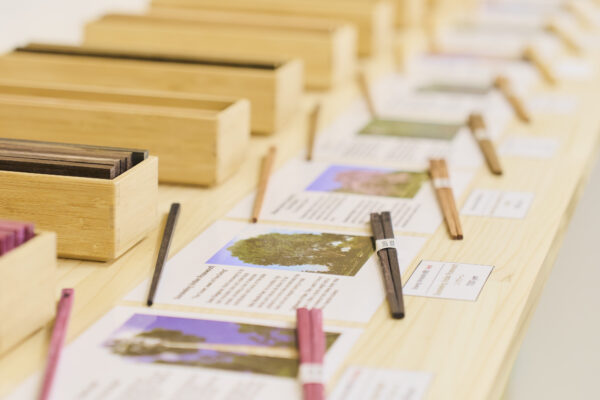
Asakusa Premium Japanese Chopstick Making Workshop
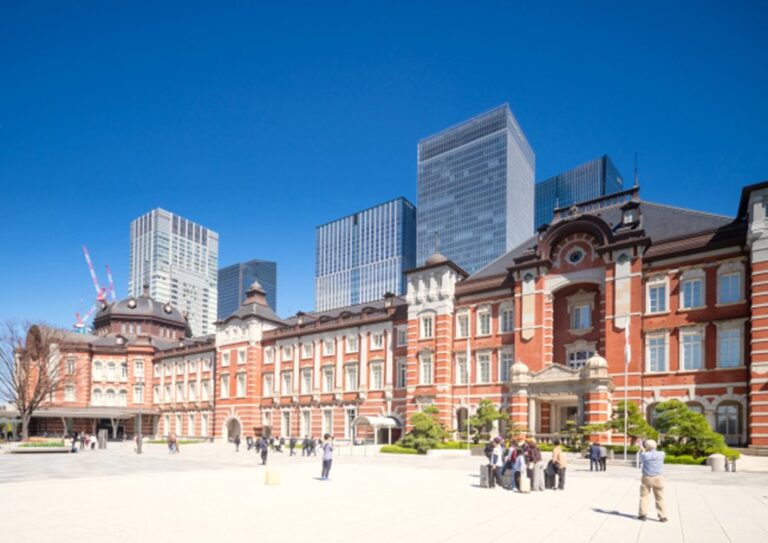
6:30 pm | Eat Through the Drinking Quarter with an English-Speaking Guide
The chopsticks workshop finishes around 6:00 pm. Walk toward Kaminarimon, and you will reach the food tour’s meeting point within minutes, where you join your English-speaking guide near the Kaminarimon police box and spend about two and a half hours exploring Asakusa’s drinking quarter. The tour ends around 9:00 pm, making it easy to continue with a walk among the illuminated buildings of Senso-ji.
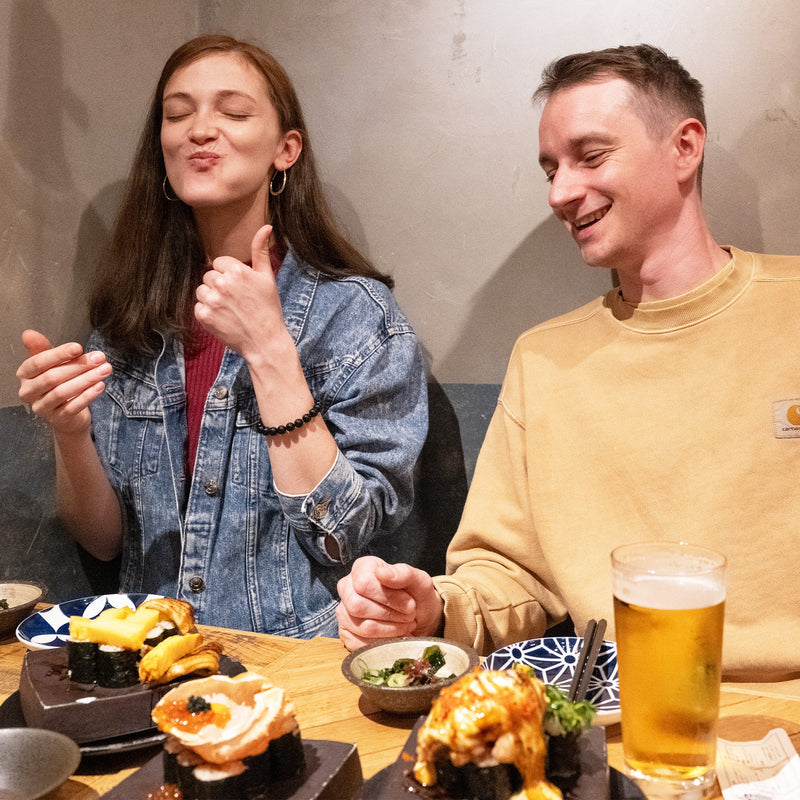
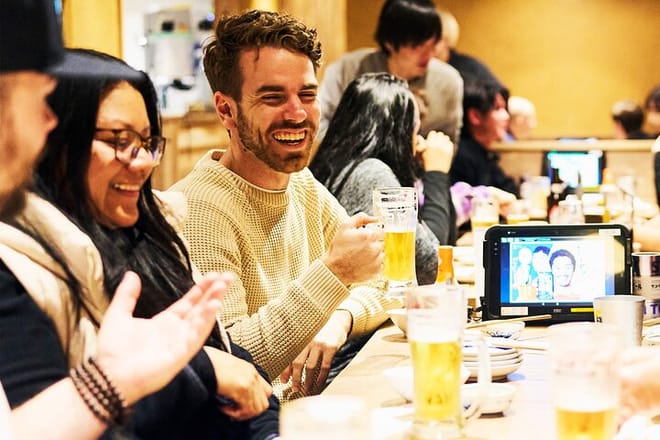
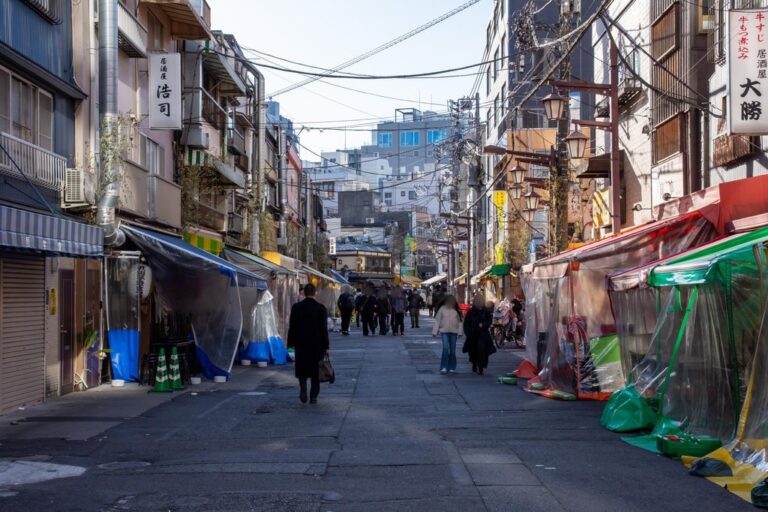
The route centers on Hoppy Street, a lane that grew out of the postwar open-air stalls. At night, red lanterns light up the street, while steam rises from motsu nikomi (beef or pork offal simmered in miso or soy sauce) and conversation fills the air. Guides typically visit around four places: taverns serving staples such as simmered beef tendon and yakitori, along with a sake bar. The tour price includes food and drinks, so you only need to pay extra if you order additional drinks.
Check a few points before you book.
Details
| Duration | About 2.5–3 hours |
| Food and drink | Around 4 venues, roughly 12 dishes plus 3 drinks |
| Group size | Small groups (maximum 8–10 people) |
| In rain | Runs as scheduled in principle (the operator contacts you in severe weather) |
| Booking deadline | Online booking by the previous day is recommended |
The tour generally runs in rainy weather, so the forecast does not need to shape your plans. After the group breaks up at 9:00 pm, Senso-ji is about a five-minute walk away.
Asakusa: Guided Food Tour with 12 Dishes at 4 Local Eateries
9:00 pm | Walk Through an Illuminated Senso-ji
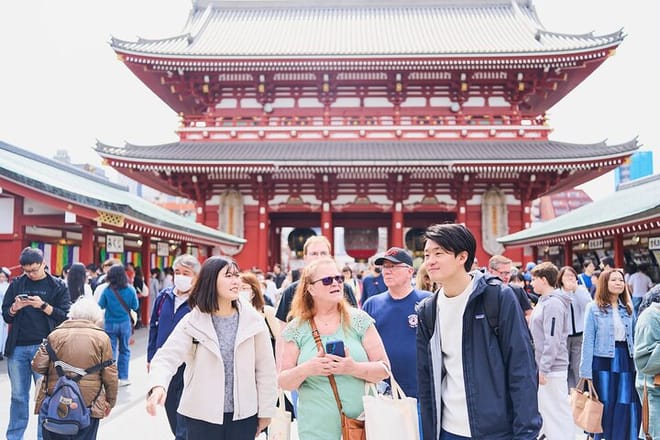
When the food tour ends around 9 pm, turn toward Senso-ji. The grounds fall quiet in a way that is hard to imagine after the daytime crowds, and the main hall and five-story pagoda stand out in gold.
The illumination runs every day from sunset until around 11:00 pm, lighting four structures: Kaminarimon, Hozomon (the large inner gate), the five-story pagoda, and the main hall. The interior of the main hall closes at 5:00 pm, but the temple grounds remain open around the clock. The offertory box in front of the hall, where visitors offer a coin and pray, remains available at night, so you can still pay your respects from outside.
Three shots are worth planning for:
- The painted shutters of Nakamise-dori, known as the Asakusa Emaki: All 89 shops feature scenes from Asakusa’s history and festivals, creating a view that appears only after the shops close
- The five-story pagoda framed through Hozomon: The red lanterns and gold of the pagoda layer together to create a shot with real depth
- Tokyo Skytree from behind the main hall: Turn around, and the illuminated tower appears in the background, bringing old and new Tokyo into a single frame
With few worshippers around at night, voices and shutter clicks carry through the grounds. For the trip back, the Tokyo Metro Ginza Line continues running into the 11:00 pm hour, with departures toward Shibuya at 11:00 pm, 11:04 pm, and 11:11 pm among others, so leaving the grounds around 10:30 pm gives you a comfortable margin.
Details
| Address | 2-3-1 Asakusa, Taito-ku, Tokyo |
| Hours | Illumination: sunset until around 11:00 pm (daily) |
| Closed | Open year-round (grounds open 24 hours) |
| Official site | https://www.senso-ji.jp/ |
| Recommended for | Night photographers, and anyone who prefers to visit quietly when crowds thin out |
If you want to go deeper into the history of Senso-ji and the surrounding streets, a guided walking tour is another option. Tour details are available below.
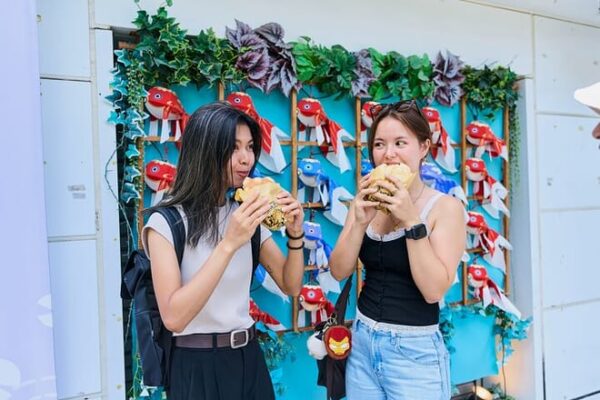
Tokyo: Asakusa & Sensoji ー Oldest Temple Walking Tour (2hrs)
An English-Guided Food Tour That Takes the Worry out of an Asakusa Night
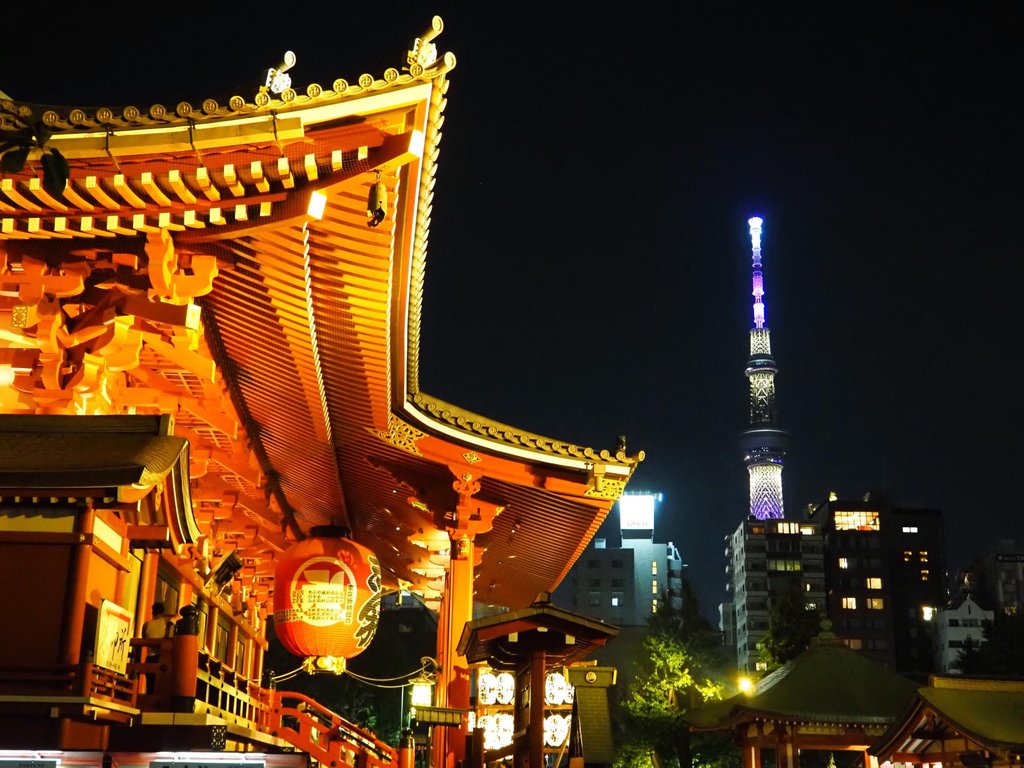
On your own, an evening in Asakusa comes with one practical hurdle: finding places where English actually works. An English-guided food tour clears that hurdle and takes the guesswork out of deciding where to go.
The section below covers the price, duration, number of dishes, and meeting point.
Tokyo: Asakusa Guided Food Tour with 12 Dishes & 3 Drinks
On this tour, run by Japan Guide Star, an English-speaking guide takes you around Asakusa’s restaurants and sake bars. You sample 12 dishes over about two and a half hours, along with a walk down Hoppy Street and treats such as taiyaki (fish-shaped cakes filled with sweet red bean paste).
Because the guide explains what each dish is and how to eat it, you can skip both the search for places and the work of deciphering a Japanese menu. The route focuses on establishments favored by local residents.
The tour starts at 6:30 pm, making it easy to join after an afternoon of sightseeing. Children aged two and over can join, and guests under 20 are welcome to come along, although Japanese law prohibits them from drinking alcohol. Cancellation is free up to 24 hours before the start.
Details
| Meeting point | Near the police box in front of Kaminarimon (1-3-1 Asakusa, Taito-ku, Tokyo; about a 3-minute walk from Asakusa Station) |
| Duration | About 2.5–3 hours (meet at 6:30 pm) |
| Included in the price | 12 dishes plus 3 drinks (extra orders paid in cash) |
| Booking site | https://japanguidestar.com/tour/tokyo-asakusa-food-tour-12-dishes-3-drinks/ |
| Recommended for | Anyone who wants a night out with English support, or a first visit to Asakusa without agonizing over where to eat |
Asakusa: Guided Food Tour with 12 Dishes at 4 Local Eateries
Three Things to Know Before an Evening Walk in Asakusa
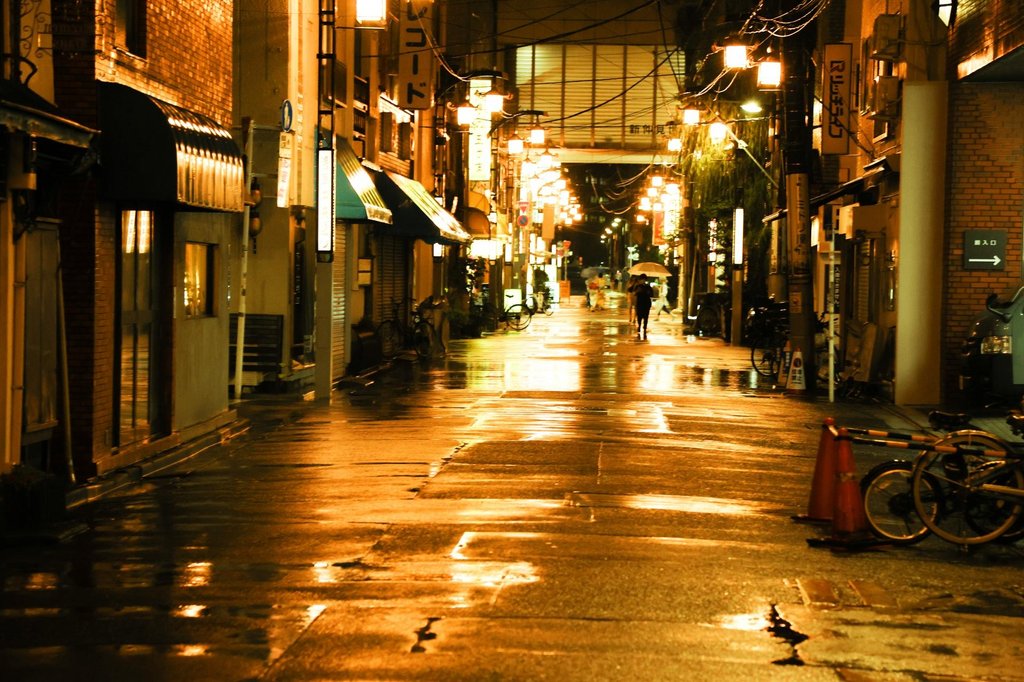
Asakusa is a neighborhood where the night starts and ends early. Arriving an hour later than planned can genuinely mean finding the shutters down at the shop you had in mind.
Closing times for the main facilities, the last-train deadline and your options if you miss it, and the way sunset and the street atmosphere shift with the seasons all come with specific times attached. Those details can determine whether an evening itinerary holds together.
Most Facilities Close Around 7 pm
Asakusa’s main sightseeing facilities close earlier than many visitors expect. Arrive at 7:00 pm, and shopping or entering a temple hall is largely off the table.
| Facility | Evening closing | What is still possible at night |
|---|---|---|
| Senso-ji main hall | Closes at 5:00 pm (the closing time stays 5:00 pm year-round; from October to March the hall opens at 6:30 am instead) | Grounds open 24 hours, illumination until around 11:00 pm |
| Nakamise-dori | Shops close one after another between 6:00 pm and 7:00 pm | Strolling past the storefronts, viewing the painted shutters after closing |
| Asakusa Hanayashiki (amusement park) | Closes at 6:00 pm (last entry 5:30 pm) | Nothing after closing |
The counters for omamori (protective charms issued at temples and shrines to carry with you) and goshuin (a seal stamp and calligraphy given as proof of a visit) also stop accepting requests at 5:00 pm, so if either is on your list, go in the afternoon. Finishing shopping and indoor sightseeing by 5:00 pm, then turning to night views and food after 7:00 pm, makes the most of an Asakusa evening.
Hours can vary by season and event, so check each facility’s official site for the latest information before you visit.
Last Trains, and How to Get Back If You Miss One
Three train lines serve Asakusa Station: the Tokyo Metro Ginza Line, the Toei Asakusa Line, and the Tobu Skytree Line. The Tsukuba Express station also called Asakusa is separate from these three, and transferring between the stations requires a walk of several minutes.
| Line | Main destinations | Approximate last train |
|---|---|---|
| Tokyo Metro Ginza Line | Toward Shibuya | Around 11:55 pm |
| Toei Asakusa Line | Toward Shinagawa and Sengakuji | Late in the 11 pm hour |
| Tobu Skytree Line | Toward Kita-Senju | Shortly after midnight |
Train times vary by day of the week and change with timetable revisions, so always check the latest schedule on each operator’s official site before you set out.
The Ginza Line’s last train runs earlier than those of the other two lines, which matters most if you are heading back toward Shibuya or Shinjuku. For Shinjuku, the usual route is to take the Ginza Line to Akasaka-mitsuke and transfer to the Marunouchi Line. Factoring in the transfer, leaving the bar during the 9:00 pm hour gives you a comfortable margin.
If you miss the last train, taxis are available around Asakusa. The ride-hailing app GO covers all of Taito-ku, and entering your destination in the app means you can ride without needing to explain it to the driver. Installing the app before you go out gives you a reliable option for getting home after the last train. A late-night surcharge applies from 10:00 pm to 5:00 am, and a taxi from Asakusa to Shinjuku typically costs around ¥4,000–¥6,000 (about $27–40 USD).
Sunset Times and Street Atmosphere Change with the Season
The same 6:00 pm looks very different in summer and winter. Sunset in Tokyo is around 6:50 pm in June but around 4:28 pm in December, a gap of about two and a half hours.
| Month | Approximate sunset | Clothing and crowd notes |
|---|---|---|
| March–May | Around 5:40–6:50 pm | A light jacket helps. Late March to early April brings crowds for the cherry blossoms in Sumida Park |
| June–August | Around 6:40–7:00 pm | Hot and humid, and the illumination shows best after 7:30 pm. The Sumida River Fireworks Festival, usually the last Saturday of July, packs the whole area |
| September–November | Around 4:30–5:50 pm | Sunset comes earlier by the week. The riverside wind turns cold in November |
| December–February | Around 4:30–5:15 pm | A heavy coat and scarf are essential. Crowds gather for the Hagoita-ichi market in mid-December, which sells decorated paddles for the New Year, and for hatsumode, the first temple or shrine visit of the year, from New Year’s Eve through January 7 |
At 6:00 pm in summer, the sky is still bright, so the 5:00 pm model course above begins with a walk in daylight and follows the sky as it gradually darkens. In winter, 5:00 pm is already fully dark, and the lanterns are glowing by the time you arrive.
Along the Sumida River, winter winds can make it feel much colder than the thermometer suggests. If you plan to photograph from Azumabashi Bridge between December and February, gloves and proper layers will let you take your time with the composition. Dates for seasonal events vary from year to year, so check the official sites of Senso-ji and the Sumida River Fireworks Festival organizing committee for the latest information.
FAQ: Common Questions About Asakusa at Night
Small uncertainties about opening hours and payment can nag at you before a night out in Asakusa. The short answers below cover when the illumination starts, how late the area remains worth visiting, whether restaurants require cash, and whether food tours need to be booked in advance.
What Time Does the Senso-ji Illumination Start?
The lights come on automatically at sunset and switch off around 11:00 pm. The start time shifts with the season: in mid-September, sunset is around 5:40 pm, so the lights are on before 6:00 pm. In summer, sunset is closer to 7:00 pm, while in winter it is around 4:30 pm.
Arriving at 8:00 pm or 9:00 pm after dinner still leaves plenty of time before the lights go out. The later hours are also quieter, giving you more time to take in Kaminarimon and the pagoda without the daytime crowds. For photography, the 30–60 minutes after sunset, when a trace of blue remains in the sky, create the strongest contrast between the warm illumination and the darkening sky.
How Late Is Asakusa Worth Visiting at Night?
Free night-view spots generally stay open until 10:00 pm, while restaurants remain open somewhere between 11:00 pm and midnight. The eighth-floor observation terrace at the Asakusa Culture Tourist Information Center, opposite Kaminarimon, is free and open until 10:00 pm, with views across the neighborhood toward Tokyo Skytree.
Most izakaya and bars on Hoppy Street and at Asakusa Yokocho, a dining alley, stay open until 11:00 pm or midnight, although last orders usually come 30 minutes to an hour before closing. If your route home involves a transfer, working backward from the last train and planning to leave Asakusa between 9:00 pm and 10:00 pm keeps the end of the night unhurried.
Do Restaurants in Asakusa Need Cash at Night?
It depends on the establishment, but older shops tend to be cash-only, so carrying cash gives you more options. The first floor of Kamiya Bar is the clearest example: it uses prepaid meal tickets and accepts neither credit cards nor electronic money nor QR code payments.
Hoppy Street, by contrast, has establishments that accept cards and QR code payments. These shops usually display stickers showing the accepted payment methods at the entrance, so you can check before going in. If you run short, you can withdraw cash at the Seven Bank ATM outside the west ticket gate of Tokyo Metro Asakusa Station, which is open from 5:00 am to midnight, among other locations.
Still, having ¥5,000–¥10,000 (about $35–70 USD) on hand when you arrive saves you from having to hunt for an ATM after 7:00 pm, when the area gets busier.
Do Asakusa Food Tours Require a Reservation?
Yes, the tour requires advance booking, although same-day reservations are still possible through the official site when availability remains. For Japan Guide Star’s Tokyo: Asakusa Guided Food Tour with 12 Dishes & 3 Drinks, you choose your date and party size on the tour detail page, and availability appears immediately.
A single booking covers up to 20 people. Cancellation is free up to 24 hours before the start, and guests under 20 can join, although the venues cannot serve them alcohol. Weekends and public holidays fill up quickly, so check availability as soon as your itinerary is set.
If eating your way through Asakusa at night appeals to you, an English-guided food tour is one way to do it. Availability and booking details are below.
Asakusa: Guided Food Tour with 12 Dishes at 4 Local Eateries
Summary
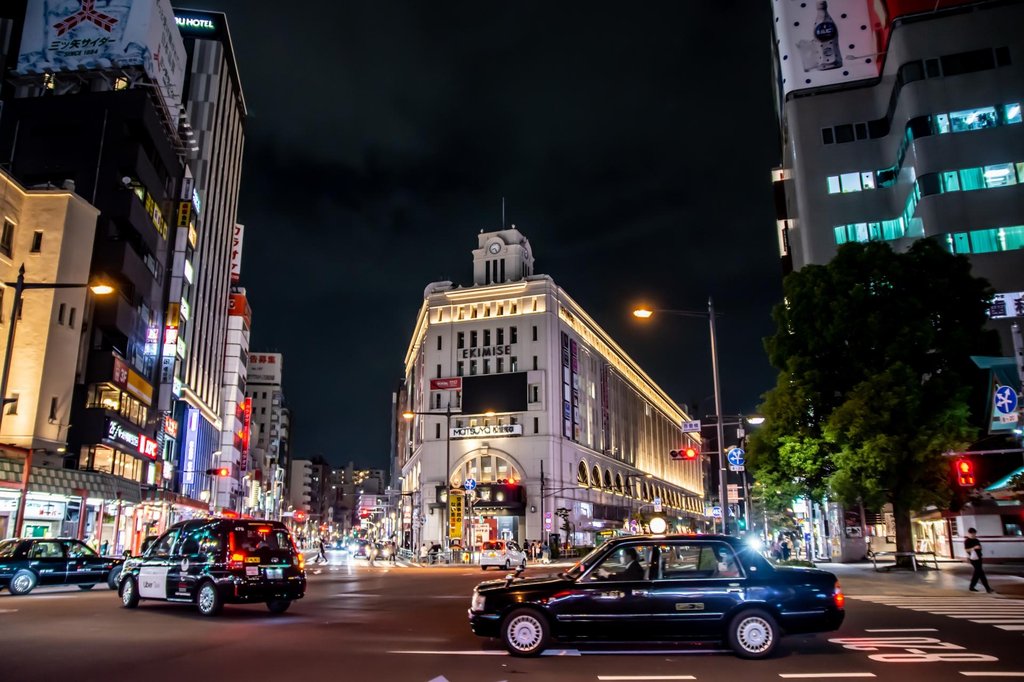
Asakusa after dark offers sights and experiences that daylight does not: the illuminated Senso-ji, the Tokyo Skytree night view from Azumabashi Bridge, and a drinking crawl along Hoppy Street. Three practical points shape how much you can fit into an evening: most facilities close around 7:00 pm, long-established establishments often require cash, and the Ginza Line’s last train leaves around 11:55 pm, earlier than the other lines.
Pairing the chopstick-making workshop with an English-guided food tour fills the stretch from 5:00 pm to just after 9:00 pm, leaving enough time to end the evening with a walk through the illuminated Senso-ji grounds.
Asakusa: Guided Food Tour with 12 Dishes at 4 Local Eateries